

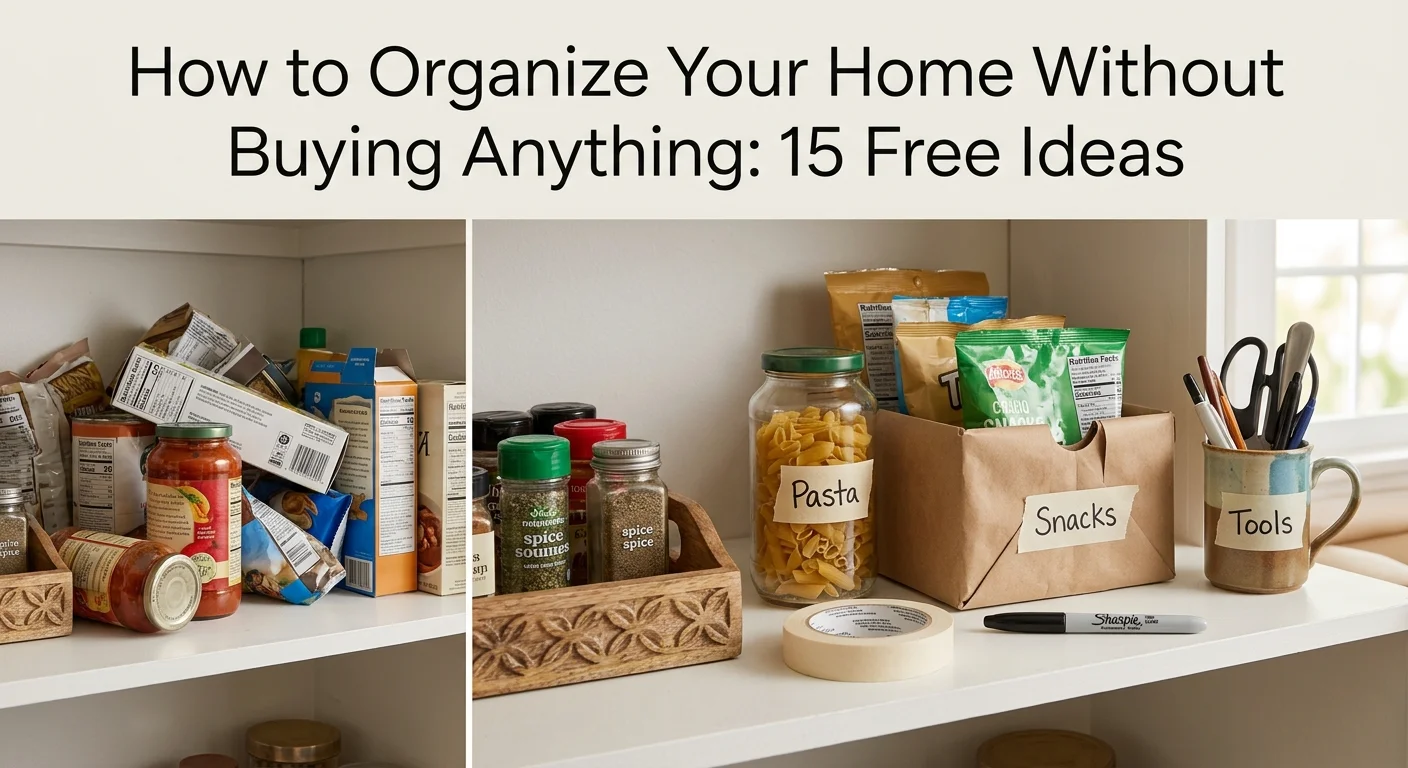
You can organize your home without buying anything by decluttering first, then reusing the jars, boxes, baskets, and trays you already own. Group similar items together, give each group one home, and label it with masking tape. Most homes already hold enough containers – you just haven’t put them to work yet.
In this guide
- Can You Really Organize a Home Without Buying Storage?
- Start by Decluttering, Not Organizing
- 15 Ways to Organize Your Home Without Buying Anything
- Things You Already Own That Can Become Storage
- How to Organize Each Room
- Your 7-Day Zero-Spend Organizing Plan
- How to Keep It Organized
- Before Buying Storage, Ask These 7 Questions
- Frequently Asked Questions
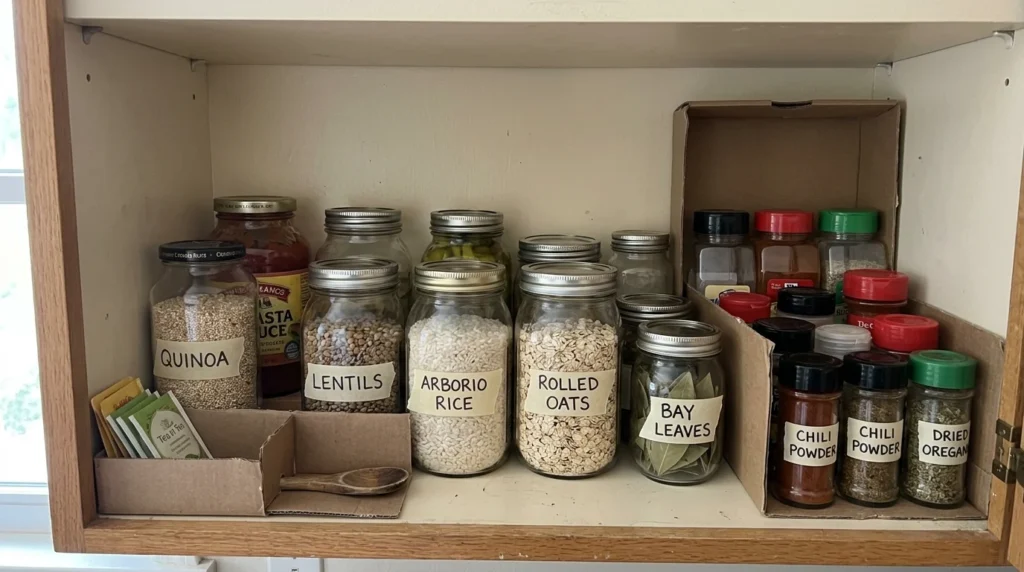
Most people buy bins before they even figure out what they’re storing, which is backwards – you end up with matching containers around the same pile of stuff, just zipped up neater. Last month, I tackled my kitchen pantry. Instead of running to Target for matching acrylic bins, I used what was already in the house: empty shoe boxes, sturdy shipping boxes, and leftover glass pasta sauce jars. I trimmed the tops off the boxes to make open trays for spices and snacks, washed out the jars for dry grains, and finished the whole space in about 45 minutes without spending a dime. This guide covers the method, 15 free ideas using things you already have, a room-by-room breakdown, and how to keep it from sliding back into clutter. You don’t need a single purchase to organize your home without buying anything – you need a process and a willingness to look at what’s already in your cabinets.
Can You Really Organize a Home Without Buying Storage?
Yes – for most homes, the limiting factor isn’t storage, it’s volume. Three things make the free route work:
- You usually have too much stuff, not too little storage. Most clutter is a sorting problem, not a shortage of containers.
- Buying containers before you know what you own leads to wrong sizes. You end up with bins that don’t fit the shelf or the drawer, and they become clutter themselves.
- Free systems get fixed faster. If a jar isn’t working as a pen holder, you swap it for a mug in five seconds – no return trip to the store.
To be fair, sometimes one small purchase genuinely helps, like a drawer divider for an oddly shaped space. But for most of a home, reusing what you already own works just as well, and it forces the step that actually fixes clutter: decluttering first. In fact, I ended up using 12 containers I already owned across three rooms, saving at least $150 in storage bins.
Start by Decluttering, Not Organizing
Organizing a pile only moves the pile. Skip straight to containers and you’re just making clutter look neater – the same amount of stuff is still there, just zipped into bins.
The 3-Pile Method
Sort everything into three piles: keep, donate or sell, and trash or recycle. The rule that makes this fast: if you haven’t used it in the past year and can’t name a specific use for it, it goes. Put the donate pile in a bag by the door so it actually leaves the house – give yourself 48 hours to drop it off, before it quietly migrates back into a closet.
The 15-Minute Reset
Set a timer for 15 minutes, pick one drawer or shelf, and finish it before you stop. Small, contained wins build momentum without the burnout of trying to do the whole house in a weekend. Good first spots: the kitchen junk drawer, the entry table, the bathroom counter, a nightstand, or one shelf in a closet.
What to Do When You Still Have Too Much Stuff
If a category still won’t fit after decluttering, a few things help: limit it to one shelf or one bin and stop there, store seasonal items together in a single spot, sell or donate duplicates, and start a one-in, one-out rule going forward. If a container is already full, the fix is removing items – not finding a bigger container.
For the full sequence, the step-by-step home organization guide walks through the order that works best, and if you want to move faster through this stage, declutter your home fast covers a condensed version of the same method.
15 Ways to Organize Your Home Without Buying Anything
These are the no-buy moves that do the most work. Start wherever your clutter is worst.
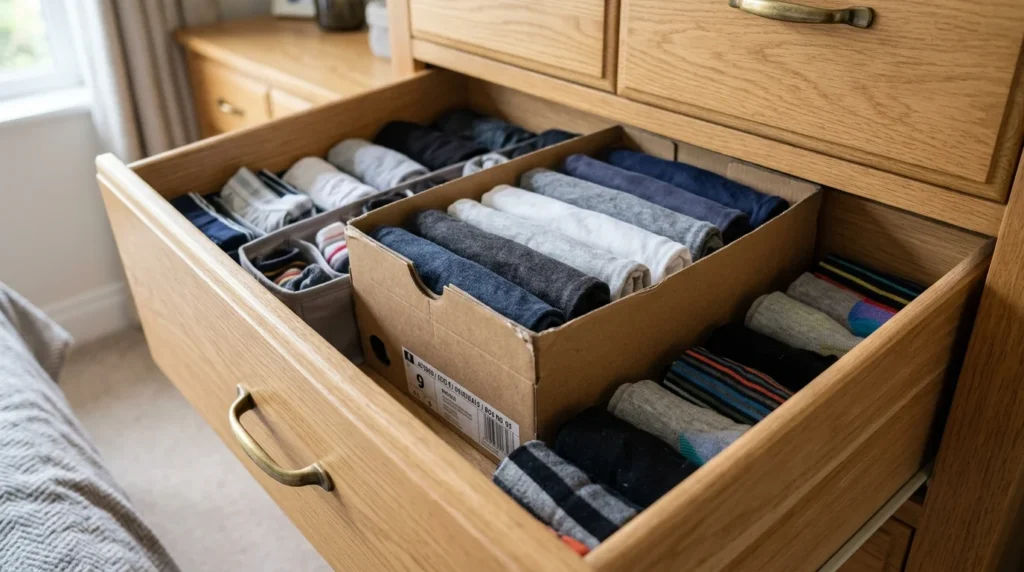
1. Repurpose Shoeboxes
Shoeboxes make free drawer dividers and shelf bins right out of the box. Cover them with plain paper or a grocery bag for a neater look. They’re sturdy, usually the right depth for a drawer, and most households already have a few lying around.
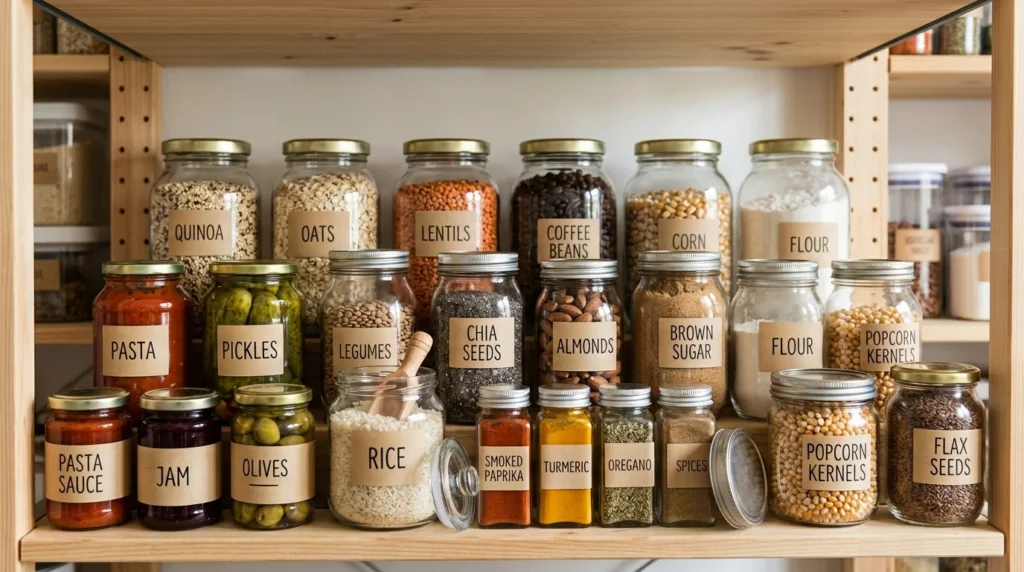
2. Use Empty Jars
Any glass jar left over from pasta sauce or pickles works for dry goods, craft supplies, bathroom items, or small hardware. Wash it, peel the label, and it’s a free, airtight, see-through container.
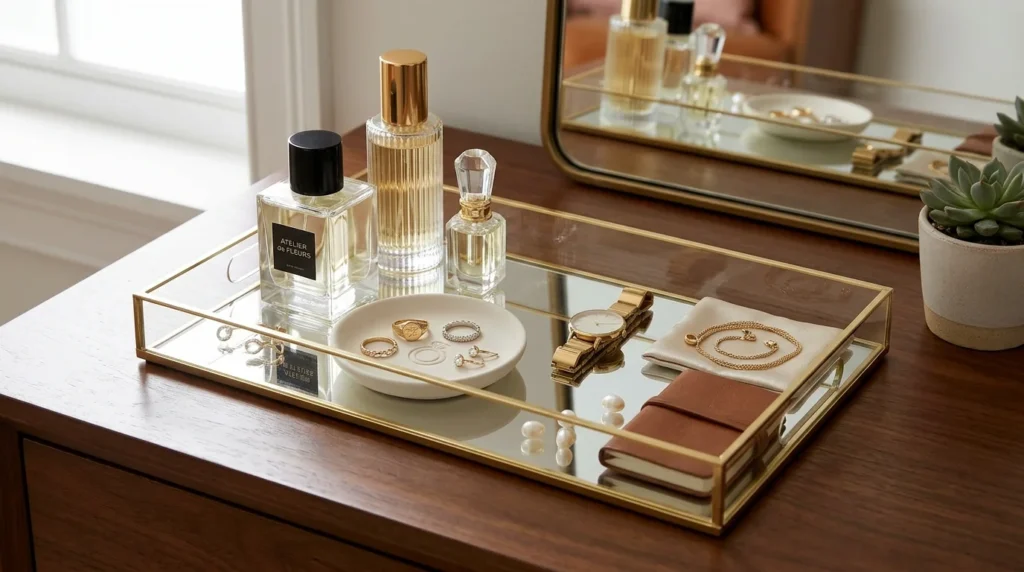
3. Use Trays as “Zones”
A tray on a flat surface creates an instant boundary that says this is where these things live. Use one on a counter, a dresser, or an entry table to corral small items that would otherwise spread out and create visual clutter.
4. Cut Cereal Boxes Into Drawer Dividers
Cardboard cereal or cracker boxes, cut down to height, become sturdy drawer dividers. Covering them with contact paper makes them look more intentional, but that’s optional – plain cardboard works fine if function matters more than form to you.
5. Muffin Tins and Ice Cube Trays
In a junk drawer or office drawer, a muffin tin or ice cube tray separates small items – batteries, paper clips, rubber bands, thumbtacks – far better than loose chaos.
6. Rearrange Existing Furniture
Sometimes the “storage” you need is just a different layout. Moving a bookshelf, dresser, or bench to a new spot can open up a storage zone or clear a pathway without adding a single new item.
7. Use Vertical Space
Vases, pitchers, and tall cups hold upright items like spatulas, scissors, pens, and markers. Baking sheets and cutting boards can stand on their edge in a cabinet instead of stacking flat.
8. Group Similar Items by Category, Not Room
Keep all your tape, scissors, and pens together rather than scattered across three rooms. One home per category makes everything easier to find – and to put back.
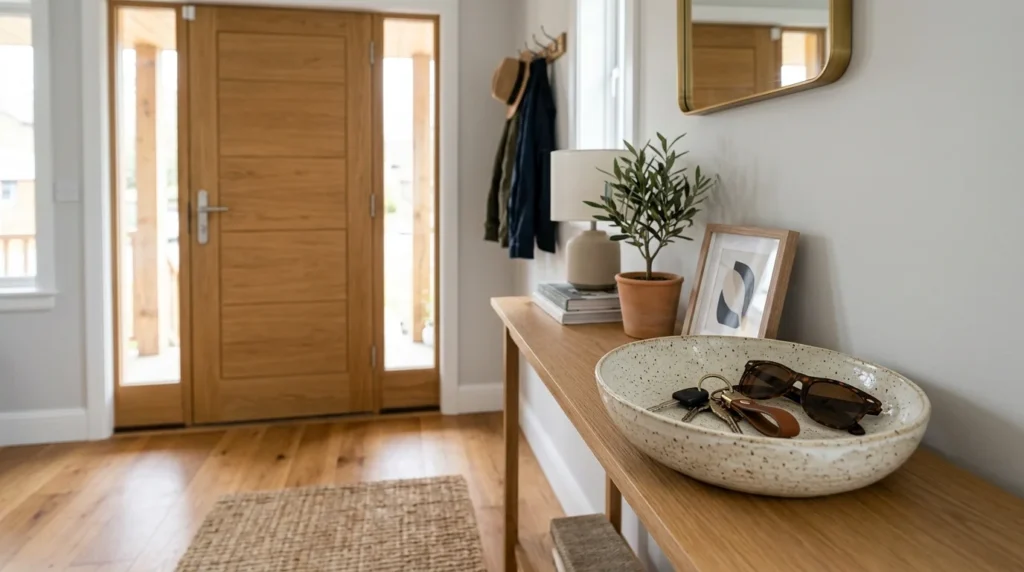
9. Create a Drop Zone by the Door
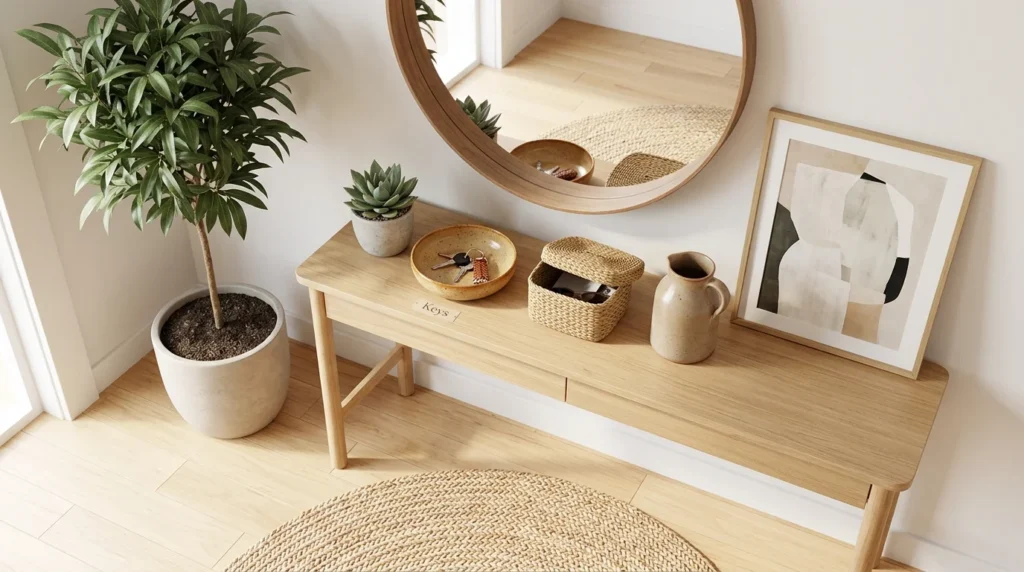
A basket or bowl you already own, placed by the door, becomes a home for keys, mail, and sunglasses – the items that otherwise pile up on the nearest flat surface.
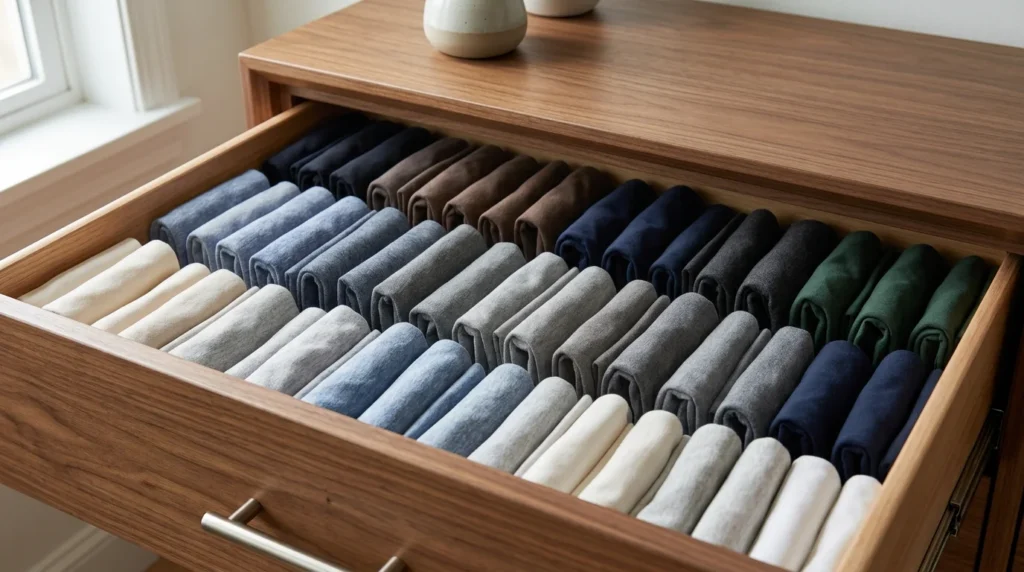
10. File-Fold Clothes
Folding clothes to stand upright in a drawer instead of stacking them flat fits noticeably more in the same space, and you can see every item at a glance.
11. Shower Curtain Rings on a Hanger
If you already own spare shower curtain rings, clip them onto a single hanger to hold scarves, belts, or tank tops – one hanger can hold over a dozen items.
12. Use a Tension Rod You Already Own
A spare tension rod installed under the sink or inside a cabinet creates a second level for spray bottles or mugs, or divides a deep shelf into two usable zones.
13. Binder Clips
Clipped to the edge of a desk or shelf, binder clips keep cables from sliding out of reach. In the pantry, they reseal snack bags just as well as a dedicated chip clip.
14. Stair Basket
A basket at the bottom of the stairs holds anything that needs to go up. Family members grab it on their way, which keeps the floor clear without a special trip.
15. Label With Masking Tape and a Marker
This is the step that makes every other idea work long-term. A clear label means everyone in the house knows where things go back – no guessing, no asking you.
Things You Already Own That Can Become Storage
Here’s the quick-reference version of the audit – what’s already in your home and what it can hold.
| Item you already own | What it can organize | Best room |
| Shoeboxes | Drawer dividers, shelf bins, cables | Bedroom, office |
| Mason jars / glass jars | Dry goods, cotton balls, pens, hardware | Kitchen, bathroom, office |
| Muffin tins | Screws, jewelry, craft items | Junk drawer, craft room |
| Trays | Zones for keys, perfume, remotes | Entryway, bedroom, living room |
| Baskets | Towels, toys, blankets | Living room, bathroom |
| Mugs and cups | Pens, brushes, utensils | Office, bathroom, kitchen |
| Cardboard boxes | Drawer dividers, closet bins | Any |
| Tension rods | Cabinet shelves, spray bottle holder | Kitchen, bathroom |
| Binder clips | Cable holders, bag clips | Office, pantry |
| Bags with handles | Hanging storage on hooks | Entryway, closet |
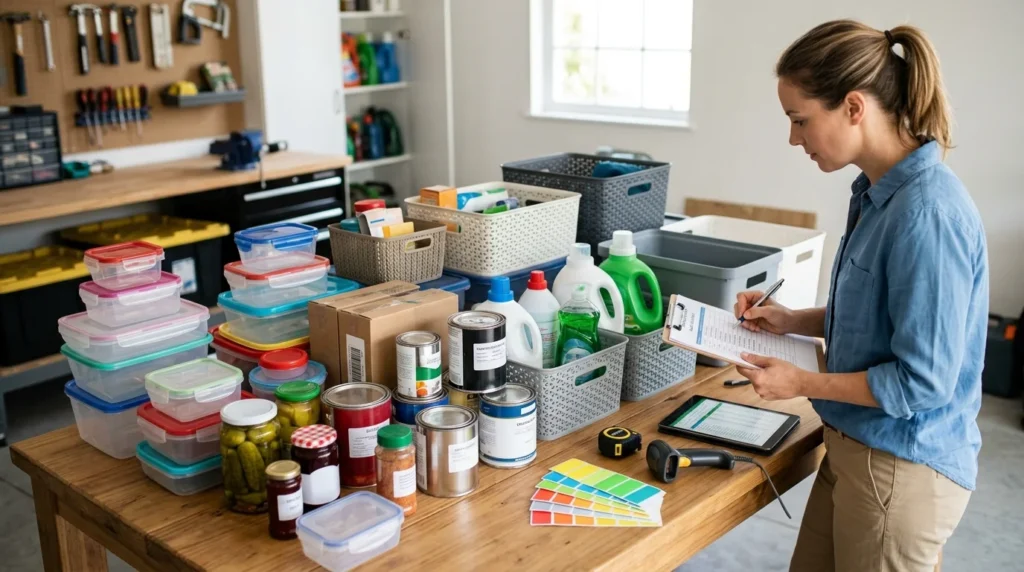
Gather everything in one spot first and photograph it. That photo is your inventory.
How to Organize Each Room Without Buying Anything
Kitchen
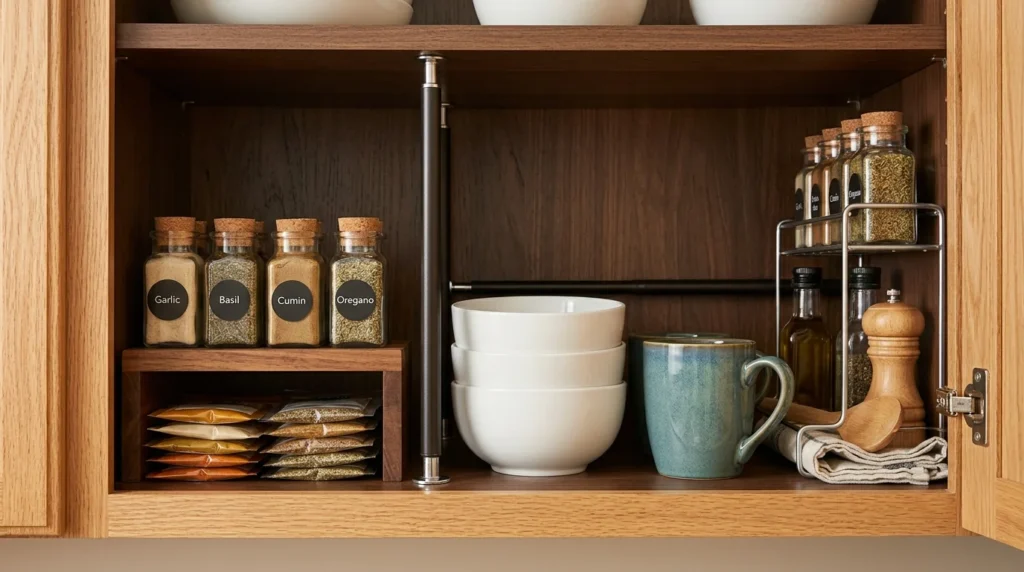
Use jars for dry goods on the counter or a shelf, and a tray near the stove to corral oil, salt, and pepper. A muffin tin in a drawer separates small items like twist ties and takeout menus. For vertical storage, stand baking sheets and cutting boards on edge in a cabinet using a tension rod or the gap you already have. A deep pot or Dutch oven you’re not using daily can even catch loose lids that don’t stack well anywhere else. For a bigger refresh, see these tiny kitchen makeover ideas.
Short on floor space? See how to organize a small bedroom.
Bedroom
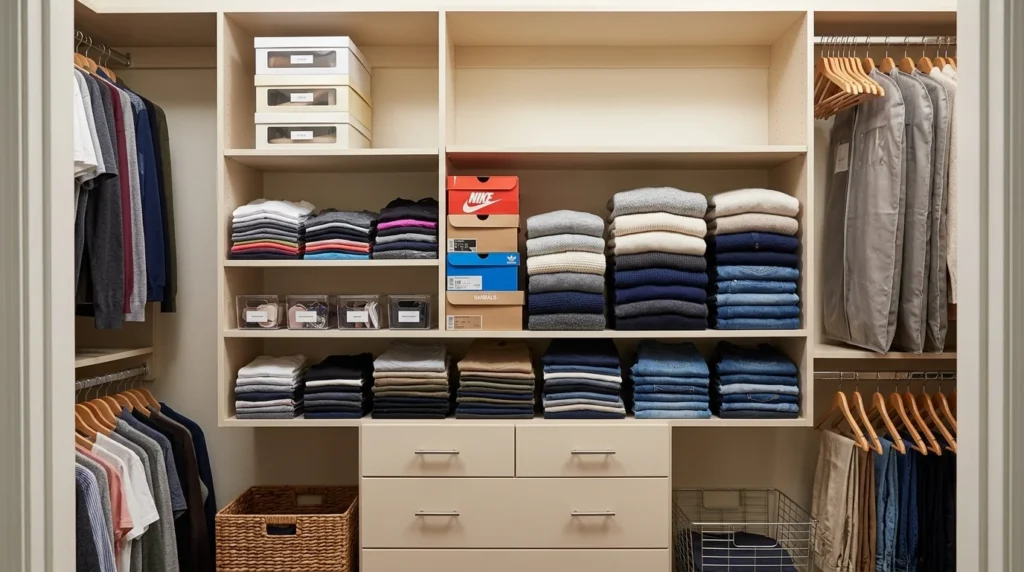
Shoebox dividers sort a messy drawer in minutes, and file-folding clothes – standing them upright instead of stacking – fits noticeably more in the same space. A bowl or dish from elsewhere in the house gives jewelry and watches one home on the dresser instead of letting it spread across the surface. If you already own an over-the-door hook, move it to the closet door for bags and accessories. For more ideas specific to a tight closet, closet organization ideas on a budget goes deeper on that one space.
Bathroom
A cup or glass you no longer use holds toothbrushes without buying a holder. A small tray under the sink keeps cleaning products from tipping over every time you reach for something. Towels stacked vertically in a basket you already own take up less visual space than folded stacks in a cabinet, and a small dish catches jewelry you take off to wash your hands.
Living Room
A basket or bin you already own corrals toys or blankets instead of letting them spread across the floor or couch. A tray on the coffee table gives remotes and small items a home instead of letting them slide between cushions. A decorative crate or box can double as a side table with hidden storage underneath.
Entryway
A basket from another room becomes a shoe bin by the door. A bowl or dish from the kitchen catches keys and sunglasses before they end up lost on a counter somewhere. If you have hooks mounted where they’re not being used, move them to the entryway for bags and jackets.
For more room-specific ideas beyond these five, small home storage ideas covers additional space-saving tricks for tighter homes.
Your 7-Day Zero-Spend Organizing Plan
Here’s how to put all of this into practice without letting it turn into an overwhelming weekend project.
Start with the audit checklist:
- Walk every room and collect every basket, jar, box, shoebox, and tray into one spot
- Sort what you collected by size – small, medium, large
- Sort by type – open containers for frequent access, lidded ones for occasional access
- Mark anything you haven’t used in the past year for the donate or trash pile
- Match each container to a category of items, not a room
- Label every container with masking tape and a marker before calling it done
Then work through one room a day:
- Day 1 – Audit. Walk the whole house and collect every container you own in one place.
- Day 2 – Kitchen. Tackle the counters, one problem drawer, and the pantry.
- Day 3 – Bedroom. Start with one dresser drawer and the closet shelf.
- Day 4 – Bathroom. Counter, under-sink cabinet, and the medicine cabinet.
- Day 5 – Living room. Coffee table, media console, and any toy or blanket overflow.
- Day 6 – Entryway and one catch-all space (junk drawer, mudroom, or office).
- Day 7 – Label everything, do a final walkthrough, and set your one-in, one-out rule going forward.
If your closet or bathroom is the area stressing you out most, bump it to Day 2—finishing one high-friction space completely gives you the momentum to tackle the rest of the week.
How to Keep Your Home Organized After Decluttering
Maintaining a no-buy system is straightforward because the rules are simple.
One-in, one-out: every new item displaces something else, so your existing storage keeps fitting what you own. A 10-minute monthly check – walk each room and ask whether your containers still match how the space is actually used – catches drift before it compounds into chaos.
Everything gets one home, and that home is labeled. A nightly 5-minute reset, putting stray items back where they belong before bed, keeps clutter from building back up overnight.
And when a container is full, treat that as a signal, not a problem. It means it’s time to declutter that category – not buy a bigger bin.
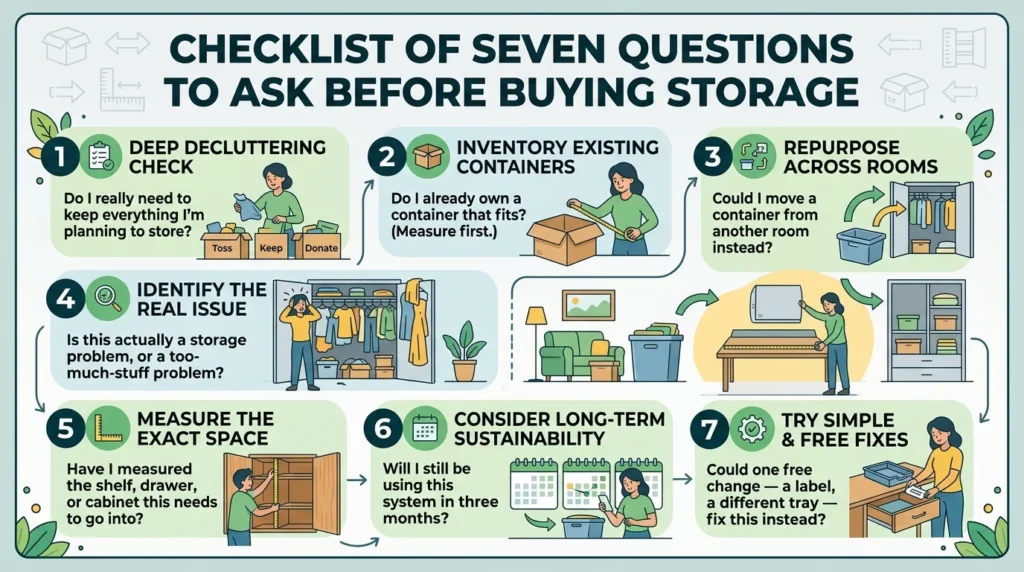
Before Buying Storage, Ask These 7 Questions
Before you add anything new to your home, run through these seven questions:
- Do I really need to keep everything I’m planning to store?
- Do I already own a container that fits? (Measure first.)
- Could I move a container from another room instead?
- Is this actually a storage problem, or a too-much-stuff problem?
- Have I measured the shelf, drawer, or cabinet this needs to go into?
- Will I still be using this system in three months?
- Could one free change – a label, a different tray – fix this instead?
If you answer yes to at least five of these, don’t buy anything yet.
For more examples of where buying first goes wrong, common home organization mistakes covers the specific traps worth avoiding.
Frequently Asked Questions
How can I organize my house without buying anything?
Declutter first, then reuse the jars, boxes, baskets, and trays you already own. Group similar items together and label each group so the system holds up over time.
What should I declutter first?
Start with whatever bothers you most every day – a counter, a drawer, an entry table – and set a 15-minute timer so it doesn’t turn into an all-day project.
How can I organize a small home?
Use vertical space, store similar items together regardless of room, and keep only what actually fits inside the containers you already own.
What household items can I use as organizers?
Shoeboxes, jars, mugs, trays, muffin tins, baskets, and cardboard boxes cover almost everything. I’ve also had great success repurposing clean plastic takeaway containers for junk drawers, sturdy tissue boxes as bag dispensers, and old wooden cutlery trays inside bathroom cabinets.
How do I stay organized without spending money?
One-in, one-out, a monthly 10-minute check, and a labeled home for every category of item.
Is it better to declutter or organize first?
Declutter first. Organizing a pile you haven’t sorted just makes the same amount of stuff look neater – it doesn’t actually reduce it.
How long does it take to organize a home for free?
In my experience, expect to spend about 45 to 90 minutes per room—or roughly one room per weekend if you’re fitting it around a busy work schedule.
Conclusion
You don’t need to spend a dollar to organize your home without buying anything – you need a clear process, an honest declutter, and a fresh look at what’s already in your cabinets, closets, and junk drawer.
Start tonight: collect every container, basket, tray, box, and jar you own and put them all in one place. Tomorrow, pick your most chaotic room and match what you collected to what that room actually needs.



Leave a Reply