


Introduction
You bought the bins. You watched the YouTube videos. You spent a Saturday pulling everything out of the closet and putting it all back in a more organized-looking way. And two weeks later, it looked exactly like it did before. Maybe worse.
If this sounds like you, I want to say something clearly: you are not the problem.
Most home organization advice out there is built on a fantasy version of your life. A life with unlimited time, no kids, no pets, no unexpected chaos, and a partner who is equally committed to maintaining a color-coded pantry system.
Real families fail at organizing not because they lack discipline but because they’re following systems designed for people who don’t live like them. In fact, much of today’s lifestyle research shows that sustainable habits are far more effective than perfection-driven systems when it comes to maintaining an organized home.
The good news is that the mistakes that sabotage most people’s efforts are consistent, predictable, and very fixable. Here are the 10 most common ones, pulled from real families, real Reddit threads, and real conversations I’ve had with people who were ready to give up for good.
Mistake 1: Buying Storage Containers Before You Declutter
This might be the single most common organizing mistake. You see those beautiful matching bins at The Container Store, you feel motivated, you buy 12 of them, and you bring them home ready to get organized.
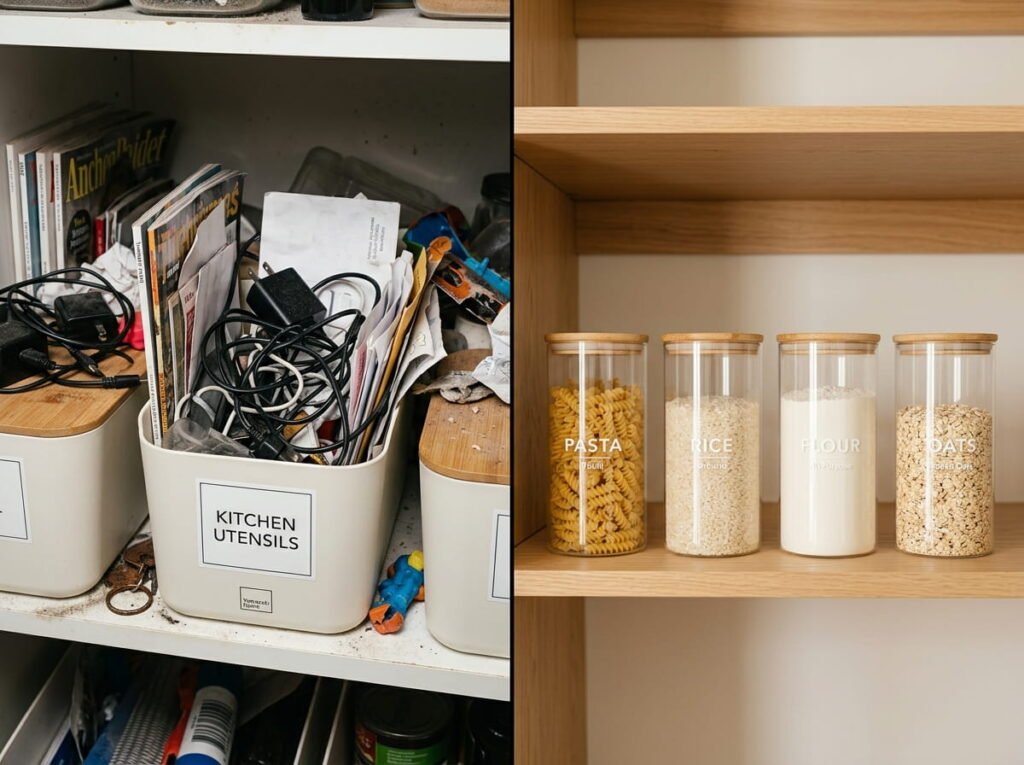
But then you’re just putting clutter into prettier containers. You still have too much stuff. The bins fill up with things you don’t actually need. And six months later, you’re staring at full bins wondering why nothing feels organized.
A real example: A mom from a home organization forum shared that she spent over $200 on bins before realizing she still had four sets of dishes she never used taking up the same cabinet space. The bins didn’t solve the problem. Decluttering first would have.
Do This Instead: Commit to a full decluttering pass through a space before you purchase a single container. Only shop for storage after you know exactly what you’re keeping, how much of it there is, and what size containers will actually work.
Mistake 2: Trying to Organize the Whole House at Once
This is what I call the “Saturday Spiral.” You start with good intentions. You pull everything out of the hall closet, which leads to the bedroom, which leads to the kids’ rooms, which leads to the basement. By 3 PM, your entire house looks worse than it did at 9 AM. You give up. You feel defeated. You don’t touch it again for six months.
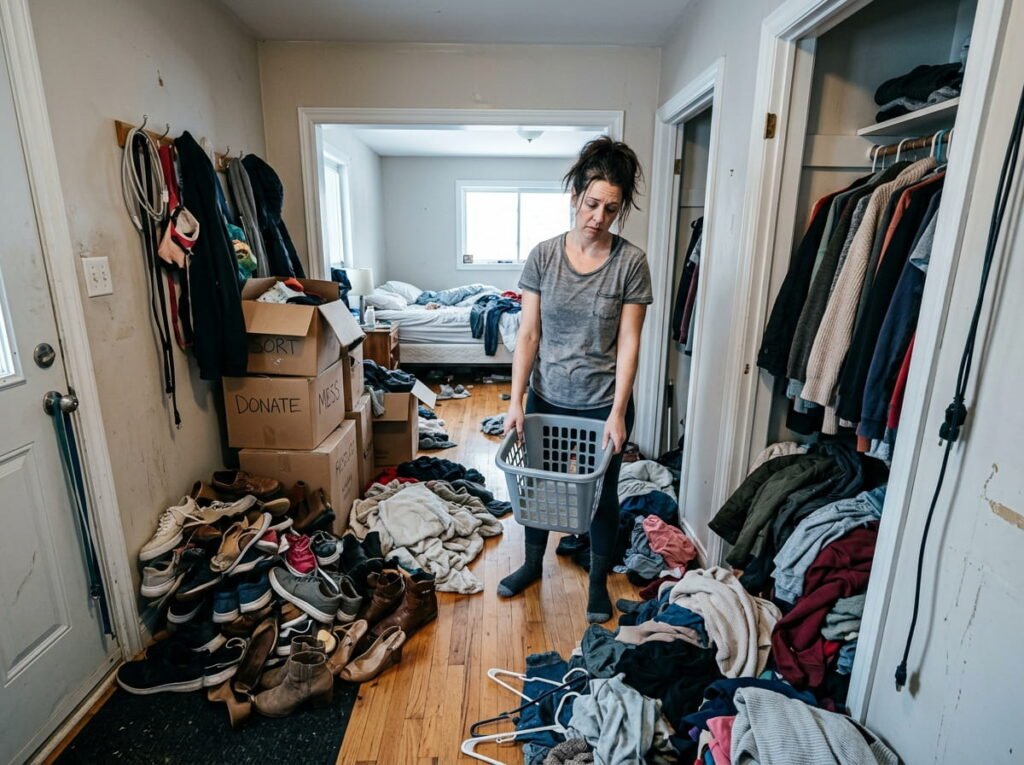
Organizing your entire home in a single session is genuinely not realistic for most families, no matter how motivated you feel at the start.
Do This Instead: Pick one small space and finish it completely before moving on. The entryway is an excellent starting point because it’s high-impact, relatively small, and you’ll see the improvement every single day. Momentum from small wins is what builds the energy to keep going.
Mistake 3: Ignoring Sentimental Items Until They Stop You Cold
Most people dive into organizing and do well until they hit a box of their kid’s old artwork, their grandmother’s china, or a shoebox of old photos. Then everything stops. The session stalls. They put the box back and feel stuck.
Sentimental items carry emotional weight, and trying to make rational, quick decisions about them in the middle of a decluttering session is exhausting. They deserve their own dedicated time, not a rushed decision during a Saturday clean-out.
Do This Instead: Set sentimental items aside in a specific labeled box or bin during your organizing session. Schedule a separate, dedicated time to go through them, ideally with a cup of coffee and no time pressure. Create a “memory box” per family member with a size limit, like a shoebox or a small bin. Once it’s full, something has to come out before something new goes in.
Mistake 4: No Permanent Homes for Your Items
If things don’t have a specific place to live, they pile up on any flat surface available. This is why counters, tables, and chairs become landing strips for everything. It’s not that your family is messy. It’s that the system has no address for those things.
When you ask your kid to “put it away” and there’s no defined “away,” they’ll drop it wherever is convenient. Can you blame them?
Do This Instead: Every single item that stays in your home needs one specific, consistent home. Not “somewhere in the kitchen.” Not “in the office somewhere.” An exact spot. Once you assign homes, “put it away” becomes an instruction that actually makes sense.
Mistake 5: Not Involving the Whole Family
You spend a Saturday setting up a beautiful new organizing system for the kids’ rooms. Labeled bins, a spot for everything. It lasts until Tuesday. Your kids have no idea what the labels mean, your partner puts things back in the wrong place, and within a week the system has collapsed.
A system that only one person understands is not a household system. It’s a personal system living in a shared space, and it will fail every time.
Do This Instead: Set up any system with the people who will use it. For kids, that means letting them help label bins, choose where things go, and pick which toys to keep. For your partner, it means communicating the system clearly and getting buy-in on the logic. A slightly less “perfect” system that everyone understands will always beat a perfectly designed system that only you can maintain.
Mistake 6: Creating Systems That Are Too Complicated to Maintain
If your organizing system requires 10 steps to follow, no one in your family will follow it. Not your kids. Probably not your partner. Maybe not even you after a particularly exhausting week.
Real family homes need systems with as few steps as possible. The best systems are the ones where putting something away is almost as easy as dropping it on the floor.
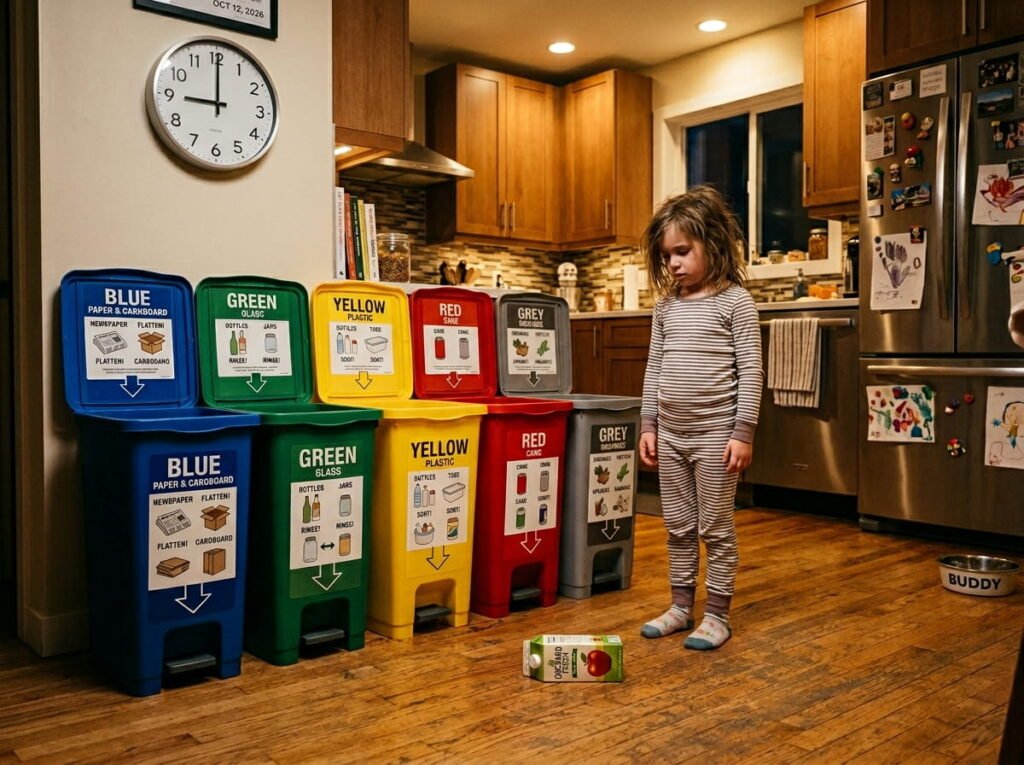
Do This Instead: Test your system with this question: “Can my most tired self, at 9 PM after a hard workday, maintain this?” If the answer is no, simplify it. Lids on storage bins are great for aesthetics but bad for daily use in family homes. Open bins and baskets are much easier to maintain consistently.
Mistake 7: Focusing on Aesthetics Over Function
Instagram and Pinterest have a lot to answer for. The perfectly color-coded pantry, the matching label set, the all-white closet with neatly folded towels. It looks incredible. It also doesn’t reflect how real families with kids and pets actually live.
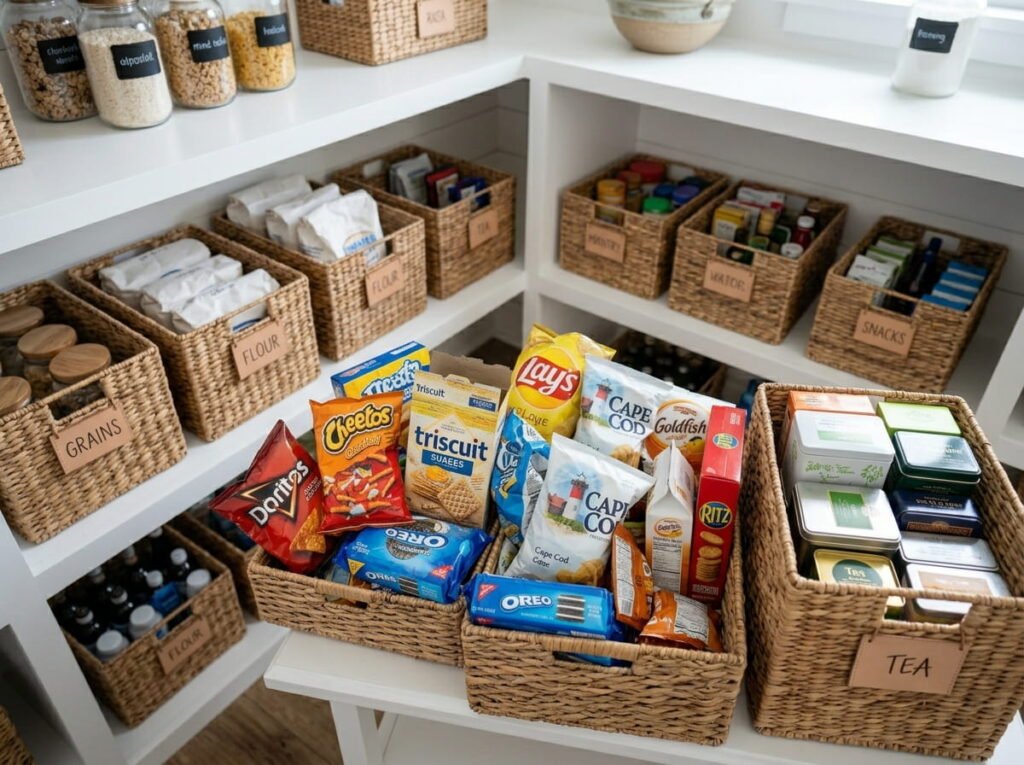
When you spend your organizing energy making things look good instead of making them work well, you end up with a beautiful system that falls apart the moment someone actually uses it.
Do This Instead: Ask “Does this work?” before “Does this look good?” Function is the priority. Aesthetics are a bonus. A labeled bin with a messy pile inside is still a better system than a beautiful basket where no one knows what belongs there.
Mistake 8: Keeping Things Out of Guilt
The bread maker your mom gave you. The baby clothes you’re never going to use again but can’t bear to donate. The exercise equipment that’s been a clothes hanger for two years. Guilt is one of the most powerful forces keeping clutter in your home.
Holding onto something you don’t use doesn’t honor the person who gave it to you. It just fills your space with low-grade stress every time you see it.
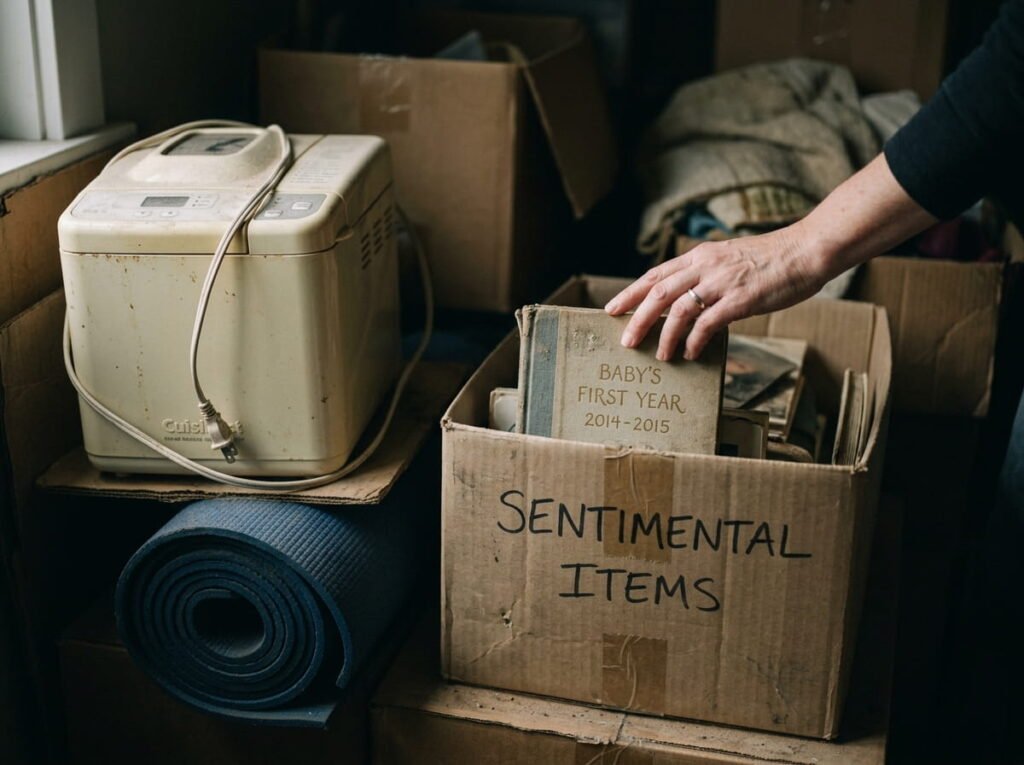
Do This Instead: Give yourself permission to take a photo of sentimental items before donating them. The memory doesn’t live in the object. Remind yourself that donating something in good condition means another family will actually use and enjoy it. That’s not disrespectful. That’s good.
Mistake 9: Skipping the “Relocate” Step
During a declutter session, people often pick up an item that belongs in another room and then walk it to that room, get distracted, and never come back. The session gets derailed. Things get half-finished. Nothing gets fully organized.
Do This Instead: During any organizing session, keep a “relocate” bin in the room you’re working in. Anything that belongs elsewhere goes in that bin without you leaving the room. Only at the end of the session do you walk through the house and return everything in the bin to its proper room.
Mistake 10: Quitting After One Bad Week
Life happens. You have a sick kid, a stressful work week, a house full of guests. The organizing system slides for a week and suddenly everything looks like it did before. And then the thought hits: “See? This never works for me.”
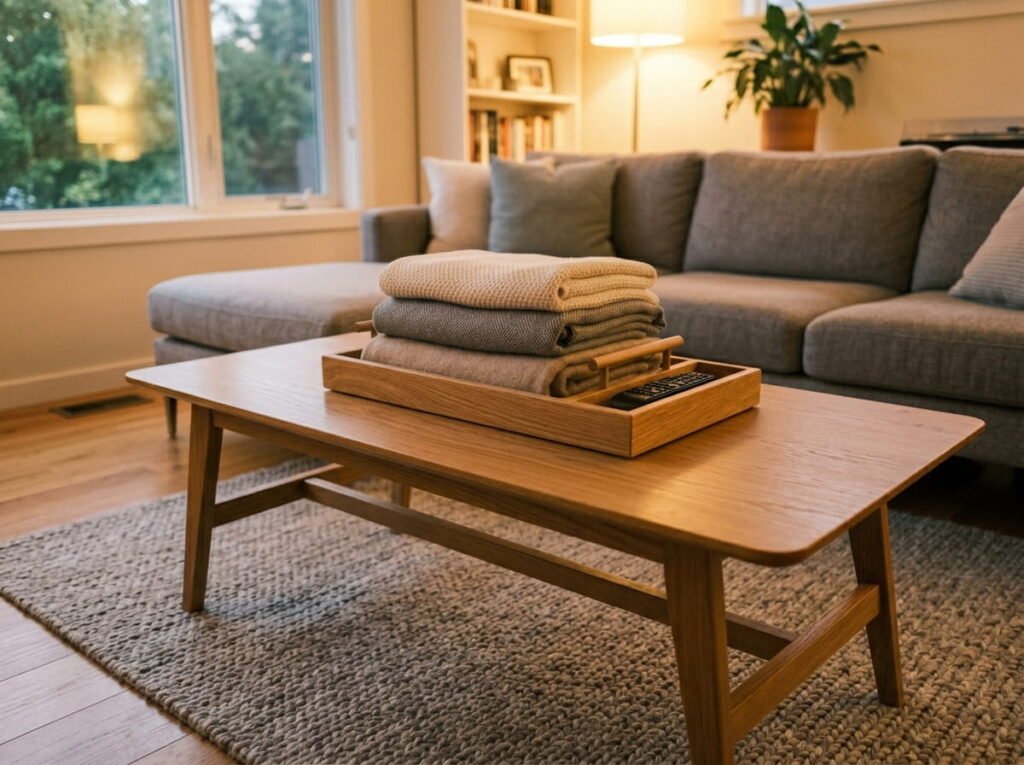
One bad week does not erase a system. It just means the system needs a reset, not an abandonment.
Do This Instead: Build a weekly reset routine into your schedule. A simple weekly home reset takes about 30 minutes and brings everything back to baseline before it snowballs out of control. Think of it like hitting a refresh button, not starting over from scratch.
Real Family Stories: It’s Not Just You
“I failed four times before it finally clicked” (Reddit, r/organization): A working dad of two in Texas said he had organized the same garage four times in three years. The breakthrough came when he finally committed to getting rid of half the items first before touching a single storage solution. “I kept trying to organize things I should have donated two years ago.”
“We set up a system my kids couldn’t follow”: A mom from Ohio shared that her first attempt at a chore and organization system for her kids was color-coded with five different bin categories. Her kids were 6 and 9. Within a week, everything was in the wrong bin or on the floor. When she simplified it to just two categories, “toys” and “books,” and added a simple hook for backpacks, both kids could maintain it without reminders.
“The guilt was the real clutter”: A woman from a home blog community admitted that the real reason her spare room was unorganized for three years was one box of her late father’s things she couldn’t bring herself to open. Once she gave herself permission to go through it slowly, on a Sunday afternoon with no pressure, she was able to keep a few meaningful items and donate the rest. The room was organized within two weeks.
Quick Home Organization Audit Checklist
Run through this checklist to find where your biggest opportunities are right now:
- Do your counters and flat surfaces collect random items daily?
- Do you regularly search for things you own but can’t locate?
- Does your entryway get cluttered within 24 hours of cleaning it?
- Do you have storage containers full of items you haven’t touched in over a year?
- Does your family know where things belong and actually return them?
- Are there rooms or closets you avoid opening because of what’s inside?
- Do you have items you’re keeping out of guilt rather than use?
- Does your organizing system require too many steps to maintain daily?
If you answered yes to three or more of those questions, start with the mistakes at the top of this list. They are almost always the root cause.
Conclusion: This Is Fixable. Seriously.
If you’ve tried and failed at organizing before, that’s not a character flaw. It’s feedback. It means the system you were using wasn’t right for your life. Now you know the specific mistakes to avoid and the exact fixes to put in place instead.
Start with just one mistake from this list. Fix it in one area of your home this week. Build from there.
And when you’re ready to build a full system from the ground up, the Organize Your Home Step by Step will walk you through every single room with a practical, family-tested approach that actually holds up.
You’re not failing. You’re just getting started with better information.
Also check out: How to declutter your home fast | Small home storage ideas | The Weekly Home Reset Routine That Keeps Everything Together





Leave a Reply