

Introduction
There’s a particular kind of frustration that comes with living in a home that feels too small. You open a cabinet and something falls out. You trip over shoes in the hallway every single morning. The kids’ bedroom has about six square feet of actual floor space visible at any given moment. And every time you try to put something away, you realize there’s nowhere left to put it.
Here’s the thing though. In most cases, the problem isn’t actually that you don’t have enough space. It’s that the space you have isn’t being used well. Residential housing trends reported by the U.S. Census Bureau show that while living costs rise, square footage often shrinks, forcing many of us to rethink our current footprints.
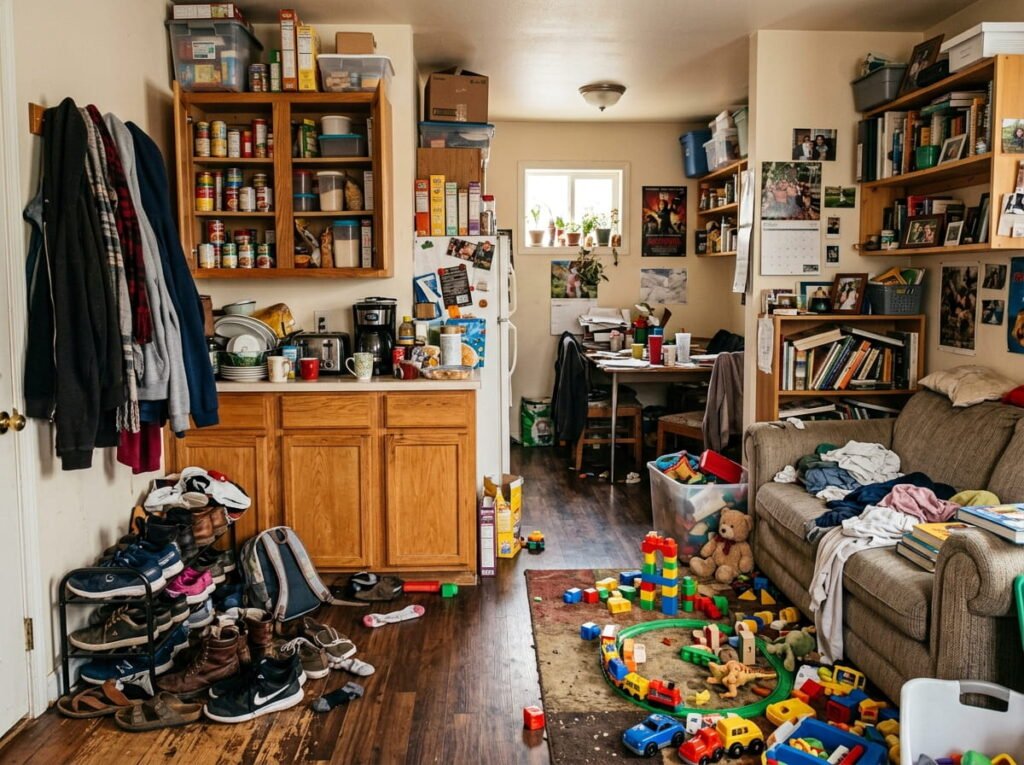
I know that sounds like one of those irritating things people say when they’ve never actually lived with three kids, a dog, two full-time jobs, and a hallway closet that’s been “temporarily” storing a broken treadmill for two years. So let me be more specific. The average American suburban home has dozens of square feet of completely unused storage potential sitting right where you already live. Behind doors. Above cabinets. Under beds. Along walls. In the twelve inches of space between your washer and your wall. None of it requires renovation. Most of it requires very little money. This guide is going to show you exactly how to find and use that space. We’ll go room by room, we’ll start with no-cost solutions and work up to budget-friendly ones, and we’ll keep everything realistic for a household that is actually lived in by actual humans who are tired at the end of the day. If you haven’t already read the full Organize Your Home Step by Step guide, start there. Decluttering before adding storage is always the right order. But if you’ve already done that work and now you’re ready to maximize what you have, let’s get into it.
Core Principles of Small Space Storage
Before diving into specific solutions, it helps to understand the three principles that make small space storage actually work. Every idea in this guide is built on one of these.
Go Up, Not Out
Most people think of storage as happening at eye level and below. Shelves, drawers, floor bins. But in a small home, the real untapped real estate is above your head. Walls go all the way to the ceiling. Most storage stops at about five feet. That gap is your opportunity.
Every Item Earns Its Space
In a smaller home, you simply cannot afford to keep things you don’t use. Every item that stays needs to justify the space it takes up. This isn’t minimalism for the sake of aesthetics. It’s practical math. When space is limited, clutter costs more.
Visibility Reduces Frustration
In small spaces, the biggest daily frustration is not being able to find things. Systems that use clear bins, labels, and open shelving make it possible to see what you have without pulling everything out. When things are visible and easy to access, families are far more likely to actually put things back.
Vertical Storage Solutions: Your Biggest Opportunity
If there’s one section of this article to read carefully, it’s this one. Vertical storage is the single most powerful tool in a small home, and it’s consistently the most underused.
Floor-to-Ceiling Shelving
Open shelving that runs all the way to the ceiling turns dead wall space into serious storage. In a living room, this means books, baskets, and display items. In a laundry room, this means detergent, spare linens, and cleaning supplies. In a garage or basement, this is where everything lives.
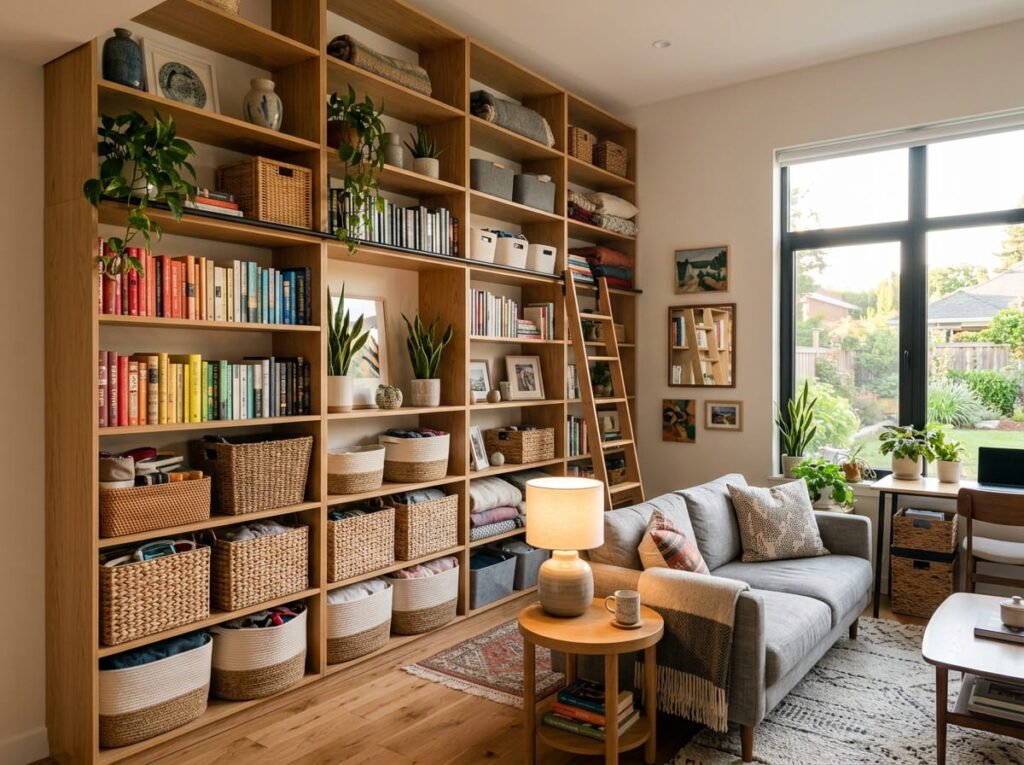
You don’t need custom built-ins. IKEA’s KALLAX and BILLY systems, combined with a few brackets, can create impressive floor-to-ceiling storage for a few hundred dollars. If you’re renting, freestanding shelving units that rest against the wall create the same effect without a single screw in the wall.
Stack It
Stackable clear bins are a revelation in small spaces. A stack of three or four labeled, clear bins takes up the same floor footprint as a single bin but gives you three or four times the storage. Use them in closets, under staircases, in laundry rooms, and in garages.
Command Hooks and Pegboards
Walls are not just for art. A pegboard in a laundry room, home office, or garage can hold tools, cleaning supplies, craft supplies, hats, bags, and dozens of other items that would otherwise pile up on surfaces. Command hooks on the inside of cabinet doors hold pot lids, cleaning supplies, cutting boards, and more.
A row of hooks mounted just inside a closet door can double the usable storage of that closet overnight. This is one of the best high-impact, low-cost moves in a small home.
Over-the-Door Organizers
The back of nearly every door in your home is unused space. Over-the-door organizers come in pocket styles for shoes, toiletries, kids’ items, and pantry goods. Narrow over-the-door shelving units can hold spice jars, cleaning spray bottles, or small pantry items.
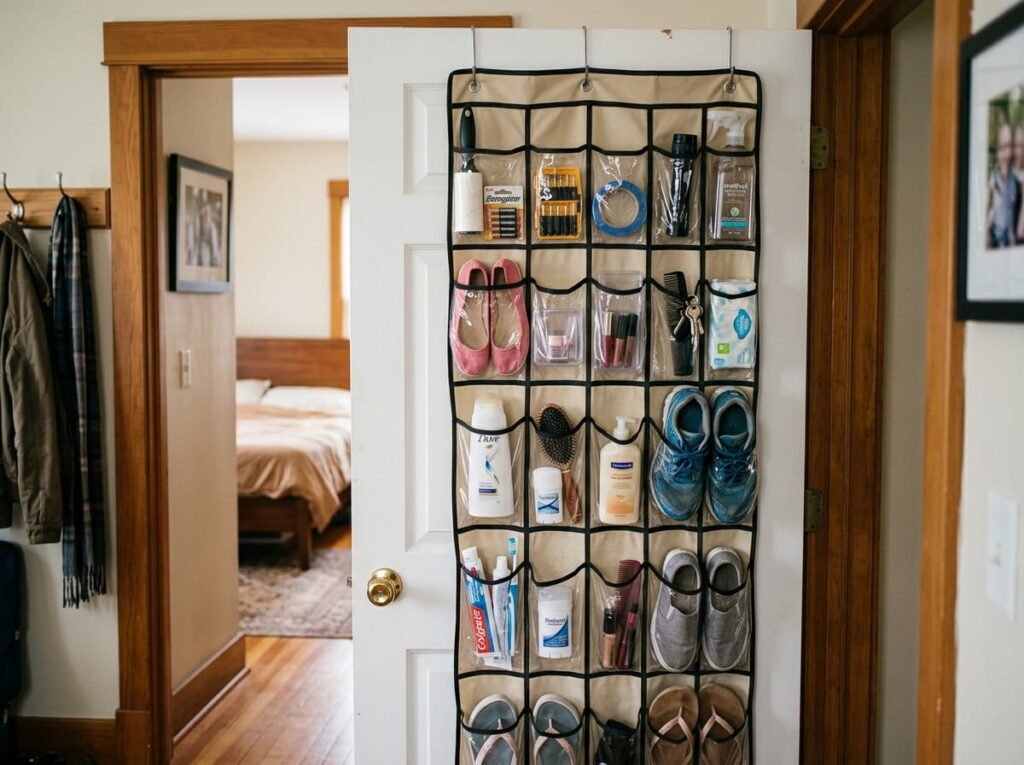
The back of your pantry door can hold a week’s worth of snacks. The back of the bathroom door can hold all your hair tools, hair ties, and products. The back of a bedroom door can hold shoes, accessories, or a reading nook’s worth of books.
Underutilized Spaces You’re Probably Ignoring
Under the Bed
The space under your bed is one of the most powerful storage zones in the home and one of the most often wasted. Flat rolling bins designed for under-bed storage can hold seasonal clothing, extra bedding, shoes, sports gear, or holiday items.
If your bed sits low to the ground, bed risers are a simple and inexpensive solution. Raise the bed by four to six inches and you suddenly have a completely new storage zone. Make sure whatever goes under the bed is in labeled, closed containers so it stays organized and dust-free.
Above Kitchen Cabinets
That gap between the top of your kitchen cabinets and the ceiling is usually collecting dust and nothing else. With a few attractive baskets or bins, this space can hold items you don’t use daily: serving platters, seasonal baking items, extra paper goods, or appliances you use only occasionally.
Use matching baskets to keep the look cohesive. Label the front of each basket so you don’t have to pull them down to know what’s inside.
The Space Above Closet Rods
Most closets have significant empty space above the hanging rod. A simple shelf, or even a set of stacked bins, can sit on the existing shelf above the rod and hold folded items, seasonal clothes, or extra linens. Double hanging rods in closets with short garments (like kids’ clothes or folded dress shirts) effectively double usable hanging space.
Under the Stairs
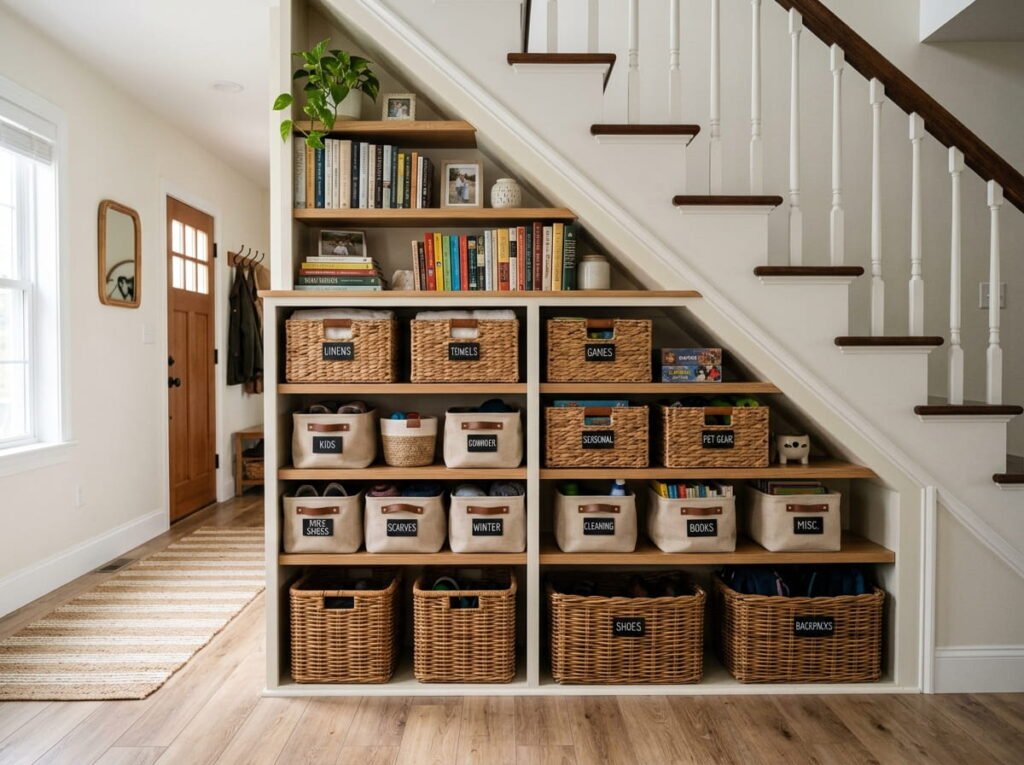
If your home has a staircase, the hollow space underneath it is potentially huge. Built-in drawers are the ideal solution, but open shelving, pull-out baskets, or even a small closet retrofit can turn this dead space into your most functional storage zone in the house.
Toe Kick Space in the Kitchen
The space beneath your kitchen base cabinets, behind the toe kick panel, is typically four to five inches deep and runs the full length of your cabinetry. Removable toe kick drawers can be added to this space to store flat items like baking sheets, cutting boards, and placemats. It’s a renovation project, but a small and inexpensive one compared to a full kitchen remodel.
Multi-Functional Furniture and Smart Pieces
In a small home, every piece of furniture should ideally do at least two jobs. If it’s taking up floor space and only doing one thing, it’s worth reconsidering.
Storage Ottomans
An ottoman with internal storage replaces a coffee table or footrest while also holding blankets, remote controls, kids’ toys, board games, or seasonal items. Many are large enough to double as extra seating when guests come over.
Beds With Built-In Drawers
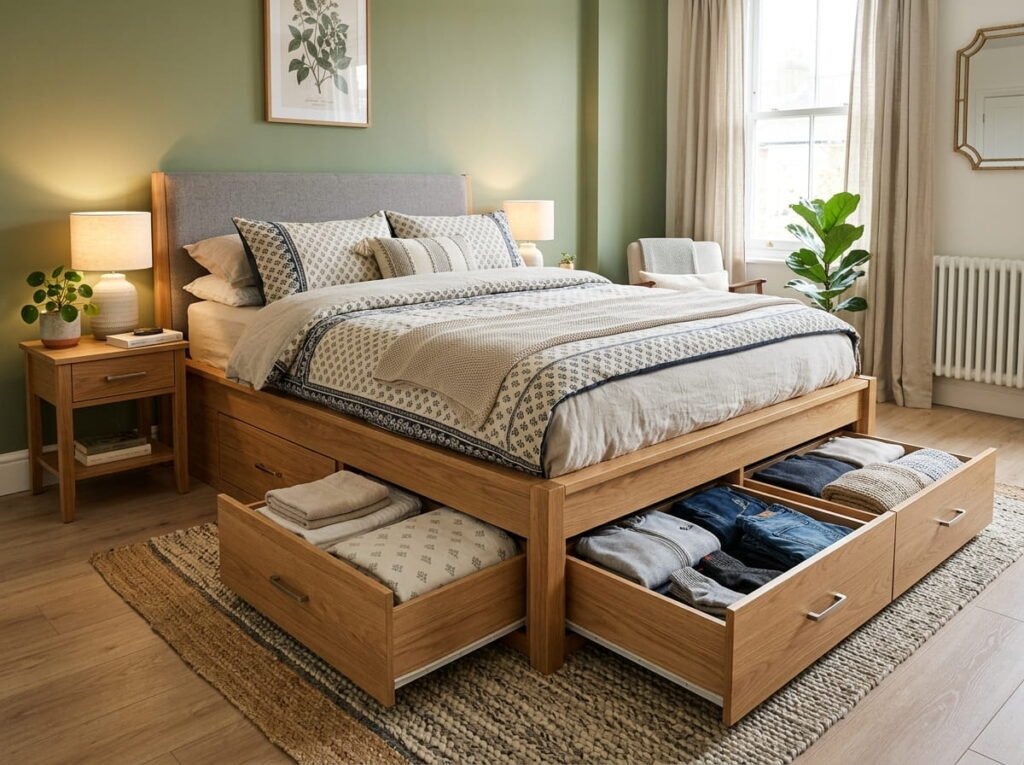
A bed frame with built-in drawers underneath is one of the best furniture investments for small bedrooms. The drawers are typically large enough to hold full seasonal wardrobes, extra bedding, or bulky items like sweaters and jeans. No need for a separate dresser, which frees up significant floor space.
Benches With Storage
An entryway bench with storage inside serves three functions: seating to put on shoes, hidden storage for seasonal accessories and pet items, and a visual anchor for the entryway. One piece, three jobs.
Kitchen Islands on Wheels
If your kitchen is small but has a little open floor space, a small rolling kitchen island with shelves or drawers underneath adds counter space and storage that can be moved out of the way when you need the room. Many are available for under $150.
Dining Tables With Leaves
A dining table with leaves that fold down takes the footprint of a narrow console table when not in use and expands to a full family dining table when you need it. For families in smaller homes, this can reclaim significant square footage in a dining room or eat-in kitchen.
Room-by-Room Storage Ideas
Kitchen
The kitchen is where small-space storage challenges tend to be the most acute. Counter space disappears fast, cabinets overflow, and somehow there’s never enough room for everything.
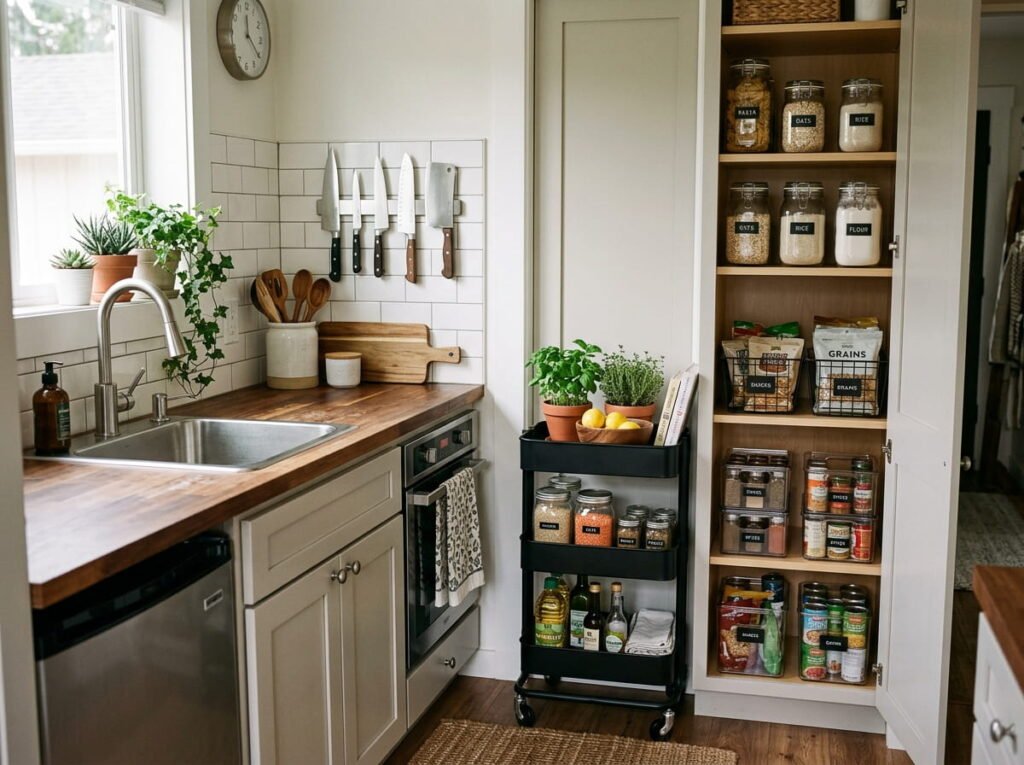
Quick wins:
- Mount a magnetic knife strip on the wall to free up a full drawer
- Add a tension rod under the sink to hang spray bottles vertically
- Use stackable clear containers in the pantry with labels on the front
- Install a pull-out organizer inside lower cabinets for pots and lids
- Add a narrow rolling cart between the fridge and the wall for spices, oils, and small items
- Use the inside of cabinet doors for measuring cups, spice packets, and small utensil hooks
- Hang a pot rack from the ceiling if you have the ceiling height and the clearance
Before: Pots stacked randomly in lower cabinets, spices loose in a drawer, cutting boards leaning wherever they fit.
After: Pots on a hanging rack or in a vertical organizer, spices in a tiered drawer organizer, cutting boards in a wall-mounted slot organizer by the stove.
Bedroom
The bedroom deserves its own full article, and we’ve written one. Check out How to organize a small bedroom for a complete step-by-step breakdown. The short version:
- Use under-bed storage for seasonal clothes and extra bedding
- Add a second hanging rod in the closet for shorter garments
- Mount floating shelves above the nightstand instead of buying a larger nightstand
- Use the back of the closet door for shoes and accessories
Bathroom
Bathrooms in American suburban homes are rarely large, and with a family of four or five using them, storage challenges pile up fast.
Quick wins:
- Add a shelf above the toilet for towels, toilet paper, and toiletries
- Use a tension rod inside the cabinet under the sink to hang spray bottles
- Mount a magnetic strip inside a cabinet door for bobby pins, nail clippers, and tweezers
- Add corner shelves in the shower for shampoo and soap instead of using a hanging caddy that drips
- Use a tiered cart beside the vanity for hair tools, products, and daily use items
- Hang an over-the-door organizer on the bathroom door for all toiletry overflow
Before: Products covering every inch of counter space, a cabinet under the sink so full the door doesn’t close properly, towels draped over the shower rod.
After: Clear counters with only daily-use items, cabinet organized with risers and bins, towels on a mounted hook rack.
Entryway and Hallway
The entryway sets the tone for the whole house, and a cluttered entryway makes even the most organized home feel chaotic the moment you walk in.
Quick wins:
- Mount hooks at two levels: adult height and kid height, so everyone can hang their own things
- Use a bench with hidden storage for shoes, dog supplies, and seasonal gear
- Add a narrow floating shelf above the hooks for a mail sorter, keys bowl, and small items
- Use a wall-mounted shoe rack instead of a floor tray to keep shoes off the ground
- Mount a small chalkboard or whiteboard for family notes, schedules, and reminders
Living Room
The living room is often the most visible room in the house, which means clutter here feels more stressful than clutter elsewhere. Storage solutions here need to work hard without looking like storage.
Quick wins:
- Use a storage ottoman as a coffee table alternative
- Add floating shelves along an empty wall for books, plants, and baskets
- Use decorative baskets for throw blankets, remote controls, and kids’ items
- Mount the TV on the wall and use the entertainment unit below for organized storage
- Add a narrow console table behind the sofa for items that tend to pile on the couch or cushions
No-Buy and Low-Budget Hacks
Not every storage solution requires spending money. Here are some of the best small space storage hacks that cost nothing or next to nothing.
Free hacks using what you already own:
- Use empty cereal boxes, covered in wrapping paper or kraft paper, as drawer dividers in a home office or junk drawer
- Repurpose an old ladder as a blanket and towel rack in the living room or bathroom
- Stack hardcover books as a stylish riser for plants or decor on shelves, which also creates visual height
- Use a tension rod inside a cabinet to create a second level for mugs or small dishes
- Fold towels and t-shirts vertically (file folding) to dramatically increase what fits in a drawer
Under $20 hacks:
- Command hooks and strips for hanging items on walls and doors without damage
- Tension rods for cabinet storage and shower niches
- Over-the-door hooks for bathrooms, bedrooms, and entryways
- Shower curtain rings clipped to a hanger to hang scarves, belts, or tank tops
Rental-Friendly Storage Ideas (No Wall Damage)
If you’re renting, or if you just don’t want to put holes in your walls, here are storage solutions that require zero permanent installation.
- Freestanding shelving units that lean against the wall or stand independently
- Command strips and hooks rated for the weight you need (they hold more than most people expect)
- Furniture that does double duty so you’re not relying on wall storage as much
- Over-the-door organizers for virtually any door in the house
- Tension rod systems inside cabinets and closets
- Rolling carts that can be repositioned as needs change
- Bed risers for under-bed storage without any modification to the bed itself
Maintenance Tips for Small Spaces
Small spaces require more consistent maintenance than larger ones because there’s less buffer. When things pile up in a large home, you can close a door. In a small home, everything is visible.
One-In-One-Out is non-negotiable. For every new item that comes into a small home, one item has to leave. This is especially true for kids’ toys, clothing, and kitchen gadgets.
Do a 5-minute surface reset every evening. In a small home, one pile on a counter or table has a disproportionate effect on how cluttered the whole space feels. A quick nightly sweep prevents that buildup.
Seasonal rotation keeps things manageable. Summer gear goes into storage in winter and vice versa. This regular rotation keeps only what you’re currently using accessible, which is especially important in small closets and limited storage spaces.
Reassess storage systems every six months. Kids grow, routines change, and what worked last year might not work now. A quick audit of whether your systems still match how your family actually lives prevents gradual drift back into chaos.
Conclusion
You don’t need to move to a bigger house, knock out a wall, or spend thousands on custom built-ins. The space you need is already in your home, waiting to be discovered and used better.
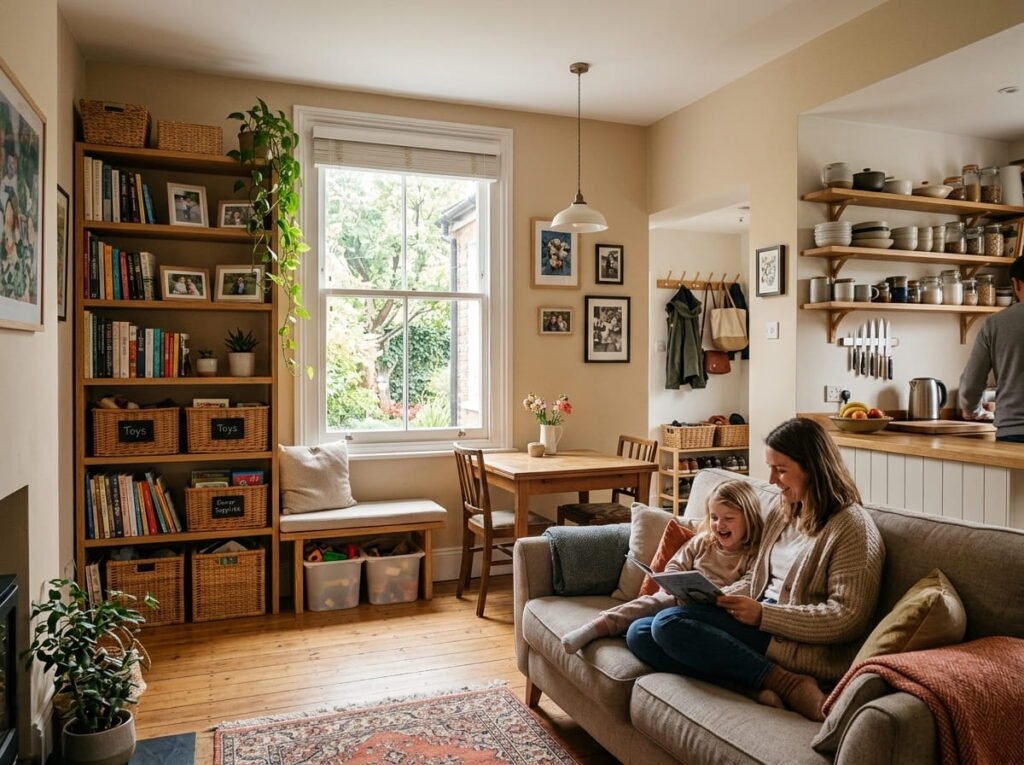
Start with vertical storage. Add one or two multi-functional furniture pieces when it makes sense. Work through each room using the ideas in this guide. And remember that even small changes compound quickly. One organized kitchen cabinet, one functional entryway, one clutter-free bedroom surface at a time adds up to a home that feels genuinely different to live in.
If you haven’t already, go read the Organize Your Home Step by Step for the full system. And if the bedroom is your biggest pain point right now, the How to organize a small bedroom article gives you a complete room-specific plan.
More space doesn’t require more money. It requires a better plan.
Also helpful:10 Home Organization Mistakes | How to declutter your home fast | The Weekly Home Reset Routine That Keeps Everything Together



Leave a Reply