

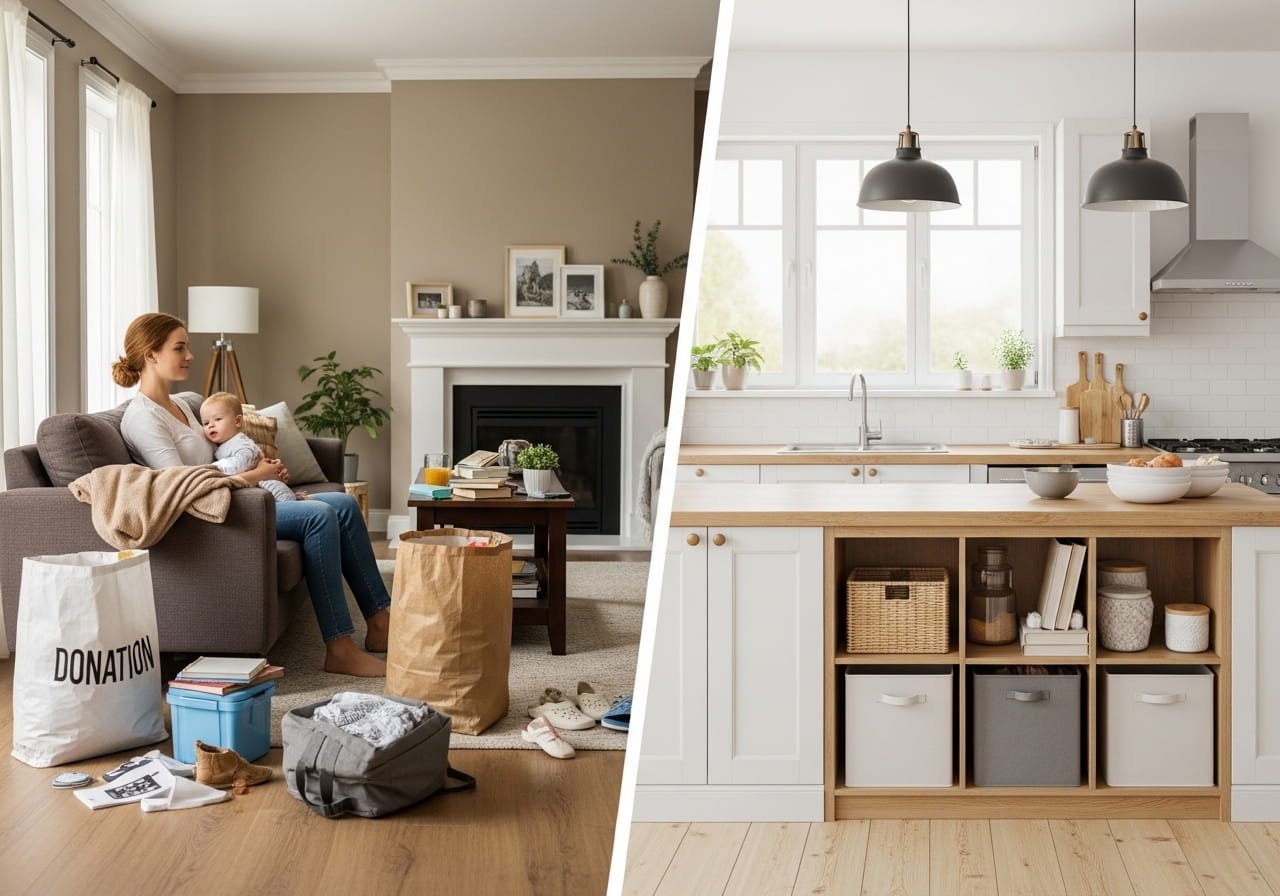
Introduction
You already know your home needs decluttering. You’ve known it for a while. But every time you think about starting, the same thought shows up: “I don’t have time for this right now.”
And honestly? You’re not wrong. You have a full-time job, kids with schedules that somehow require more logistics than a small military operation, a pet that needs walking, and roughly 45 minutes between dinner and the moment you physically cannot keep your eyes open. Spending a whole weekend pulling everything out of closets and sorting it into piles is not a realistic option for most of the families I work with.
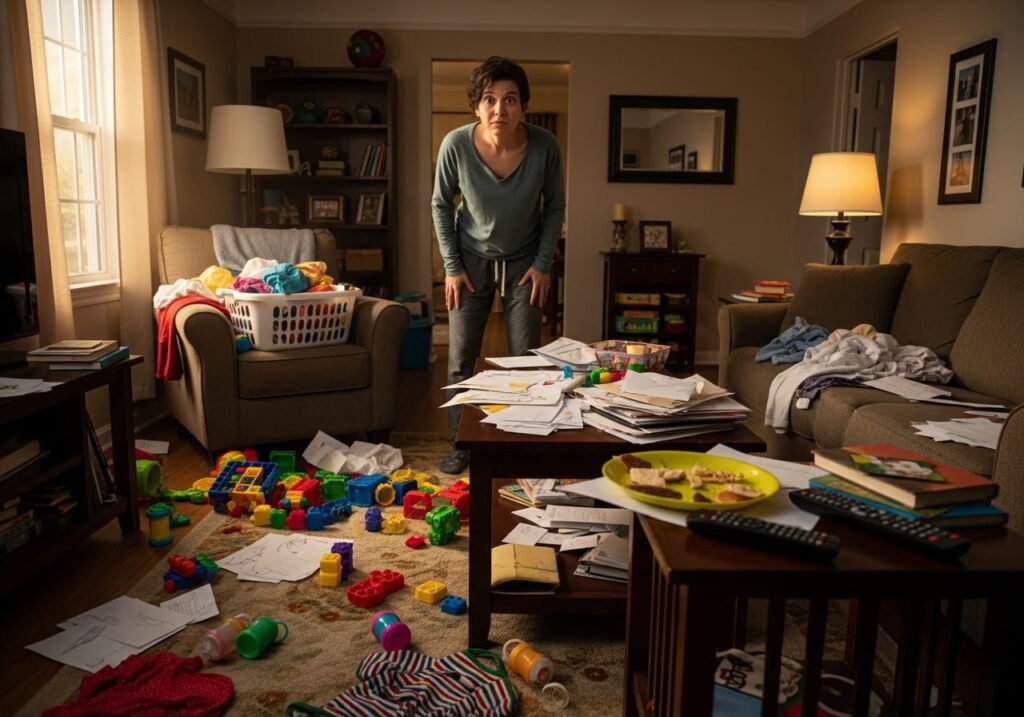
Here’s what I want you to know: decluttering fast is a real skill, and it does not require a free weekend, a hired organizer, or a complete life overhaul.
It requires short focused sessions, a clear decision-making framework so you’re not standing in front of a coffee maker from 2009 trying to decide your feelings about it, and a priority system that gets you visible results fast enough to keep your motivation alive.
This guide is built for busy families who need to see progress quickly or they’ll stop. That’s not a character flaw. That’s just how motivation works for real people living real lives. We’re going to work with that, not against it.
By the end of this article, you’ll have a clear, fast, repeatable system for making a real dent in your home’s clutter, even on a Tuesday night when you only have 30 minutes.
Mindset for Fast Decluttering
Before you touch anything, let’s deal with the mental blocks that slow most people down to a complete stop.
“But What If I Need It Someday?”
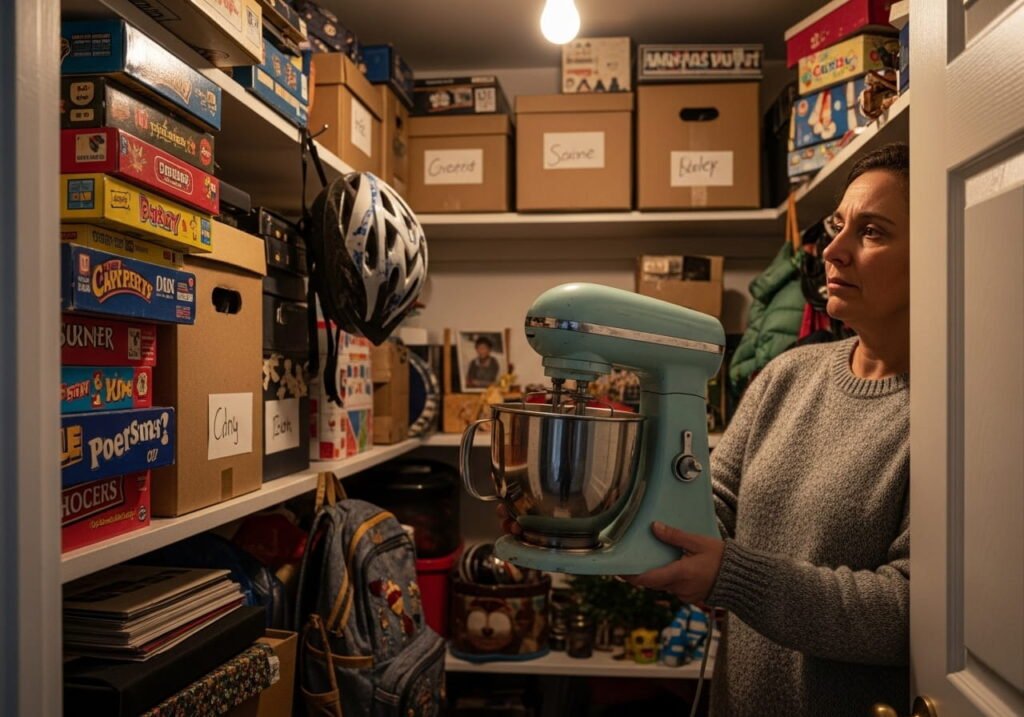
This single thought is responsible for more clutter than almost anything else. The fix is the 20/20 Rule: if you can replace the item in under 20 minutes for less than $20, you do not need to keep it out of fear. You’re holding onto low-value items and paying for that decision in mental load and physical space every single day.
“I Feel Guilty Getting Rid of This”
Guilt-based clutter is one of the heaviest kinds. The gift you never used. The kids’ artwork pile from 2018. Your grandmother’s casserole dish that has never touched your oven. A helpful reframe: donating something in good condition means another family will actually use and enjoy it. That’s not disrespectful to the giver. That’s generous.
“I Don’t Know Where to Start”
This is usually analysis paralysis dressed up as a logistical problem. The answer is always the same: start with whatever is bothering you the most. Not the “right” room. Not the room that will photograph best. The room that drains you every time you walk into it. That’s your starting point.
“I’ll Do It When I Have More Time”
More time is not coming. Not in the next two weeks, and probably not in the next two months. The families who successfully declutter their homes do it in small, consistent chunks over time, not in marathon sessions they wait to have the perfect conditions for.
The Best Fast Decluttering Methods
The 12-12-12 Rule
This is the single best method for days when you have limited time and limited decision-making energy. The mission is simple: find 12 things to throw away, 12 things to donate, and 12 things to return to their proper place in the house.
That’s 36 decisions. Most people can do this in 15 to 20 minutes in any room of their house. The results are visible, the process is concrete, and there’s no ambiguity about what you’re trying to accomplish.
Use this on weekday evenings when you have 20 minutes and need to feel like you moved the needle.
The 20/20 Rule
Any time you pick up an item and the phrase “but just in case” passes through your mind, apply the 20/20 Rule immediately. If you can replace it within 20 minutes for $20 or less, let it go. This rule eliminates hours of agonizing over low-value items that are collectively eating your storage space.
30-Minute Power Sessions
Set a timer for 30 minutes. Pick one small area, not a whole room, just one area. A single drawer. One shelf in a closet. The kitchen counter. The bathroom cabinet under the sink. Work only in that space until the timer goes off. Stop when it goes off whether you’re finished or not. This approach prevents the burnout spiral where you pull everything out, get overwhelmed, and leave it worse than you found it.
The rule: one space, one session, timer on, headphones in, move fast.
The Room-by-Room Blitz
When you have a slightly longer window, like a Saturday morning with two or three hours, do a blitz pass through each room. The goal here is not deep organization. It’s removal. Walk through every room with a trash bag and a donation box. Pull out obvious trash and obvious donations only. Don’t stop to sort, reorganize, or deal with “maybe” items. Speed is the point. You can do a more thorough pass later.
Priority Order: Where to Start for Maximum Impact
Not all rooms are equal when it comes to fast results. Here’s the order that gives you the most visible impact for the time you put in.
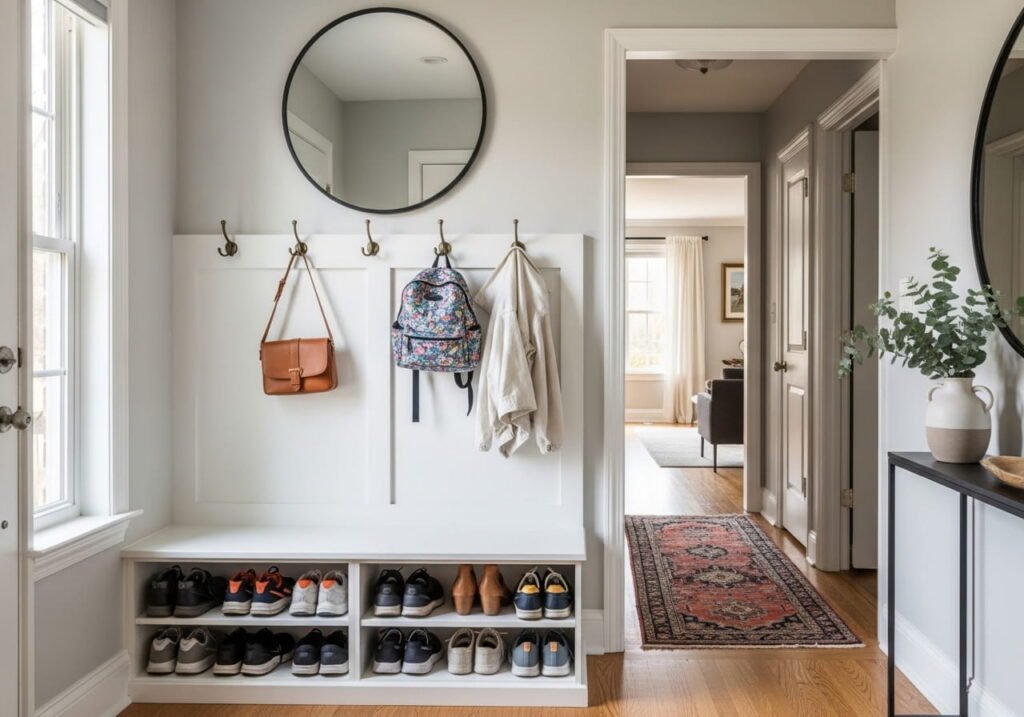
1. Entryway first. You see it every time you leave and arrive home. Getting it clear changes how your whole home feels instantly. Even 20 minutes here makes a noticeable difference.
2. Kitchen counters second. Clear counters make a kitchen feel clean and functional even if nothing else in the room has changed. Focus only on the counters in your first pass. Don’t open a single cabinet.
3. The main living area third. Clearing surfaces in your most-used shared space delivers the visual calm that reminds you why you’re doing this.
4. Your bedroom fourth. Your rest environment matters more than most people give it credit for. A clear floor and clear nightstand make a real difference to how you sleep and how you feel in the morning.
5. Kids’ rooms and closets last. These take longer and require more decision-making. Save them for when you have momentum and a little more time.
Step-by-Step Fast Decluttering Process
Follow these steps every time you sit down for a decluttering session, whether it’s 20 minutes or two hours.
Step 1: Gather your supplies before you start. Two garbage bags (one for trash, one for donations), a cardboard box or bin for “relocate” items, and a marker for labeling. Having these ready before you start saves the time and mental energy of stopping to find them mid-session.
Step 2: Set your timer. Whatever window you have. 20 minutes. 45 minutes. 90 minutes. Set it before you touch anything.
Step 3: Work fast and trust your gut. Research consistently shows that first instincts about what to keep or let go are usually right. The longer you hold something and think about it, the more likely you are to talk yourself into keeping it for the wrong reasons. If you pick something up and don’t feel a clear “yes, I use and need this,” it goes.
Step 4: Don’t reorganize during a declutter session. Your only job right now is to remove things. Reorganizing what remains is a separate session. Mixing the two is what causes three-hour sessions that end with an even messier room.
Step 5: Remove the bags and boxes immediately. The moment a bag is full, tie it and move it to your car or your front door. Donation bags that sit in your house for two weeks are just guilt in a new form, and they become a source of second-guessing. Out of the house fast.
What to Do With All the Stuff
Donate: Anything in good condition that someone else could genuinely use. Local thrift stores, Facebook Marketplace free sections, Buy Nothing groups, Goodwill, Salvation Army, and local shelters (especially for clothing, linens, and kitchenware) are your best options. Many areas have free pickup for larger donation loads.
Sell: High-value items in good condition can go on Facebook Marketplace, Poshmark for clothing, or OfferUp. Be realistic though: selling takes time. If the item is worth less than $20, donate it instead. Your time has value.
Trash: Broken items, stained clothing, expired products, and anything too worn for donation goes straight in the garbage. Do not donate things that are genuinely past their useful life. It wastes donation center staff time and doesn’t help anyone.
Recycle: Electronics can be dropped at Best Buy or local e-waste facilities. Many areas have textile recycling for clothes too worn to wear. Check your municipality’s website for specific guidelines.
Motivation and Speed Hacks
Use a timer every single time. The psychological effect of a countdown is real. It creates urgency, prevents perfectionism spiraling, and gives you a clear stopping point so you don’t feel like decluttering is an endless task.
Put on a podcast or playlist. Fast-paced music genuinely speeds up physical tasks. Designate a specific playlist that only plays during decluttering sessions. Over time, hearing it triggers a focused, efficient mindset automatically.
Take before photos. Before you start any session, take a photo of the space. When you’re tired 25 minutes in and wondering if any of this is making a difference, look at the before photo. The contrast is almost always more dramatic than it feels from inside the process.
Involve your kids. For kids 7 and older, make decluttering a game. Set a timer and challenge them to find 10 things to donate from their room before it goes off. Offer a small incentive. Kids are often more willing to let go of things than parents expect, especially when it’s their choice and they’re in control of the process.
The accountability text. Tell one friend what you’re doing and send them a photo of the finished space when you’re done. That one external commitment is often enough to make you follow through on a night when you’d otherwise convince yourself to skip it.
Common Fast Decluttering Mistakes to Avoid
Starting too big. A whole room or a whole closet is rarely the right scope for a single session. Start with one drawer, one shelf, one counter. Finish it completely. Move on.
Creating a “maybe” pile. Maybe piles become permanent residents. If you genuinely cannot decide, put the item in a box, date it, and store it out of sight for 30 days. If you haven’t needed it in 30 days, donate it without opening the box.
Letting donations linger. A donation bag sitting by the door for two weeks invites second-guessing and makes your space feel less cleared than it actually is. Load the car the same day you fill the bag.
Trying to declutter and organize in the same session. Decluttering and organizing are two separate processes. Mixing them leads to half-finished projects. Declutter first. Organize what remains in a separate session.
For a deeper look at the habits that derail most people’s progress, check out 10 Home Organization Mistakes .
Conclusion: 20 Minutes Is Enough to Start
You do not need a free weekend. You need 20 minutes and a decision to start.
Pick up a trash bag tonight. Go to the room that bothers you the most. Set a timer for 20 minutes and use the 12-12-12 rule. When the timer goes off, load the donation bag into your car and throw away the trash bag.

That is a real win. And real wins build real momentum.
When you’re ready to build a complete room-by-room system around what you’ve cleared, the Organize your home step by step will walk you through every stage from decluttering to daily maintenance. That’s your next step. But tonight, just start.
Also helpful: Small Home Storage Ideas | Closet organization ideas on a budget | How to Organize a Small Bedroom





Leave a Reply