

Introduction
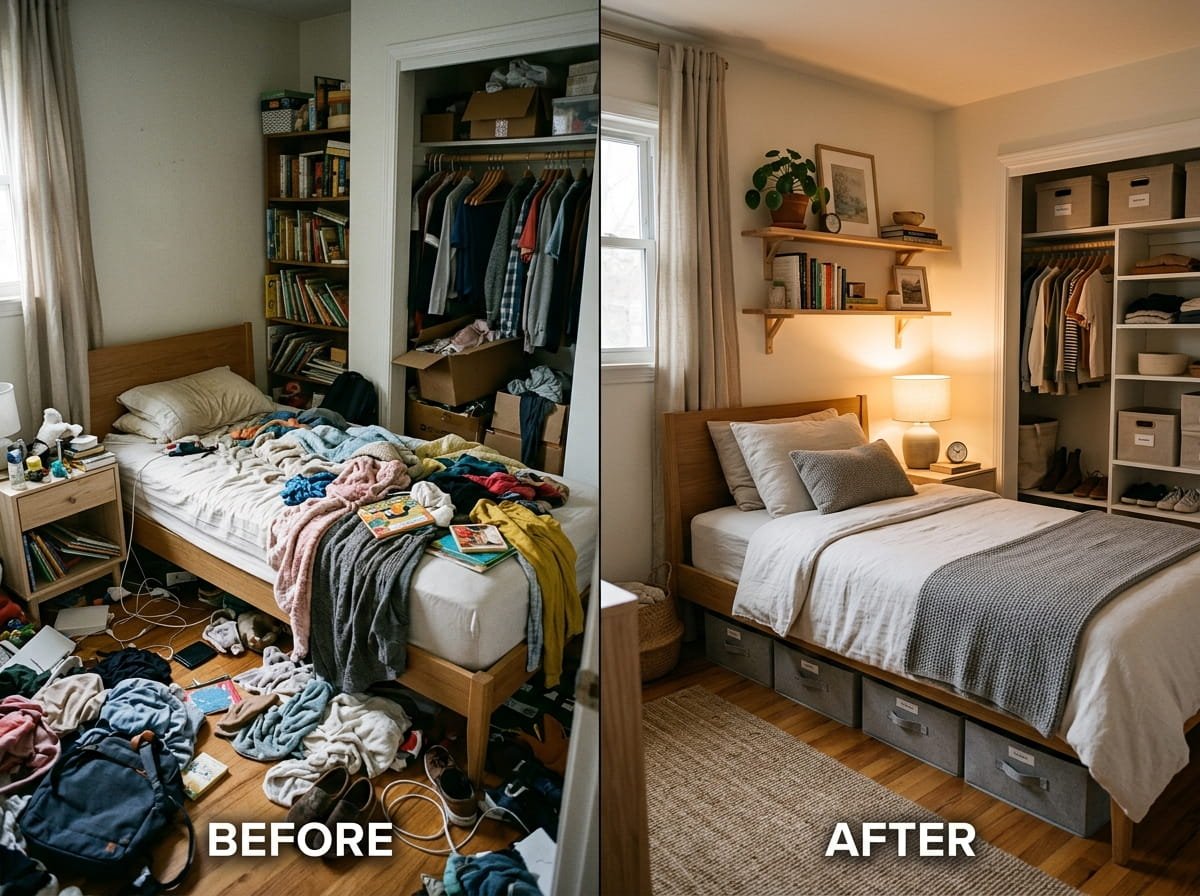
The bedroom is supposed to be the one room in the house where you can actually exhale. Where you close the door at the end of a long day and feel some sense of calm. But for a lot of families, the bedroom is just another room where the clutter has won.
Clothes on the chair. Clothes on the floor. A closet so packed you have to fight it to get anything out. Nightstands buried under a landslide of chargers, books, water bottles, and things you don’t even recognize anymore. Under the bed? Let’s not talk about under the bed.
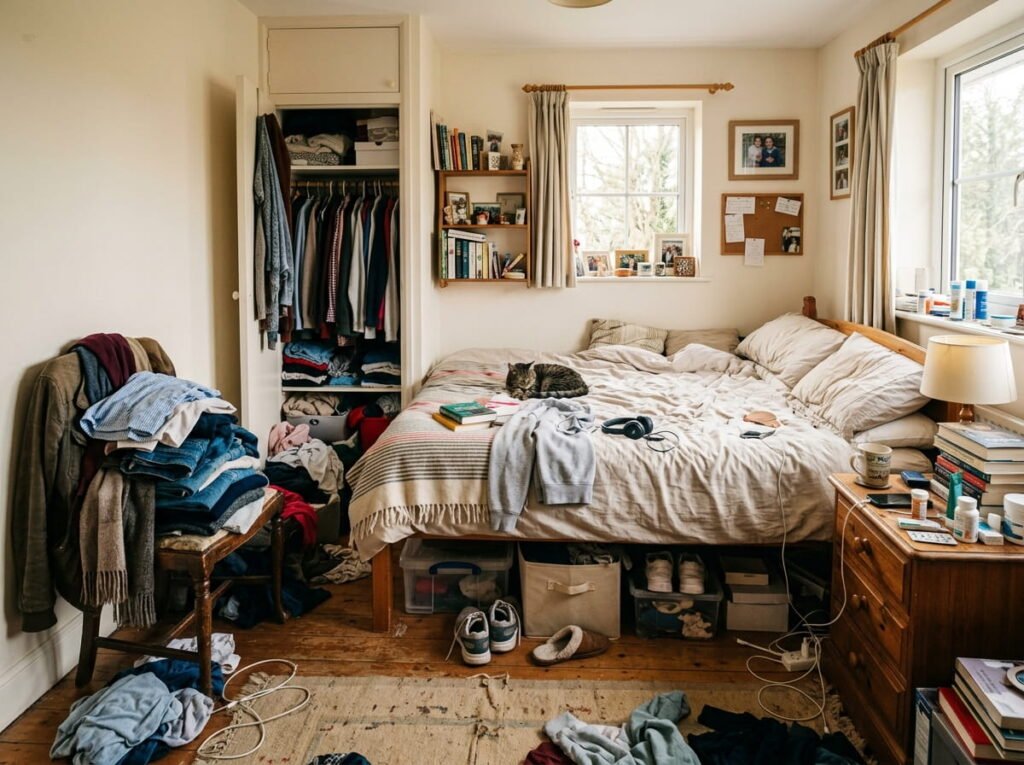
Whether we’re talking about a kids’ room, your primary bedroom, or a spare room doing triple duty, the same core problem usually applies: too much stuff and not enough intentional space for it to live.
The good news is that a small bedroom doesn’t need to stay this way. You don’t need a bigger room or a custom closet system. You need a clear process, a few smart storage moves, and a realistic maintenance habit you can actually keep.
Let’s walk through it step by step.
Step 1: Declutter Before You Organize Anything
This is the step most people skip and the reason most bedroom organization attempts fail. You cannot organize your way around too much stuff. You have to reduce it first.
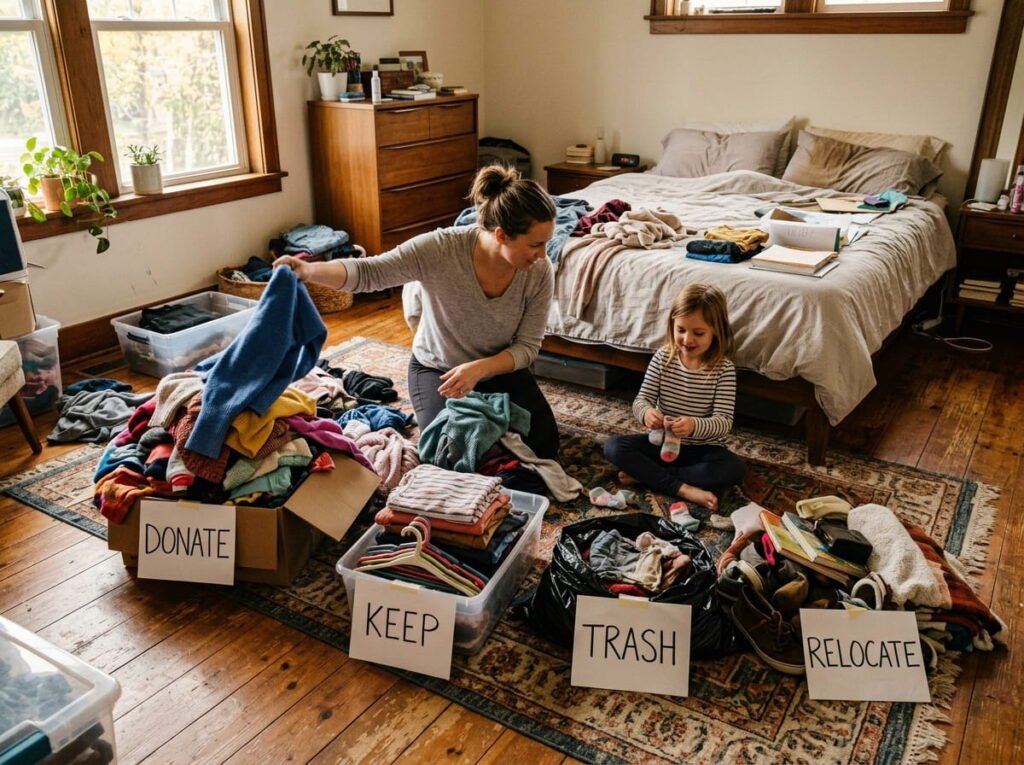
Pull everything out of the closet. Pull out the under-bed chaos. Open every drawer. The goal is to make visible everything that currently lives in this room so you can make honest decisions about what actually belongs.
Sort into four piles:
- Keep: Used regularly and belongs in this bedroom
- Donate: In good condition but no longer needed or wanted
- Trash: Broken, worn out, or expired
- Relocate: Belongs in your home, but not in this room
A practical tip: set a timer for 45 minutes and don’t let yourself leave the room during that time. The focused pressure helps you make decisions faster and prevents the common trap of walking an item to another room and never coming back.
Apply the rules from the Organize your home step by step here too. The 12-12-12 rule works especially well for bedrooms: find 12 things to throw away, 12 to donate, and 12 to return to their proper place. Most people can clear a significant amount of a bedroom with just that.
Step 2: Closet Organization on a Budget
The closet is almost always the most chaotic part of a small bedroom, and it’s the space that makes the biggest difference when you get it right.
Double Your Hanging Space for Almost Nothing
Most closets hang clothes at one level, which leaves a massive empty gap below shorter garments like shirts, jackets, and kids’ clothes. A second hanging rod costs around $10 to $20 and effectively doubles your usable hanging space.
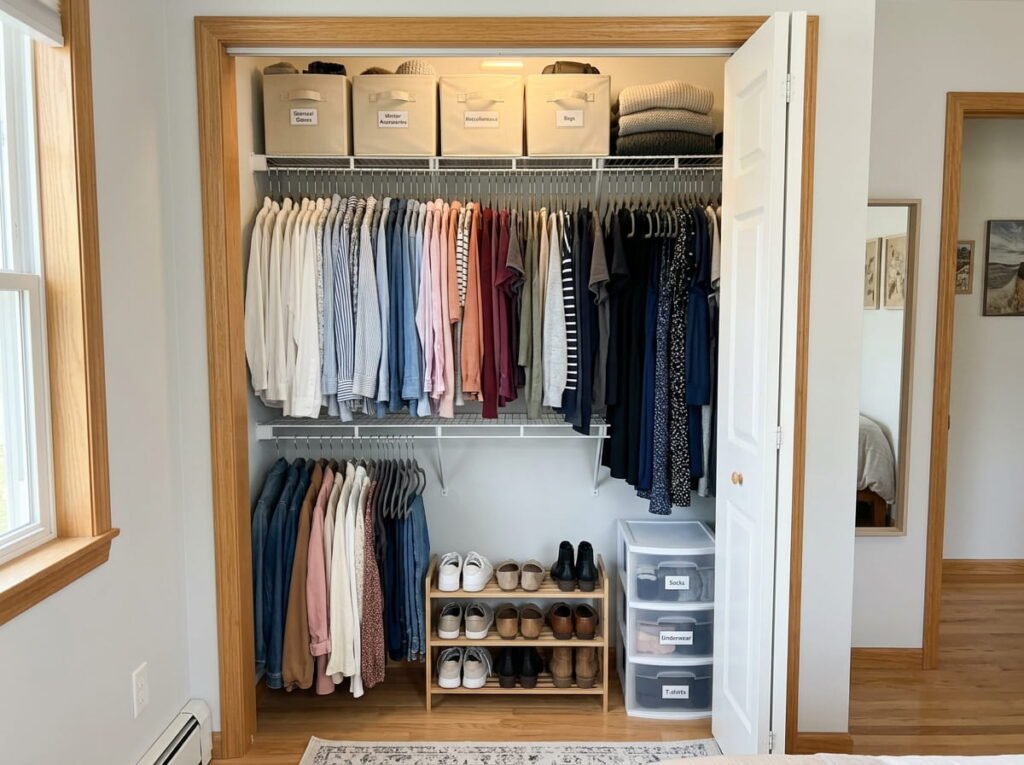
How to do it: hang a second rod from the existing rod using S-hooks and a short chain, or install a simple closet doubler that hangs from the existing rod. No tools, no drilling, no damage to walls.
Use the Vertical Space
Most closet shelves stop well below the ceiling. Stackable bins, extra shelves, or even a simple tension rod across the top section of the closet can add another level of storage above the existing shelf. This top tier is perfect for seasonal items, extra bedding, and things you access infrequently.
Categorize Ruthlessly
Once you’ve decluttered, group what remains by category. All shirts together. All pants together. All dresses together. Within those groups, organize by color or by frequency of use. This sounds simple but it makes a dramatic difference in how easy it is to find things and how easy it is to put things back.
Budget closet tools that actually work:
- Slim velvet hangers (they take up about a third of the space of standard plastic hangers and clothes actually stay on them)
- Over-the-door shoe organizer for the inside of the closet door
- Clear stackable bins on the top shelf for seasonal items
- A small hanging organizer for belts, scarves, and accessories
- Drawer dividers for any built-in drawers in the closet
Step 3: Under-Bed and Vertical Wall Storage
Under-Bed Storage Done Right
The space under your bed is potentially the largest single storage zone in a small bedroom. The key is using it intentionally instead of letting it become a dumping ground for random items that have nowhere else to go.
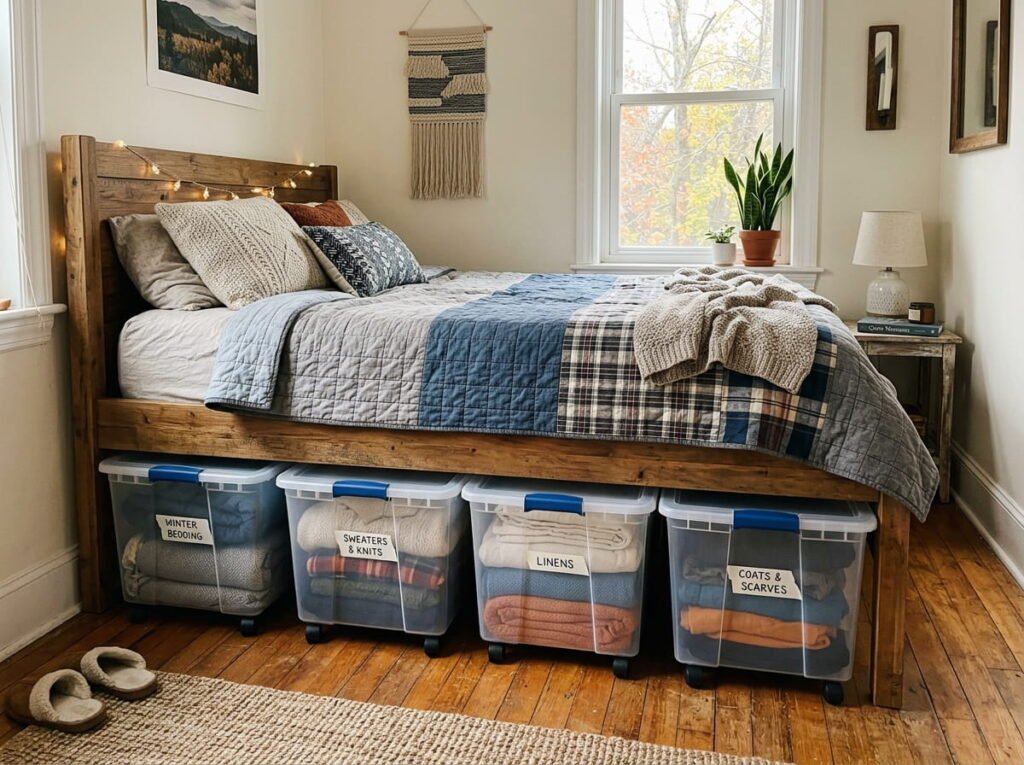
What works best under the bed:
- Flat rolling bins for seasonal clothing (winter sweaters in summer, summer dresses in winter)
- Shallow containers for extra bed linens and pillowcases
- Shoe boxes or a flat shoe organizer for shoes you wear less frequently
- Sports gear and hobby items that don’t need daily access
To maximize under-bed space:
- Use bed risers to gain 4 to 6 extra inches of clearance if your bed sits low
- Choose containers with lids to keep things dust-free
- Label every container so you know what’s inside without pulling everything out
Vertical Wall Storage
Walls are one of the most underused storage surfaces in a bedroom. A few simple additions can free up significant floor and surface space.
Floating shelves above the nightstand are one of the best small bedroom upgrades you can make. Instead of a nightstand with a large footprint, mount two or three small floating shelves on the wall. They hold your lamp, your book, your phone charger, and whatever else lives on your nightstand, while taking up zero floor space.
Hooks on the back of the bedroom door for tomorrow’s outfit, bags, robes, and frequently rotated items keep clothes off the chair and off the floor.
A wall-mounted pegboard or hook strip near the closet handles items that don’t belong in the closet but always end up on the floor: gym bags, backpacks, jewelry, and hats.
Step 4: Dresser, Nightstand, and Surface Storage
The Dresser
A dresser can hold a lot or feel like it holds nothing, depending on how it’s organized inside.
File folding (also called the KonMari method) is the single best thing you can do for your dresser drawers. Instead of stacking clothes flat on top of each other, fold them into small rectangles and stand them vertically in the drawer like files in a filing cabinet. You can see every item at once, everything fits more compactly, and pulling one thing out doesn’t destroy the whole drawer.
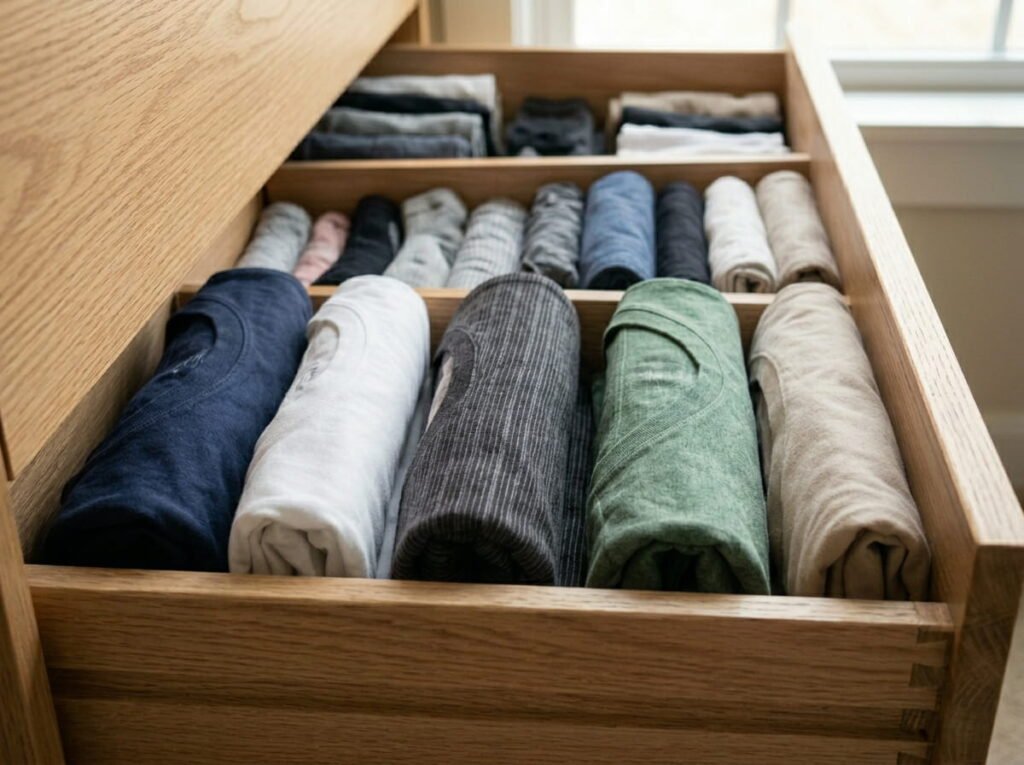
Use drawer dividers to separate categories within each drawer. Socks in one section, underwear in another, workout clothes in a third. Dividers are inexpensive, available at most stores, or easily made from small cardboard boxes.
The Nightstand
A nightstand has one job: hold the things you need within reach when you’re in bed. Most nightstands end up holding six times more than they should.
Keep only these items on and in your nightstand:
- A lamp or phone charger
- One book or your current reading
- A glass of water
- Any nightly medication
Everything else gets a different home. If your nightstand currently has more than these things on it, it’s a clutter landing pad, not a functional piece of furniture.
Surfaces in General
Every flat surface in a bedroom, including the top of the dresser, the windowsill, and any extra shelving, should follow the same principle: only items that are used daily or that genuinely bring you calm belong there. If it’s there because you haven’t found somewhere else for it, that’s not a reason to keep it there.
Step 5: Kids’ Small Bedrooms vs. Adult Bedrooms
Kids’ bedrooms and adult bedrooms have different organization challenges, and the solutions need to reflect that.
Kids’ Small Bedrooms
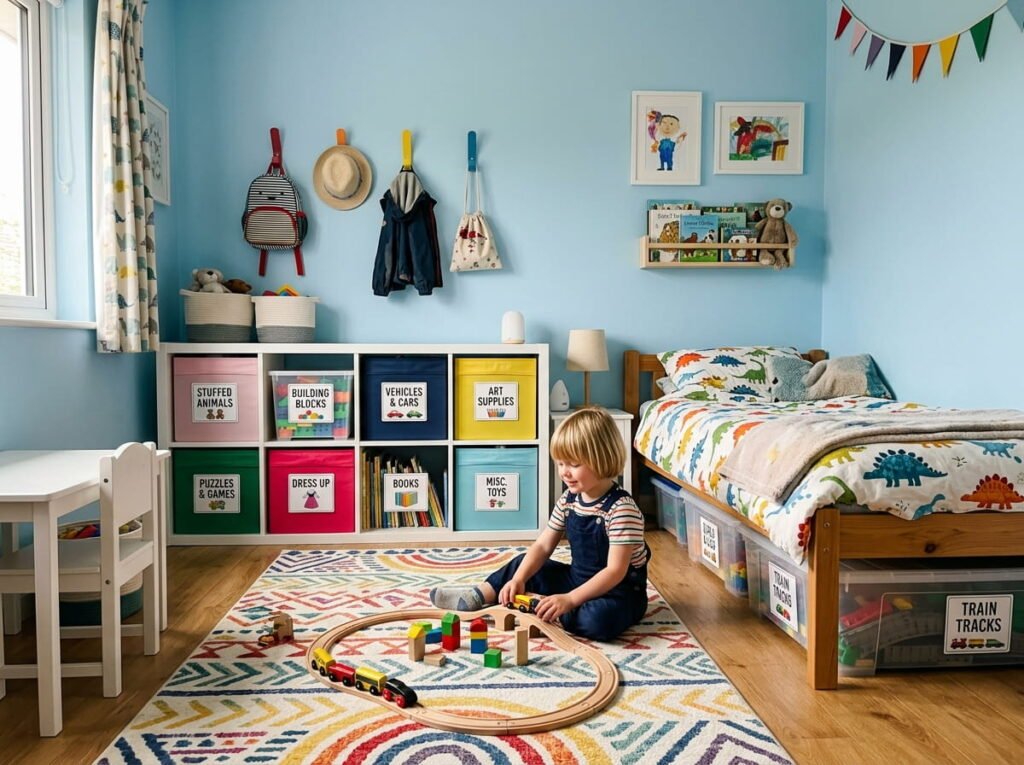
The biggest challenge in a kid’s bedroom is that the contents change constantly. A 7-year-old and a 12-year-old have completely different storage needs, and trying to build a system for “kids” in general leads to systems that stop working every couple of years.
What works consistently across ages:
- Low, open bins for toys and items kids need to access independently
- Labeled storage so kids know exactly where things go (use pictures for younger kids, words for older ones)
- Hooks at kid height for backpacks, jackets, and tomorrow’s outfit
- A “done with this” bin where kids can put toys they’ve outgrown, ready to donate
Keep the floor clear. In a small kids’ bedroom, floor space is play space. Everything that can be stored vertically or under the bed should be, so the floor is available for actual use.
Rotate toys. Keep only a portion of toys accessible at a time. Store the rest in a bin in a closet or elsewhere. Swap them out every few weeks. Kids actually play more with less, and the rotation keeps things feeling fresh without buying new things.
Adult Small Bedrooms
In adult bedrooms, the main challenges are usually clothing overflow and a lack of surfaces for daily essentials.
The clothing overflow fix: If your closet is full and your drawers are full and clothes are still ending up on the floor or a chair, the problem is volume, not storage. Go back to the declutter step. A 12-month rule works well here: if you haven’t worn it in the last 12 months, it goes.
The “chair problem”: Almost every adult bedroom has a chair or a corner that becomes a holding zone for clothes that are not quite dirty enough for the hamper but not quite clean enough to go back in the closet. The fix is a dedicated hook for these items. One hook or a small wall-mounted bar designated specifically for “in-between” clothes removes the visual clutter without pretending you’re going to fold everything immediately every time.
Step 6: Creating a Calm and Functional Bedroom
Organizing the physical items is only half the equation. The other half is creating a space that actually feels restful.
A few principles that make a real difference:
Clear the floor completely. Even in a small bedroom, a floor with nothing on it feels dramatically more spacious and calm than the same floor with items scattered around it.
Limit decorative items on surfaces. Three intentional items on a dresser can look beautiful. Twelve random items look like clutter regardless of what they are.
Use consistent storage containers. Matching bins and baskets create visual calm even in a small, tightly packed space. Mismatched containers make even an organized space feel busy.
Light and color matter. Light colors make small rooms feel bigger. Good lighting, especially on nightstands, makes a room feel designed instead of stuffed.
Step 7: Daily Maintenance Routine
The hardest part of a small bedroom is keeping it from sliding back into chaos. Here’s a realistic daily routine that takes under 10 minutes.
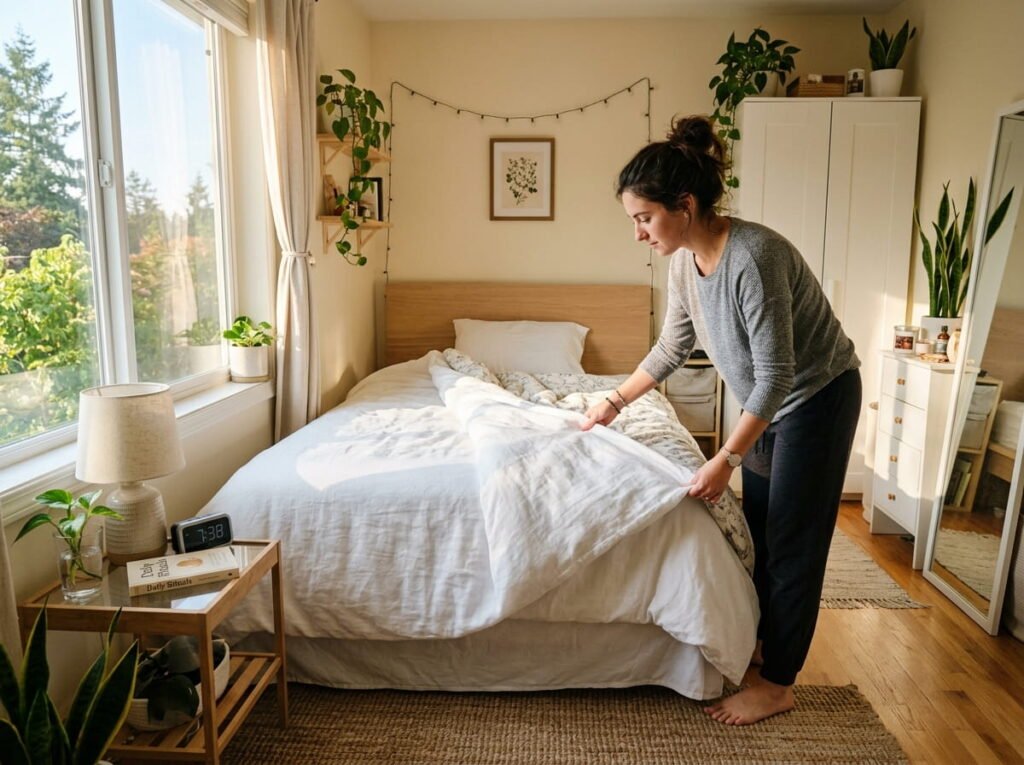
Every morning:
- Make the bed immediately (this alone makes the room feel 70% more organized)
- Pick anything off the floor and return it to its home
- Clear the nightstand of anything that doesn’t belong there
Every evening:
- Hang or fold tomorrow’s outfit instead of leaving it on the floor
- Return any items from other rooms to where they belong
- Put dirty clothes directly in the hamper
Once a week:
- Pull out anything that has migrated under the bed that doesn’t belong there
- Do a quick closet check and return any items to their proper place
- Reassess the dresser top and nightstand and clear anything that’s crept back
For a complete weekly routine that covers the whole house, check out the Weekly home reset routine.
Conclusion: Small Rooms Can Feel Generous
A small bedroom doesn’t have to feel cramped or chaotic. With the right system, even a modest room can feel calm, functional, and like a genuine place of rest.
Start with the declutter. Then tackle the closet. Then work through the under-bed storage and the surfaces. Don’t try to do it all in one session. Even one drawer or one surface completely organized is progress that compounds.
For more ways to maximize every inch of your home, the full Small Home Storage Ideas: Maximize Space Without Renovating guide covers every room with practical, budget-friendly solutions. And if you’re ready to organize your whole home with a complete system, the Organize Your Home Step by Step: A Realistic 2026 Guide for Busy Families is the place to start.
Your bedroom should be the room in your home where you feel the most at ease. Let’s get it there.
Also helpful: Small Home Storage Ideas | 10 Home Organization Mistakes | Organize Your Home Step by Step




Leave a Reply