

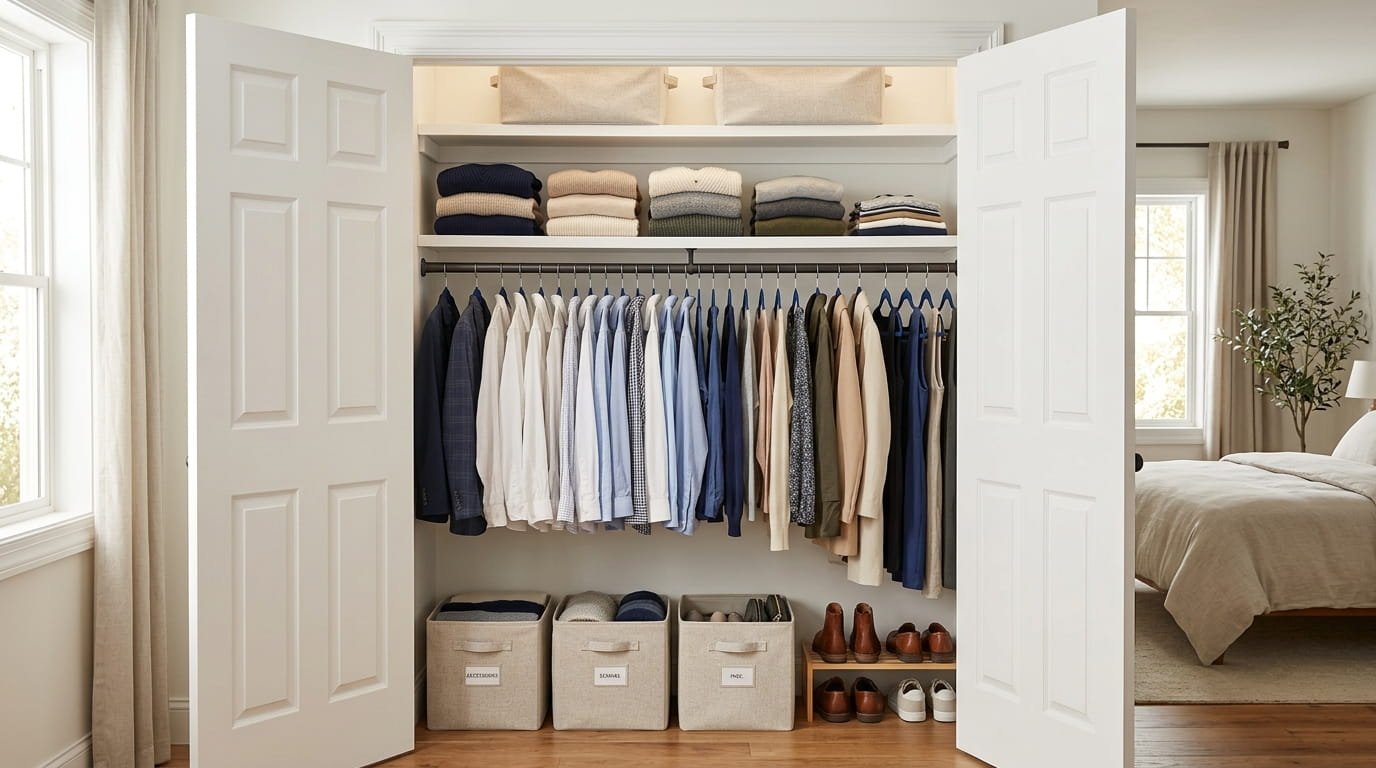
Looking for closet organization ideas on a budget? A packed closet makes every morning harder, and it can feel like the only fix is a pricey custom system. It isn’t.
With some decluttering and a few low-cost tools, you can get much more from the space you already have. Many of these cheap closet organization hacks cost less than a takeout lunch, and a few are free. They also work in a tiny walk-in or a narrow reach-in, so they double as small closet organization ideas.
Below is a simple plan for organizing a closet under $50. It starts with a quick audit and ends with a system that stays tidy.
Prices in this post are estimates. They change often, so check current prices before you buy.
Quick Takeaways
You don’t need a custom closet system to gain storage. Clear out what you don’t use first. Then add a few low-cost tools that fix your biggest problem. Most upgrades below cost under $25 each, and several cost nothing.
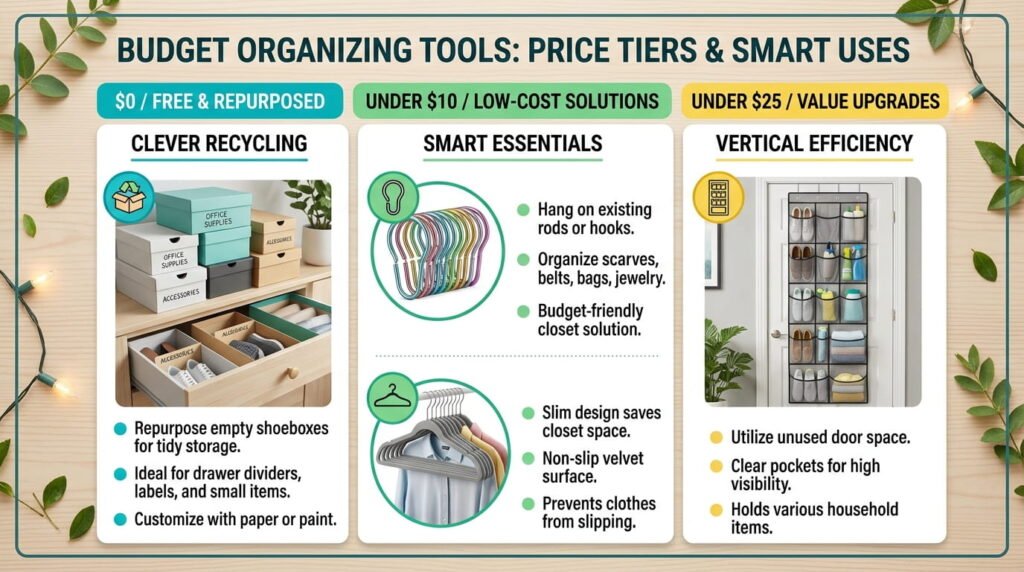
Budget Organization Matrix
| Price Tier | Top Budget Upgrades | What It Helps With |
| $0 (DIY and declutter) | The 3-step audit, reverse hanger trick, shoebox drawer dividers | Frees up rod and drawer space |
| Under $10 | Shower curtain hooks for scarves and belts, fabric-wrapped DIY bins | Tames small items |
| Under $25 | Slim velvet hangers (30-pack), over-the-door pocket organizer, hanging fabric shelf | More hanging and shelf room |
| Under $50 | Mix any two or three upgrades above, such as velvet hangers plus a closet rod doubler | Adds a second hanging level and keeps small items in order |
Step 1: The 3-Step Closet Audit (Before Spending a Dime)
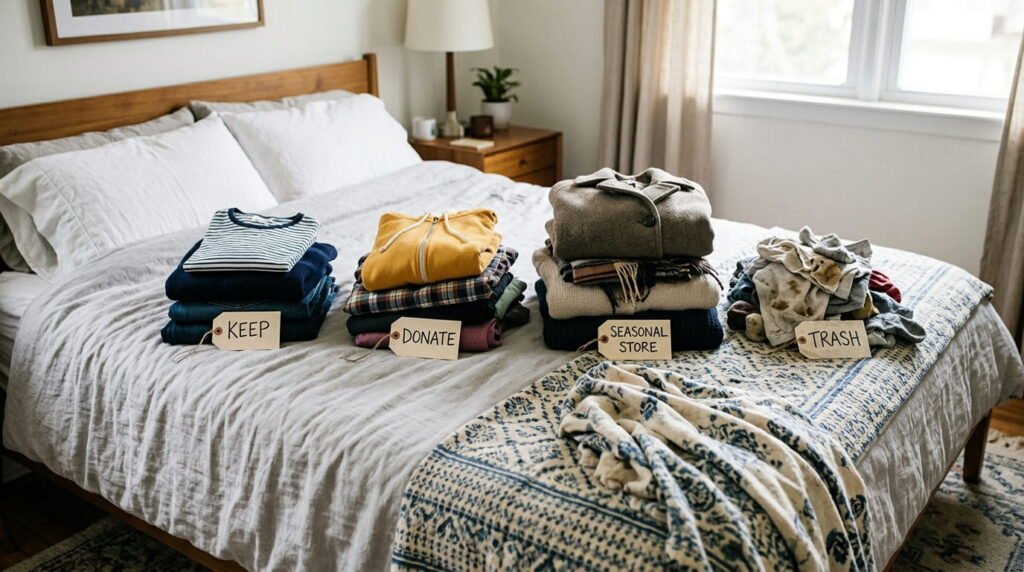
The cheapest way to gain closet space is to own less clutter inside it. The audit has three simple steps:
- Pull everything out. Take down clothes, shoes, bags, and anything on the shelves. Lay it all on your bed or floor. Sort it into four piles: Keep, Donate, Seasonal Store, and Trash.
- Apply the 12-month rule. This decides what earns space in your main closet.
- Run what’s left through the 4 C’s. This catches the things you keep out of habit or guilt.
It costs nothing, and it makes every upgrade later in this post work better.
The 12-Month Rule vs. Seasonal Holding Bins
The core rule is simple. If you haven’t worn an item in 12 months in a row, it moves out of your main closet space.
Why 12 months? A full year covers every season. That means a winter coat gets a fair chance, and a swimsuit does too.
But what about clothes you only wear in certain months? That’s where a holding bin comes in. Out-of-season clothes aren’t unused, they’re resting.
Here’s how to set one up:
- Pick a clear, lidded bin and fill it with clean, off-season clothes.
- Store it in secondary space, like under the bed or in the garage.
- If you use the garage, keep the bin off the floor and make sure the area stays dry.
- Swap the bin’s contents when the seasons change.
Your main closet then holds only what you can wear right now. Keep special-occasion outfits, like formal wear, in their own spot, since you may only wear them once a year.
The 4 C’s Evaluation Matrix
Before you put anything back on a hanger, ask these four questions:
- Current: Does it fit your body and your real daily life today?
- Condition: Is it free from stains, tears, or wear that can’t be fixed?
- Claim: Does it have real use or meaning for you, or are you keeping it out of guilt?
- Count: Do you own too many of the same basic item, like 12 plain black t-shirts?
If an item fails two or more, it’s probably time to let it go. Put the Donate pile in your car right away so it doesn’t drift back into the closet.
Letting go can be hard. If you get stuck, our guide to Minimalist Home Organization Tips for busy families can help you build the habit.
Step 2: High-Impact Upgrades Under $50
Now that your closet holds only things you wear, it’s time to add a few tools. You don’t need all of them. Pick the two or three that solve your biggest problem, and you’ll stay under budget.
1. Slim Velvet Hangers (More Hanging Space Instantly)
Cost: About $12 to $15 per 30-pack
Why it works: Most slim velvet hangers are listed at around 0.2 inches thick. Chunky wood and plastic hangers are much bulkier, so they use up rod space fast. Swapping them lets you fit more clothes on the same rod. The soft, grippy surface also keeps clothes from sliding off.
Actionable tip: Color-code your hangers. Try black for tops and grey for bottoms. It gives your closet a clean, high-end look for very little money.
Keep a few sturdy hangers for heavy coats and suits, since thin hangers can bend under a lot of weight.
Bonus under $10: Clip a few shower curtain hooks onto one hanger. Each hook can hold a scarf or a belt, so they hang in plain sight instead of piling up in a drawer.
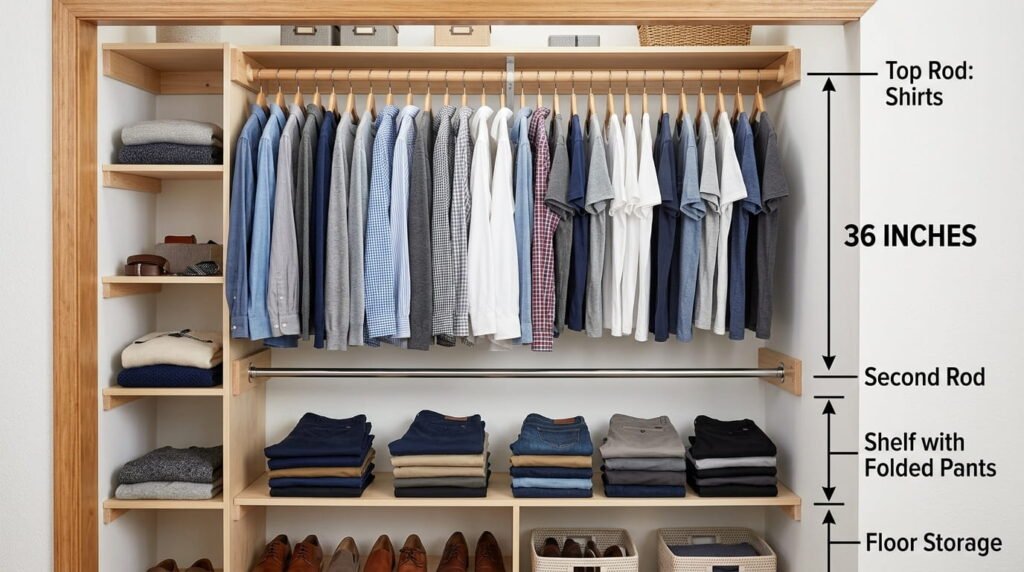
2. Double Hanging System: Add a Second Rod
Cost: About $15 to $20
Why it works: In most standard closets, the space under short garments goes unused. A second rod puts that space to work. It’s one of the best small closet organization ideas because it adds hanging room without adding furniture.
DIY setup steps:
- Measure from your top rod to the floor.
- Check the length of your longest shirt. Items on the top tier need room to hang clear.
- Hang a second rod about 36 inches below the top rod.
- Hang shirts on the top tier, and folded pants and skirts on the bottom tier.
A quick note on the hardware. Tension rods work for very light items in a narrow space, but they aren’t made to hold a full load of clothes. For daily clothing, look for a closet rod doubler, also called a hanging closet rod. It hangs from your existing rod. Check the weight limit on the label before you load it up.
Long dresses and coats won’t fit on the top tier. Keep them on the main rod at one end.
3. Vertical Door Storage Hacks for Shoes and Accessories
Cost: About $12 to $18
Why it works: The back of the closet door is usually empty wall space. An over-the-door pocket organizer turns it into storage without taking up any floor or shelf room.
Alternative uses for pocket organizers:
- Shoes and sandals
- Rolled t-shirts and leggings
- Hair tools, lint rollers, and garment care items
Before you buy, check that the door still closes with the organizer on it. Bulky pockets can block it in tight closets.
4. DIY Shelf Dividers and Repurposed Storage Bins
Cost: $0 to $10
Why it works: Stacks of sweaters and purses tip over easily on upper shelves. Simple dividers keep each pile in its own lane.
Budget ideas to try:
- Cardboard shelf dividers: Cut sturdy cardboard to the height of your stacks. Fold it into an L shape and tape the seam. For heavier items like purses, upright magazine file holders work well.
- Shoebox drawer dividers: Cut the lids off old shoeboxes and place them inside drawers. They keep socks, underwear, and belts in neat sections for free.
- Fabric-wrapped storage bins: Turn sturdy cardboard boxes into good-looking bins for just a few dollars.
Here’s how to make a wrapped bin:
- Pick a sturdy box and cut off the flaps.
- Measure each side and cut fabric or contact paper to match, with a little extra for the edges.
- Smooth it onto the box one side at a time.
- Fold the extra over the top edge and secure it inside.
If you have a bit more to spend, hanging fabric shelf units and clear stackable shoe bins are two more helpful add-ons. They come in many price ranges, so compare before you buy.
Step 3: Maintaining Your Budget Closet System
A closet stays tidy when everything has a home. The easiest way to do that is zoning. A zone is just a spot for one type of item. Short sleeves go in one section, then long sleeves, then jackets, then pants. Shoes, bags, and accessories get their own zones too.
When you know where each thing lives, putting it back takes seconds. Zoning isn’t just for clothes, either. You can use functional zones in Small Kitchen Organization Ideas the same way.
The “One-In, One-Out” Rule
This rule keeps your closet from filling up again. When a new item comes in, an old one goes out. New jeans in, old jeans out.
Here’s how to make it stick:
- Treat your hanger count as your limit. If every hanger is in use, something has to leave before something new arrives.
- Keep a donation bag at the bottom of the closet. When it’s full, drop it off.
Because your closet has a fixed size, this rule works with it instead of against it.
The Reverse Hanger Trick for Ongoing Audits
This trick shows you what you actually wear. At the start of the season, turn all your hangers backward so the hooks face the opposite way. When you wear an item, hang it back the normal way.
After about six months, look at what’s still backward. Those clothes are good candidates for donation. Leave special-occasion pieces out of this test, and give them the full 12 months instead.
Printable Closet Organization Checklist
Your 60-Minute Closet Makeover
Empty the entire closet onto your bed or floor.
Group clothes into four piles: Keep, Donate, Seasonal Store, Trash.
Wipe down shelves, vacuum the floor, and dust the closet rods.
Swap bulky plastic or wood hangers for slim velvet hangers.
Install a second hanging tier or an over-the-door organizer.
Hang garments by category (short-sleeve → long-sleeve → jackets → pants).
Place non-hanging items, like sweaters and bags, in bins on the top shelves.
Final Thoughts
A better closet doesn’t have to cost much. Start with the audit, since it’s free and it does the most work. Then add one or two upgrades that fit your space, and use the one-in, one-out rule to keep it that way.
Once your closet is set up, keep it tidy with the 10-minute daily reset routine in How to Stay Organized Daily.




Leave a Reply