

Introduction
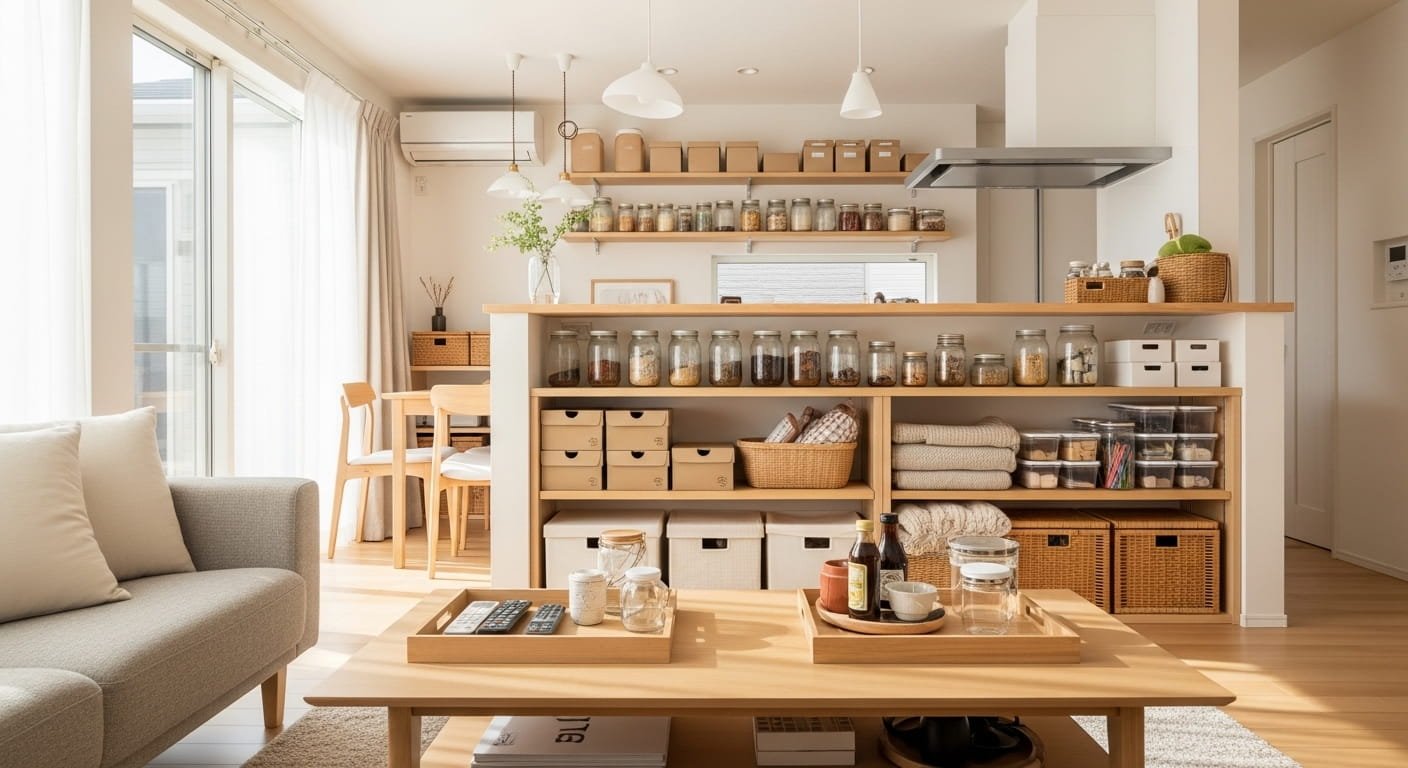
The idea is appealing. A calm, clutter-free home. Clear counters. Open space. Only things you love and use. You’ve seen the photos, read the articles, maybe even watched the documentaries. And some part of you thinks: yes, that is what I want.
Then you look around at the Lego pieces on the living room floor, the four half-used bottles of the same shampoo in the bathroom, the kitchen junk drawer that has somehow become sentient, and the garage that hasn’t been fully navigable since 2021. And the gap between that minimalist vision and your actual life feels so wide that you dismiss the whole idea as something for people without children, without pets, and without a real life.
Here’s what I want to reframe for you: minimalism for families is not about white walls and owning 47 possessions. It is not about making your kids give up their toys or serving dinner on one artisanal plate per person. Family minimalism is about removing the excess so that what remains is the life you actually want to be living.
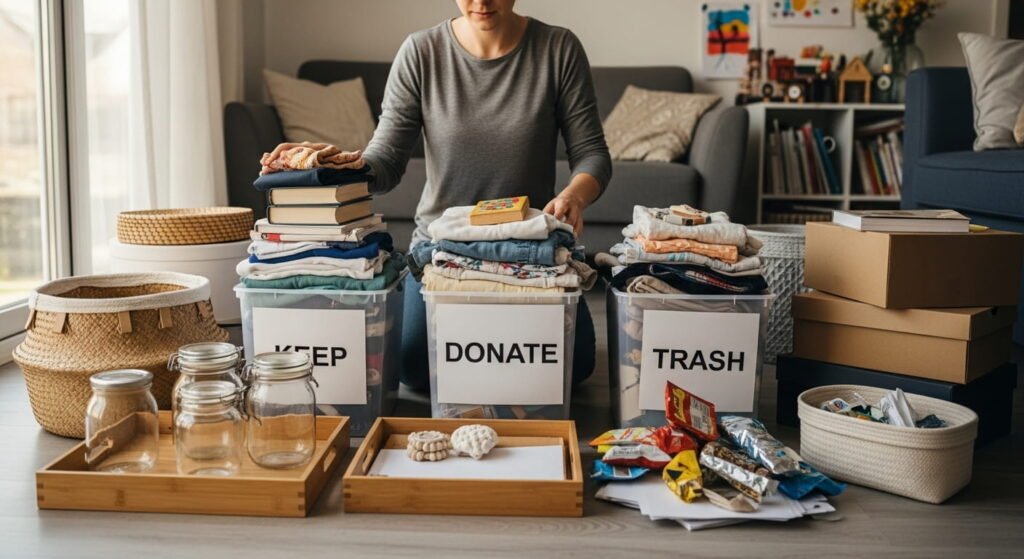
It is the difference between a home full of things nobody uses, which constantly creates work and mental load, and a home where everything earns its place and the family has room to actually breathe, play, and rest.
You don’t have to go extreme. You don’t have to become a different kind of family. You just have to own a little less and manage what you have a little more intentionally. That is genuinely achievable, and the families who have done it describe the results as life-changing.
What Realistic Minimalism Looks Like for Busy Families
Realistic family minimalism is not a destination. It’s a direction.
It does not mean owning as few things as possible. It means owning fewer things than you currently do, specifically fewer things than you can comfortably manage without stress.
It looks like:
- A kitchen with only the appliances and tools your family actually uses, where everything fits in the cabinets without a game of Tetris every time you put groceries away
- Kids’ rooms with enough toys that children are genuinely engaged but not so many that cleanup feels impossible and nothing gets played with properly
- A closet where you can see every item you own, where getting dressed in the morning takes three minutes instead of fifteen
- Common areas that can be reset to calm in five minutes because there simply isn’t that much stuff to deal with
It is not about perfection. A minimalist family home still has school projects on the table sometimes. It still has muddy shoes by the door after a rainy afternoon. It still has the dog’s toys spread across the living room floor on a regular basis. The difference is that none of those things layer on top of a baseline of permanent, unmanageable clutter.
Key Minimalist Rules That Actually Work for Families
One-In-One-Out
Every new item that enters your home displaces something already there. New shoes for your kid means an old pair leaves. New toy means an existing toy goes to donation. New kitchen gadget means an existing one goes. Applied consistently, this rule prevents the gradual accumulation that turns manageable homes into overwhelming ones. It also naturally slows down impulsive purchases when you have to think about what will leave to make room.
The 90/90 Rule
Look at any item you’re uncertain about. Have you used it in the last 90 days? Will you realistically use it in the next 90 days? If the answer to both is no, it doesn’t need to be in your home right now. This rule is more forgiving than the standard 12-month rule and works especially well for families with seasonal items or activity-based possessions.
The Capsule System
A capsule system is a defined, limited collection of items within a category. A capsule wardrobe means a set number of versatile pieces that mix and match well, rather than a closet stuffed with items you forget you own. A capsule toy collection means a curated set of toys your children genuinely love and engage with regularly, with the rest in rotation or donated.
Capsule systems work because they force curation: you have to actively choose what’s in the capsule rather than passively accumulating until the category overflows.
Good Enough Is Finished
Perfectionism is one of the biggest barriers to sustainable minimalism in families. Waiting until you have the perfect system, the perfect containers, or the perfect free weekend means never actually starting. A good enough system that gets used beats a perfect system that exists only as a plan. Done consistently and imperfectly is infinitely better than done perfectly once and then abandoned.
Decluttering With a Minimalist Mindset
The standard decluttering question is “should I keep this?” The minimalist decluttering question is slightly different: “does this item earn its place in my home?”
That shift in framing is surprisingly powerful. Instead of looking for reasons to let something go, you’re looking for reasons to keep it. The burden of proof flips. Items need to justify their presence, rather than you needing to justify removing them.
An item earns its place if it is used regularly, if it genuinely serves your current life, or if it brings you real and consistent joy. “I paid a lot for it” does not earn a place. “It might be useful someday” does not earn a place. “I feel guilty getting rid of it” does not earn a place.
For a practical fast approach to decluttering that pairs well with a minimalist mindset, the How to declutter your home fast gives you a complete process with time-boxed sessions and clear decision frameworks that make the minimalist question easier to apply room by room.
Minimalist Organization by Category
Clothes
Clothing is where most families have their single biggest volume problem and their single biggest opportunity for immediate improvement.
The goal is not a capsule wardrobe of 33 items. The goal is a wardrobe where every item fits, is in good condition, gets worn regularly, and can be found and returned to its place without effort.
Practical approach:
- Start with the 12-month rule: anything not worn in the last year leaves
- Remove duplicates mercilessly: how many black t-shirts does one person genuinely need
- Keep only what fits your current body and your current life, not the life you used to have or plan to have
- Use the seasonal rotation system covered in Closet Organization Ideas on a Budget to keep only the current season accessible
For kids, do a size sweep every season change. Kids grow fast and quietly, and before you know it half the closet holds clothes that technically exist but cannot be worn by anyone.
Toys
Toy minimalism is where most parents are most skeptical, and where they’re most often surprised by the results.
Research consistently shows that children play more creatively and more deeply with fewer toys than with many. When there are 200 items to choose from, kids cycle through things rapidly and struggle to settle into sustained play. When there are 20 well-chosen items, they invent, build, and engage in a qualitatively different way.
A realistic toy minimalism approach:
- Keep one bin or basket per type: building toys, art supplies, figures, books, outdoor toys
- Rotate rather than eliminate: items not currently accessible go into a storage bin in a closet, swapped out monthly or seasonally
- Apply the 90/90 rule: toys not touched in 90 days and not likely to be used in the next 90 go to donation
- Involve kids in the process and in the decision-making, which builds healthy relationships with possessions that last into adulthood
Kitchen Items
Kitchen clutter is almost always a volume problem disguised as a storage problem. Most families own significantly more kitchen tools, appliances, dishes, and cookware than they regularly use.
Minimalist kitchen questions:
- How many plates, bowls, and glasses does your family actually need for daily life plus one or two guests? You probably own two or three times that number
- Which appliances do you use at least twice a month? Those stay. Everything else is a candidate for the donation box
- How many spatulas, wooden spoons, and whisks do you own? Keep your two favorites of each. Donate the rest
- Are there dishes in your cabinet that you’ve never used since you got them?
A kitchen where everything in it gets used is dramatically easier to organize and maintain than one stuffed with equipment for a version of your life that doesn’t actually exist.
Sentimental Items
Sentimental items deserve their own specific approach because they operate outside the normal logic of use and function. These are the items that don’t earn their place by being useful but by being meaningful, and that’s a legitimate reason to keep something.
The minimalist approach to sentimental items is not to eliminate them but to contain them intentionally. One memory box per family member with a size limit. One dedicated shelf for meaningful objects. A physical album for photos rather than boxes of loose prints that never get looked at.
The act of curating a physical memory collection, choosing the best and most meaningful items to keep, often makes the collection more valuable and more enjoyable than a disorganized pile of everything. Quality over quantity applies to memories just as much as to kitchen gadgets.
Creating Calm Spaces Without Emptiness
One of the most common fears about minimalism in a family home is that it will feel cold, sterile, or unwelcoming. That it will look like nobody actually lives there.
Calm and warmth are not opposites. The homes that feel most welcoming are not the ones stuffed with the most things. They’re the ones where every item has been chosen with care, where there’s room to breathe, and where the space feels like it was designed for the people living in it.
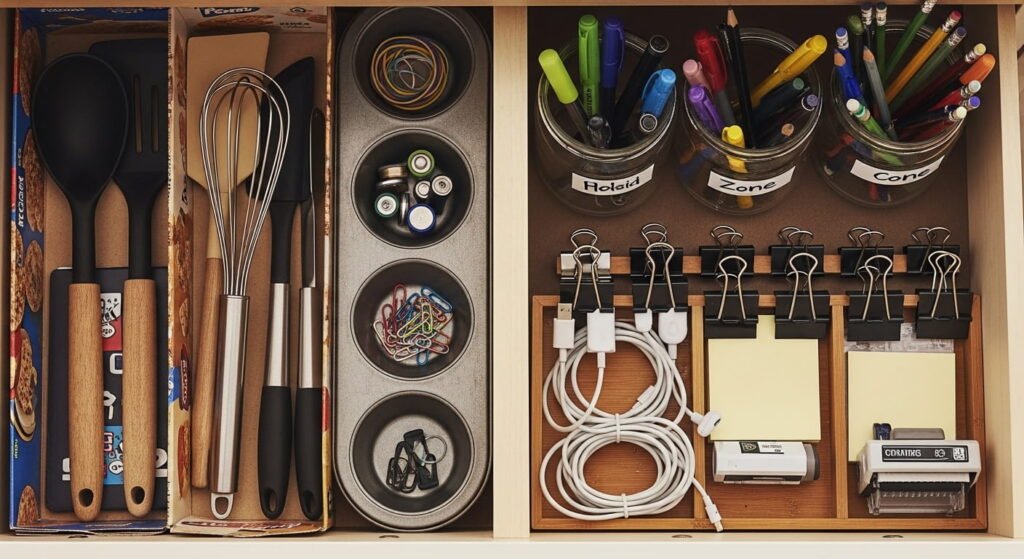
A few practical ways to create calm that still feels like a real family home:
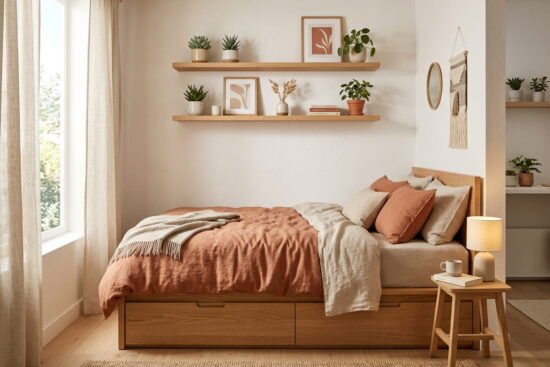
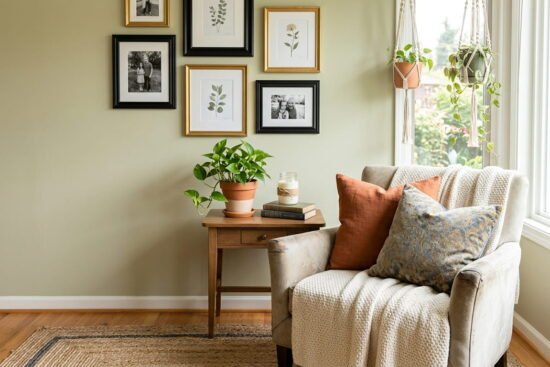
Use texture and warmth instead of volume. A few throw blankets, a rug, some plants, and good lighting create a cozy atmosphere more effectively than a room full of stuff. You can have significantly fewer objects and a significantly warmer room.
Display a few things beautifully rather than many things randomly. Three meaningful items on a shelf look considered and personal. Thirty random items on the same shelf look like a flea market. Fewer things, displayed intentionally, create a stronger sense of personality than an overcrowded room.
Let negative space work for you. Empty space is not wasted space. A clear counter, an open corner of a room, or a shelf with room to breathe makes the items nearby feel more important and the room feel larger.
How to Involve Kids in Minimalism
Getting kids on board with a more minimal approach is more achievable than most parents expect, especially when you involve them in the process rather than imposing it on them.
Start with a conversation, not a purge. Talk to your kids about why the family is making these changes. Explain it in terms they connect with: more space to play, easier to find their favorite things, less time cleaning up means more time for fun. Kids are more reasonable than adults often give them credit for.
Give kids ownership of their decisions. Let kids choose which toys stay and which ones go, within whatever framework you set. A 7-year-old who gets to decide which of their toys to keep feels respected and is far more likely to care for and maintain those toys than one who comes home to find things have been donated without their input.
Make it a regular practice, not a punishment. Seasonal toy rotations, donation runs before birthdays and holidays, and the one-in-one-out rule feel normal and natural to kids when they’re part of the routine from an early age. Families who start these practices early report that their kids advocate for their own version of minimalism by the time they’re teenagers.
Celebrate the results together. After a declutter session, acknowledge what the family accomplished. Order pizza. Watch a movie in a newly cleared living room. Connect the effort to the reward in a tangible way.
Benefits Real Families Experience
The families who have moved toward a more minimal approach consistently describe benefits that go well beyond tidier counters.
Less mental load. When there’s less stuff to manage, track, clean around, and put away, the daily mental tax of maintaining the home drops significantly. Parents describe feeling less tired and less resentful of household tasks.
Fewer arguments. A significant number of family conflicts in busy households are triggered by clutter-related frustrations. The constant “where is my…” the nightly “someone needs to clean up this mess,” the weekend standoffs over whose job it is to deal with the garage. Less stuff means fewer of these friction points.
Kids who play better. The research on this is consistent: kids engage more deeply with a curated selection of toys than with an overwhelming abundance of them. Parents who implement toy minimalism regularly report that their kids complain less about being bored.
More financial margin. When you stop buying things to fill space or manage clutter, spending drops naturally. Families that embrace intentional consumption consistently find they spend less without feeling deprived.
Conclusion: Just a Little Less Is a Lot More
You don’t have to become a minimalist. You don’t have to own 100 things or paint your walls white or give away your grandmother’s china. You just have to own a little less than you do right now, and manage what you keep with a little more intention than you currently do.
That gap, between your current home and one where everything has a place and the family can reset the space in five minutes, is not as wide as it feels from where you’re standing. It’s mostly filled with things that aren’t adding value to your daily life.
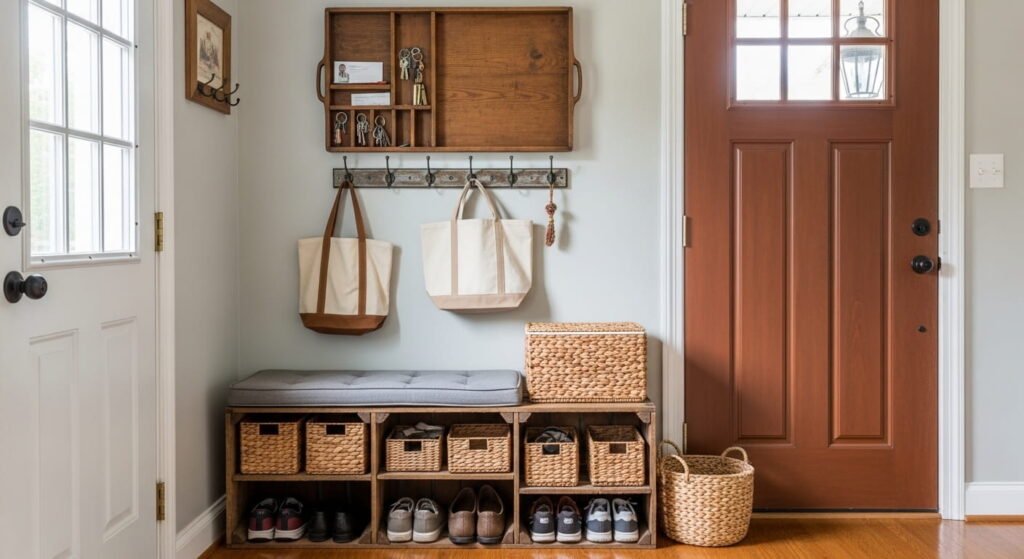
Remove those things, build simple systems for what remains, and maintain them with a consistent daily habit. The Organize Your Home Step by Step gives you the full system for doing exactly that, room by room, at whatever pace works for your family. And if the visual overwhelm of too much stuff is your biggest barrier right now, the 10 Home Organization Mistakes guide will show you exactly where to start untangling it.
Less really is more. Not as a philosophy, but as a practical daily reality. Your family deserves to find out what that feels like.
Also helpful: How to Organize Your Home Without Buying Anything | Small Home Storage Ideas | How to organize a small bedroom


Leave a Reply