

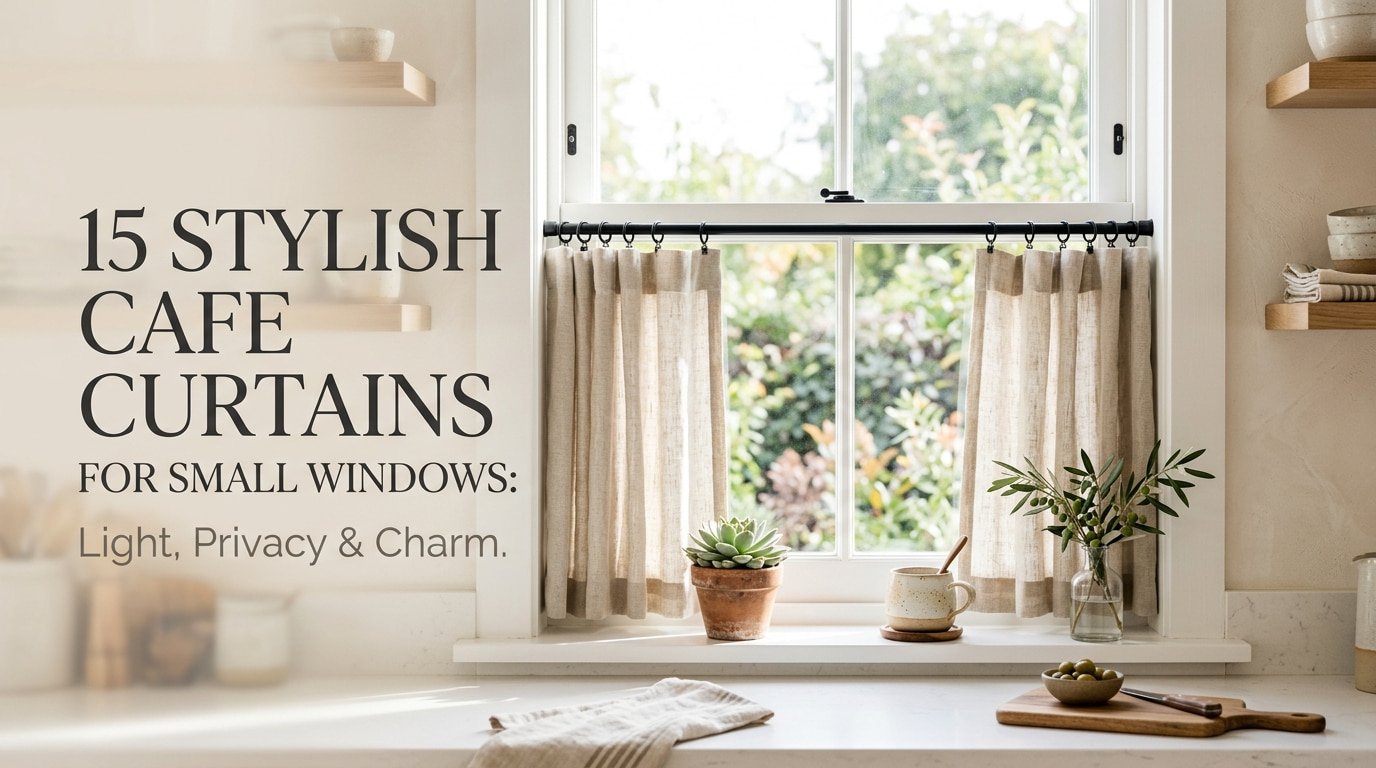
Cafe curtains offer a simple way to dress small windows without blocking light or making a room feel closed in. They cover only the lower half of the glass, so you keep privacy while the top stays open and bright. Many people choose cafe drapes curtains for kitchens, bathrooms, and cozy corners because they feel light and easy to move. Small window curtains in this style also help short or narrow frames look balanced instead of bare. You can find stylish curtains for small rooms in almost any fabric or color, from crisp cotton to soft linen. The right pair adds charm without heavy fabric or complicated hardware.
15 Distinct Cafe Curtain Styles to Try
Pinch Pleat
Look: Structured and tailored with clean, uniform vertical folds.
Design: The fabric is pinched at the top into neat, even pleats that hang straight. A curtain rod or track holds them in place.
Practical tip: Choose medium-weight cotton or linen blends in solid colors for a polished look in dining areas or home offices. The even folds stay tidy with minimal fuss. Pair them with a simple metal rod for a finished appearance that works in both modern and traditional spaces. This style holds its shape well over time and gives small windows a custom, ordered feel without extra bulk.
Parisian Bistro (Tension Rod Top & Bottom)
Look: Tailored, flat, and neatly anchored at both ends.
Design: Fabric stretches between two tension rods, one at the top and one at the bottom of the window. No rings or clips needed.
Practical tip: Pick lightweight cotton or sheer fabric so the panel stays smooth and easy to adjust. This style suits narrow bathroom or kitchen windows where you want full coverage on the lower half without drilling holes. Wipe-clean fabrics make daily care simple in high-use spots. The double-rod hold keeps the curtain in place even when windows open often.
Tie-Top
Look: Whimsical and soft with customizable fabric ties or ribbon bows.
Design: Wide fabric strips or ribbons sew onto the top edge and tie directly around the rod. You can adjust the height or loosen the bows for a relaxed drape.
Practical tip: Use soft cotton or lightweight linen and match the ties to your wall color for a pulled-together look. This style works well in casual living spaces or reading nooks where you want an easy, handmade feel. Change the ties seasonally for a quick update without buying new panels.
Tab-Top
Look: Casual and cottage-like with wide fabric loops.
Design: Broad fabric tabs sew along the top and slide onto the rod. The tabs create soft, even gathers as the curtain hangs.
Practical tip: Opt for natural textures like cotton or linen in muted tones. This style suits farmhouse curtains in kitchens or breakfast areas where you want an easy, lived-in look. Wide tabs slide smoothly and hide less of the rod than narrower options.
Classic Rod Pocket
Look: Clean and traditional with a simple sewn-in fabric tunnel.
Design: A pocket sewn along the top edge slips straight onto the rod. The fabric gathers naturally when pushed together.
Practical tip: This style works well in bold prints. Printed curtains in florals or checks add personality to small windows without needing extra hardware. Medium-weight cotton keeps the gathers neat and the pocket from stretching over time. Choose a rod diameter that fits the pocket snugly for a tidy finish.
Ring-Top with Clips
Look: Breezy, modern, and a bit industrial.
Design: Metal or wood rings attach to the fabric with clips or sew-on tabs. The rings slide freely along the rod.
Practical tip: Lightweight linen or cotton blends move easily and create soft movement. These make ideal kitchen cafe curtains because you can open and close them with one hand while cooking. Matte black or brushed metal rings add a clean contrast against light fabrics.
Box Pleat
Look: Architectural and geometric with crisp, formal folds.
Design: Wide, square pleats form at the top and hang in straight, structured panels. Hooks or a track usually hold them.
Practical tip: Choose heavier cotton or a cotton-blend for sharp pleats that hold their shape. Solid or subtly textured fabrics suit formal dining rooms or studies where you want order and clean lines. The deep folds add quiet presence without overwhelming a small window.
Ruffle Top
Look: Romantic, vintage, and feminine with soft gathered edges.
Design: Extra fabric gathers or ruffles along the header, then attaches to the rod with a pocket or ties.
Practical tip: Soft cotton or voile keeps the ruffles light. Soft ruffles suit bedroom decor and give gentle texture without heavy weight. Choose pale colors or small florals for a calm, pretty effect that pairs well with simple bedding. These ideas bedroom curtains work especially well on short windows above a dresser or nightstand.
Pencil Pleat
Look: Neat and classic with tightly grouped, slim folds.
Design: Narrow pleats form across the top like a row of pencils. A heading tape and hooks usually secure them to a track or rod.
Practical tip: Medium-weight fabrics such as cotton or polyester blends keep the pleats crisp. Neutral tones or subtle patterns fit almost any small window in living rooms or hallways. The tight folds use fabric efficiently and create a tidy, gathered look that stays even.
Inverted Pleat (Euro Pleat)
Look: Modern and sleek with a smooth front face.
Design: Pleats fold backward so the front stays flat and clean. Hooks attach behind the fabric.
Practical tip: Choose smooth cotton or linen blends in solid colors for a contemporary feel. This style works well in minimalist spaces or rooms with clean architecture. The flat front shows off fabric texture without extra bulk, making small windows look taller and more open.
Scalloped Header
Look: Decorative with a soft wave-pattern top edge.
Design: The top edge cuts into gentle curves or scallops before hanging from a rod or clips.
Practical tip: Lightweight cotton or lace-trimmed fabrics keep the curves soft. Soft pastels or white work well in bathrooms or girls’ rooms where you want a pretty detail. The scalloped edge draws the eye upward and adds interest without needing pattern in the main fabric.
Eyelet / Grommet
Look: Contemporary with metal rings set into the fabric.
Design: Large metal grommets punch along the top. The rod slides straight through the rings.
Practical tip: Medium-weight fabrics with a bit of body hold the grommets well. Matte or brushed metal finishes suit modern kitchens and living spaces. The rings slide smoothly, so opening and closing stays easy even on wider small windows.
Back-Tab (Hidden Tab)
Look: Minimalist because the rod stays completely hidden.
Design: Fabric tabs sew on the back of the panel. The rod slips through, leaving a smooth front.
Practical tip: Choose fabrics with good drape such as linen or soft cotton. Solids or quiet textures keep the clean look. This style fits rooms where you want the focus on the fabric itself rather than the hardware. It creates soft, even folds without visible rings or clips.
Lace Edge Bistro
Look: Heritage and Parisian-inspired with delicate lace trim.
Design: A simple panel often finishes with lace along the bottom or side edges and hangs from a rod or tension system.
Practical tip: Lightweight cotton or cotton-lace blends keep the look airy. This delicate style suits tiny window frames and adds soft detail without bulk. Small curtains for small windows in this style work especially well in bathrooms or powder rooms where you want privacy and a touch of charm.
Goblet Pleat
Look: Regal with padded pleats shaped like a wine glass.
Design: Each pleat forms a rounded, goblet shape at the top and hangs in deep, formal folds. Hooks usually support the weight.
Practical tip: Heavier fabrics such as cotton velvet or substantial linen help the goblets hold their shape. Deep colors or rich textures suit dining rooms or formal sitting areas. The structured top adds height and presence to small windows without needing extra length.
How to Choose the Right Cafe Curtains for Your Small Window
Start by measuring the width of the glass and the height from the sill to the point where you want the curtain to end. Most cafe curtains stop at the sill or just below it. Add a little extra width so the fabric gathers nicely when closed.
Next, think about fabric weight. Lightweight cotton or linen lets more light through and feels airy. Heavier fabrics block more view and add privacy. Match the weight to how much light and privacy you need in that room.
Rod and hanging style matter too. Tension rods work for renters. Standard rods suit most styles. Tab-top, tie-top, and ring-clip styles double well as door curtains when you need a soft divider or privacy on a French door or pantry entrance. Choose a rod finish that complements your other hardware so the whole window looks intentional.
FAQs
What length should cafe curtains be for small windows?
Most cafe curtains end at the windowsill or one to two inches below it. This length keeps the look balanced and prevents the fabric from pooling. Measure from the rod to the sill and choose panels that match that drop for a clean finish.
How do cafe curtains compare to roman curtains?
Cafe curtains hang loosely from a rod and cover only the lower half of the window. Roman curtains fold or lift in neat horizontal layers and usually cover the full height. Cafe curtains feel lighter and more casual, while roman curtains give a tailored, complete look.
Can cafe curtains work as door curtains too?
Yes. Shorter styles with tabs, ties, or rings slide easily and work well on French doors or pantry doors. They give privacy without blocking the full view or light the way full-length panels can.
Conclusion
Cafe curtains bring style, privacy, and light control to small windows without heavy fabric or complicated installs. From crisp pinch pleats to soft ruffles, the fifteen styles above give you clear options for any room. Pick the one that matches your space and daily needs. Save this list for your next refresh, try a new style, or share your favorite with a friend who needs window ideas.




Leave a Reply