

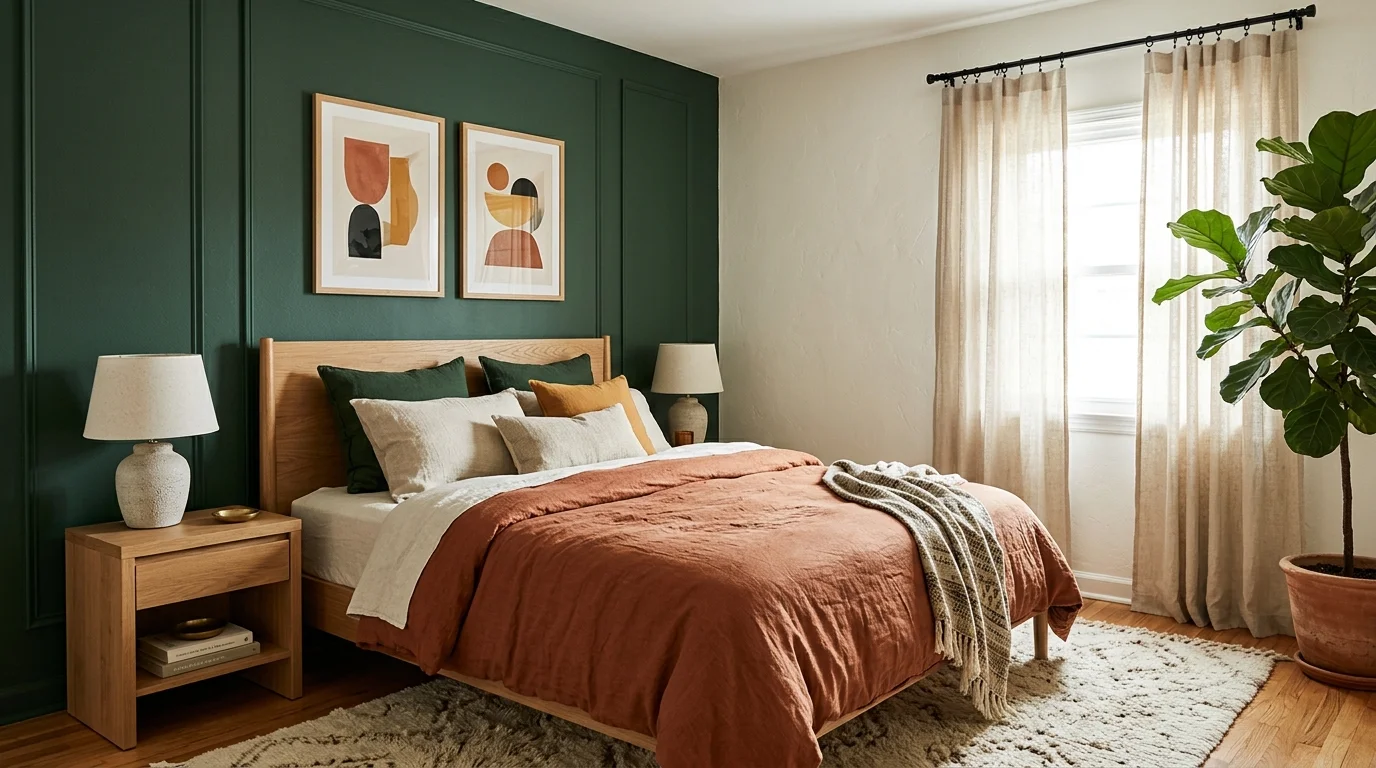
The safest bedroom color is a warm white such as Sherwin-Williams Alabaster (SW 7008). For a small or dim room, choose walls with an LRV (light reflectance value) of 55 or higher. For one dramatic wall, paint the wall behind the headboard Naval (SW 6244) or Peppercorn (SW 7674) and keep the other three walls light.
The nine bedroom color ideas below list exact paint codes, LRV and the type of room each one suits. They are bedroom-specific, so for colors across the rest of the home, see our guide to interior color schemes.
Bedroom Color Ideas at a Glance
| Palette | Wall color | Accent color | Mood | Best for |
|---|---|---|---|---|
| 1. Warm White and Soft Beige | Alabaster SW 7008 (LRV 82) | Accessible Beige SW 7036 (LRV 58) | Calm | Small or dim rooms |
| 2. Sage Green and Cream | Creamy SW 7012 (LRV 81) | Softened Green SW 6177 (LRV 49) | Relaxed | Rooms with warm daylight |
| 3. Dusty Blue and Light Gray | Agreeable Gray SW 7029 (LRV 60) | Sleepy Blue SW 6225 (LRV 58) | Restful | Sleep-focused primary bedrooms |
| 4. Blush Pink and Warm Neutrals | Faint Coral SW 6329 (LRV 75) | Kilim Beige SW 6106 (LRV 57) | Soft | Warmth without bold color |
| 5. Navy Blue and Crisp White | Pure White SW 7005 (LRV 84) | Naval SW 6244 (LRV 4) | Bold | Bright rooms, one accent wall |
| 6. Olive Green and Natural Wood | Olive Grove SW 7734 (LRV 20) | Natural wood and woven texture | Earthy | Large, bright rooms |
| 7. Lavender and Soft Gray | Repose Gray SW 7015 (LRV 58) | Grape Mist SW 6548 (LRV 54) | Gentle | A hint of color that stays neutral |
| 8. Terracotta and Sand | Netsuke SW 6134 (LRV 63) | Cavern Clay SW 7701 (LRV 20) | Warm | Warm afternoon light |
| 9. Charcoal Gray and Muted Beige | Accessible Beige SW 7036 (LRV 58) | Peppercorn SW 7674 (LRV 10) | Moody | Bright rooms, one accent wall |
LRV values come from the Sherwin-Williams color pages and are rounded to the nearest whole number. A higher LRV means the color reflects more light.
9 Bedroom Color Ideas With Paint Codes
1. Warm White and Soft Beige
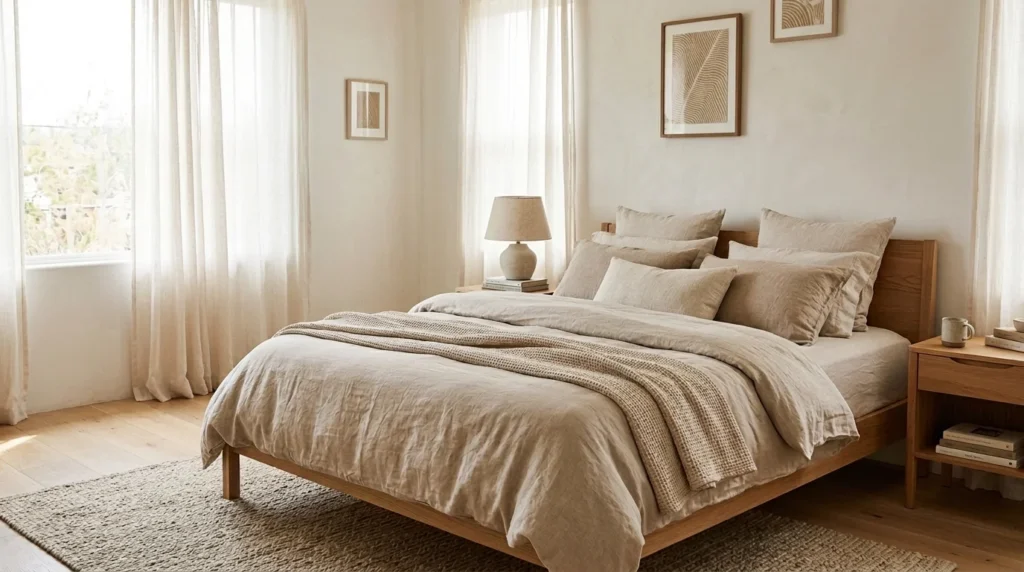
| Walls | Alabaster SW 7008 (LRV 82) |
| Accent | Accessible Beige SW 7036 (LRV 58) on bedding, a rug or an upholstered bench |
| Trim and ceiling | Pure White SW 7005 (LRV 84) |
| Pair with | Oak or ash furniture and linen bedding |
| Best for | Small bedrooms, north-facing rooms and rooms you may restyle later |
| Skip it if | You want a color you can notice from across the room |
Alabaster reflects about 82 percent of the light that hits it, which makes it one of the easiest choices for a small or dim bedroom. Accessible Beige sits about 24 points lower on the scale, so it reads as a soft step down from the walls instead of a contrast.
Because the two colors are close in depth, texture has to carry the room. A chunky knit throw, a linen duvet and a woven rug give the eye something to settle on, and the room avoids the flat look that an all-neutral palette can have.
2. Sage Green and Cream
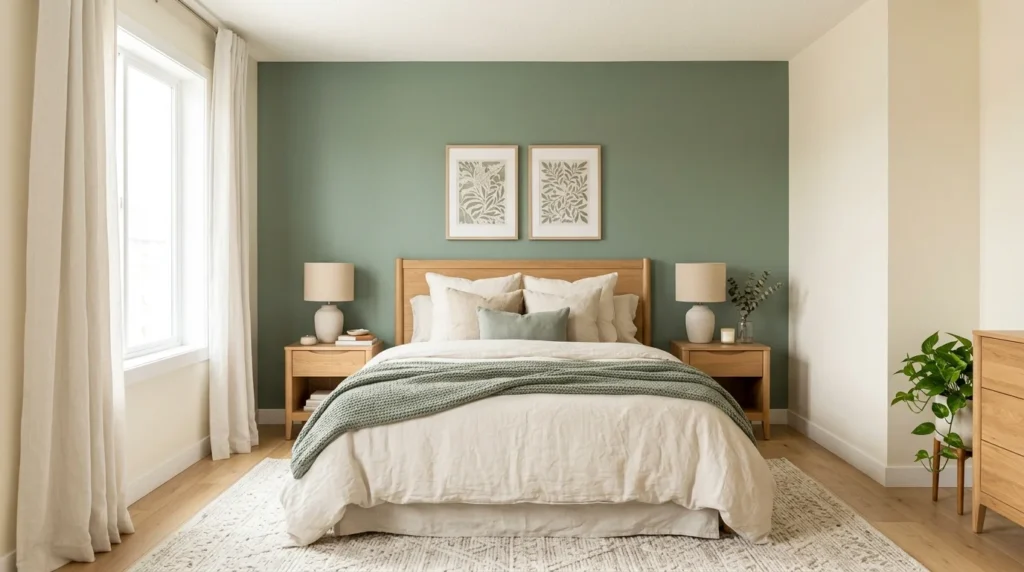
| Walls | Creamy SW 7012 (LRV 81) |
| Accent | Softened Green SW 6177 (LRV 49) on one accent wall, curtains or bedding |
| Trim and ceiling | Alabaster SW 7008 (LRV 82) |
| Pair with | Walnut or oak furniture, cream linen and a few leafy plants |
| Best for | Bedrooms with south or west windows |
| Skip it if | Your room is very dim and the green already looks gray in a sample |
Softened Green is a gray-green at LRV 49, light enough to cover a whole wall without darkening the room much. Set against Creamy walls, it gives the bed wall a clear focal point and keeps the rest of the room bright.
In a medium or large room you can paint all four walls Softened Green and use Creamy on the bedding and curtains instead. In that case, keep the trim and ceiling in Alabaster so the room still has a light edge.
3. Dusty Blue and Light Gray
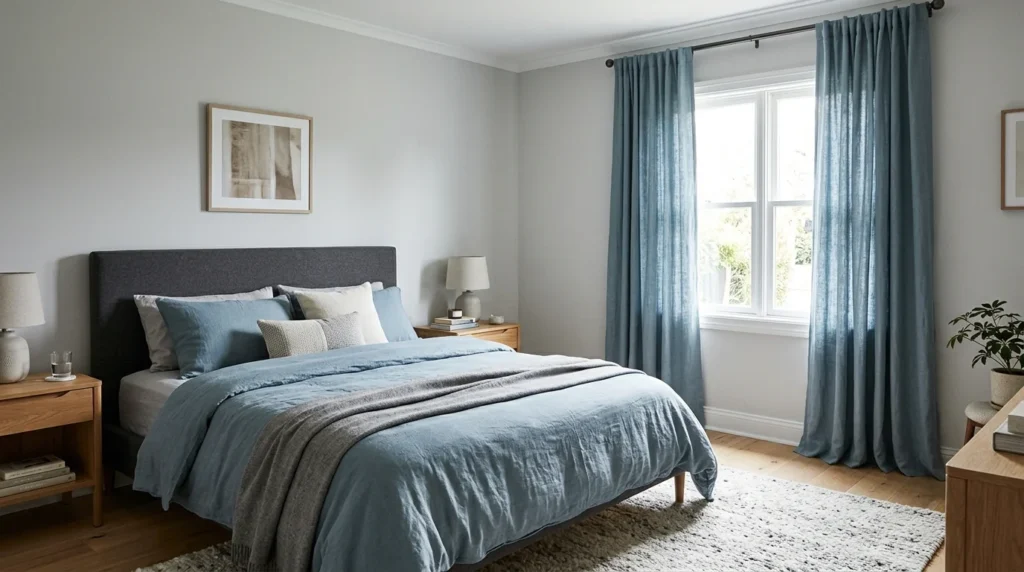
| Walls | Agreeable Gray SW 7029 (LRV 60) |
| Accent | Sleepy Blue SW 6225 (LRV 58) on bedding, curtains or the headboard wall |
| Trim and ceiling | Pure White SW 7005 (LRV 84) |
| Pair with | Warm wood nightstands and 2700K bulbs in the bedside lamps |
| Best for | A primary bedroom built around sleep, with south or east light |
| Skip it if | The room faces north and you only use cool-white bulbs |
Agreeable Gray is a warm gray, so it keeps the blue from feeling icy. Sleepy Blue is a pale gray-blue, and its LRV is within about three points of the wall color. The two colors differ in hue, not in depth, which is why the pairing looks calm instead of busy.
Cool colors lose warmth quickly in a north-facing room. Wood furniture and warm lamp light add back most of that warmth.
4. Blush Pink and Warm Neutrals
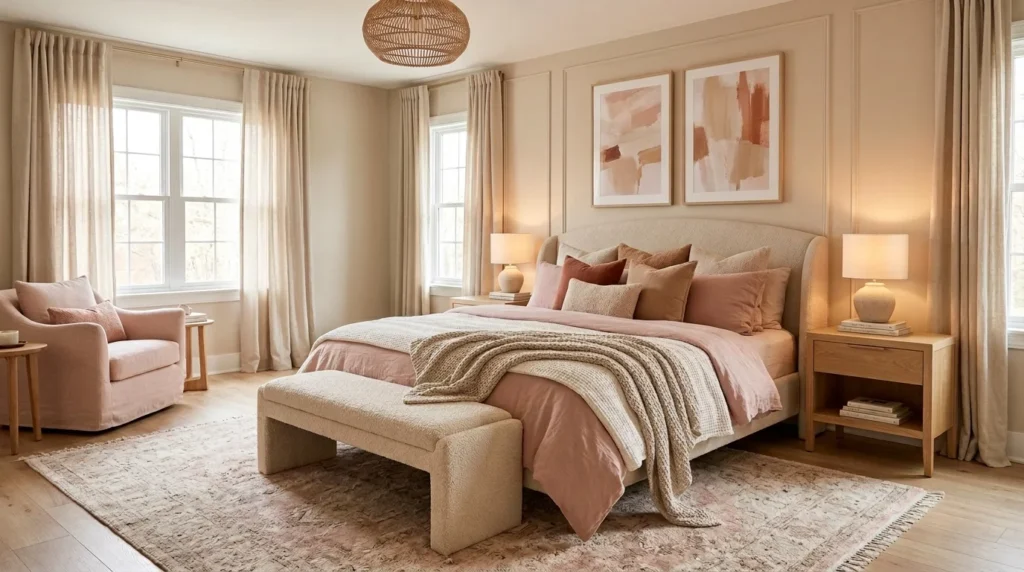
| Walls | Faint Coral SW 6329 (LRV 75) |
| Accent | Kilim Beige SW 6106 (LRV 57) on curtains, a headboard or a rug |
| Trim and ceiling | Alabaster SW 7008 (LRV 82) |
| Pair with | Light oak, rattan and cream or oatmeal linen |
| Best for | Bedrooms that need warmth without bold color |
| Skip it if | You want a room that reads clearly pink |
Faint Coral is a pale pink-peach that looks closer to a warm cream than to a true pink. That is what keeps it calm on all four walls. Kilim Beige is a light tan, and pairing blush with tan instead of bright white stops the pink from looking sweet.
Let the tan and cream carry the bedding. Pink walls with pink textiles on top push the room toward a single, very sweet tone, while tan bedding keeps it grown-up.
5. Navy Blue and Crisp White
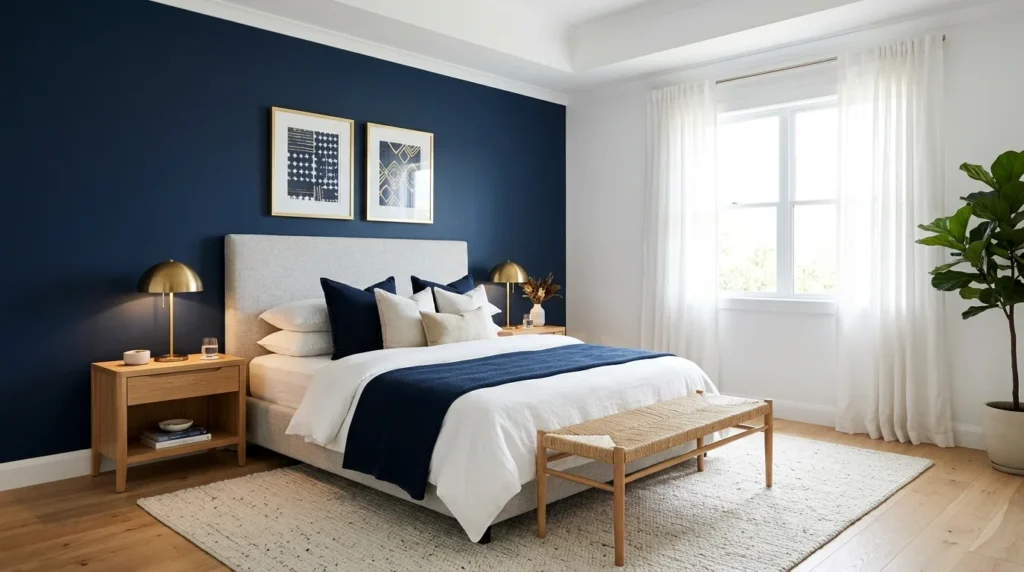
| Walls | Pure White SW 7005 (LRV 84) on three walls |
| Accent | Naval SW 6244 (LRV 4) on the wall behind the headboard |
| Trim and ceiling | Pure White SW 7005 (LRV 84) |
| Pair with | Brass hardware, light oak and white bedding |
| Best for | Bedrooms with strong daylight and a headboard wall without a window |
| Skip it if | The room is small and dim and you would paint every wall navy |
This palette has the biggest contrast in the list, about 80 LRV points between the walls and the accent. Naval absorbs almost all the light that reaches it, so keep it to one wall and let the three white walls bounce light back into the room.
Pure White is a soft, slightly warm white, so it does not look clinical next to navy. Keep the bedding mostly white and let the navy wall work as a backdrop. Brass lamps or a wood nightstand add warmth against the cool color.
6. Olive Green and Natural Wood
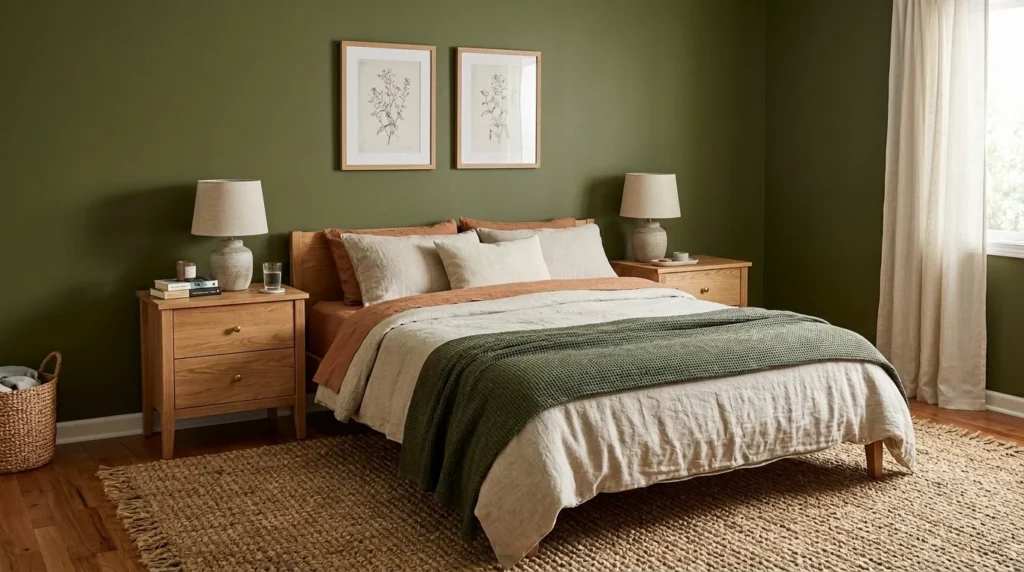
| Walls | Olive Grove SW 7734 (LRV 20) on all walls in a large room, or on one accent wall |
| Accent | Natural wood furniture, woven baskets and a jute rug |
| Trim and ceiling | Creamy SW 7012 (LRV 81) |
| Pair with | Oak or walnut, rattan and cream linen |
| Best for | Large or bright bedrooms |
| Skip it if | The room is small and faces north |
Olive Grove is a muted yellow-green with an LRV of about 20, so treat it as a dark color. On all four walls it needs real daylight to look rich instead of heavy. In a smaller room, paint the headboard wall and keep the others light.
Natural wood is what makes the color work. Oak and walnut have a warm undertone that suits the yellow in the green, and a jute rug or woven baskets add texture that keeps a dark wall from feeling flat.
7. Lavender and Soft Gray
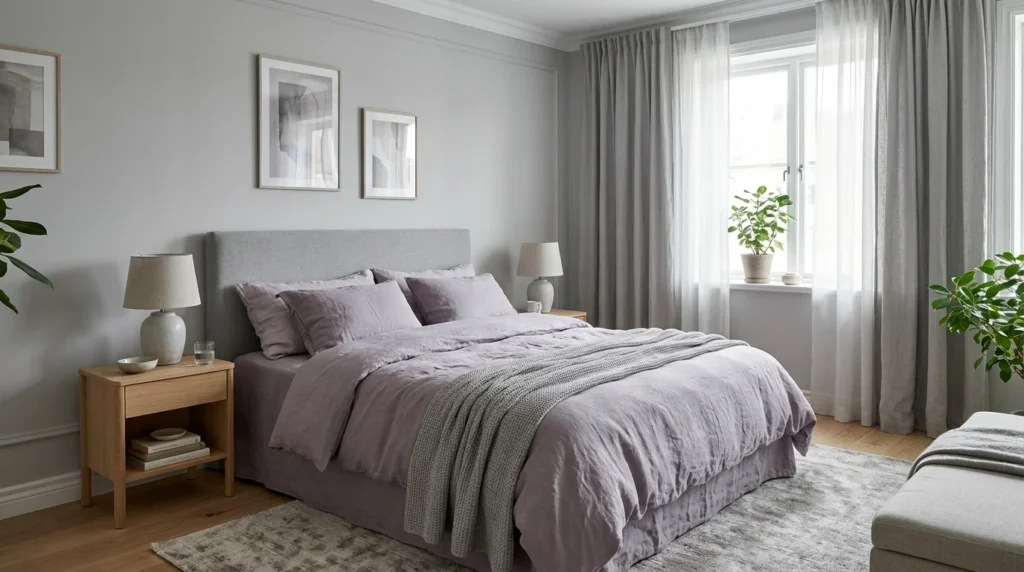
| Walls | Repose Gray SW 7015 (LRV 58) |
| Accent | Grape Mist SW 6548 (LRV 54) on bedding, curtains or one wall |
| Trim and ceiling | Pure White SW 7005 (LRV 84) |
| Pair with | Light wood, brushed nickel hardware and white bedding |
| Best for | A hint of color that stays close to neutral |
| Skip it if | You want a clear lilac |
Grape Mist is a gray-purple, which is why it works in a bedroom. A muted lavender reads as a neutral with a hint of color, while a bright purple can make the room look themed. Repose Gray is a warm gray, and that warmth keeps the purple from turning cold.
If you want lavender on the walls of a small room, Lite Lavender (SW 6554, LRV 71) is the lighter option. It reflects far more light than Grape Mist, so the room stays open.
8. Terracotta and Sand
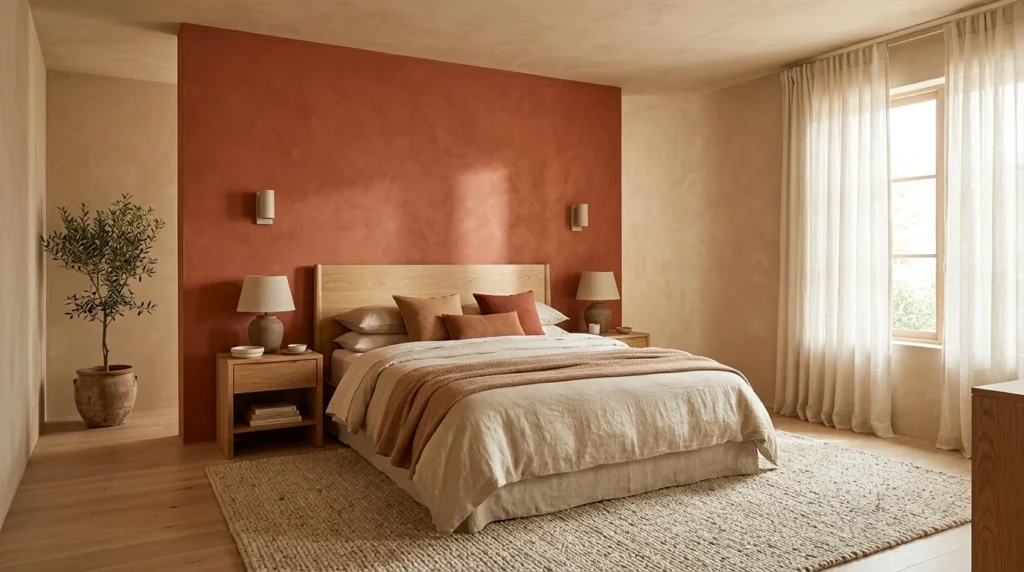
| Walls | Netsuke SW 6134 (LRV 63) |
| Accent | Cavern Clay SW 7701 (LRV 20) on the headboard wall, bedding or a throw |
| Trim and ceiling | Creamy SW 7012 (LRV 81) |
| Pair with | Cream or white linen, rattan and light wood |
| Best for | Bedrooms with warm afternoon light |
| Skip it if | The room is small and dim and you want terracotta on every wall |
Netsuke is a soft sand color, and Cavern Clay is a brown-red clay with an LRV of about 20. That makes Cavern Clay best as one wall or as textiles, with the sand walls keeping the room light.
A bedroom is meant for rest, so balance the clay with cream or white bedding. Without it, a terracotta wall and terracotta bedding can feel too intense late in the evening.
9. Charcoal Gray and Muted Beige
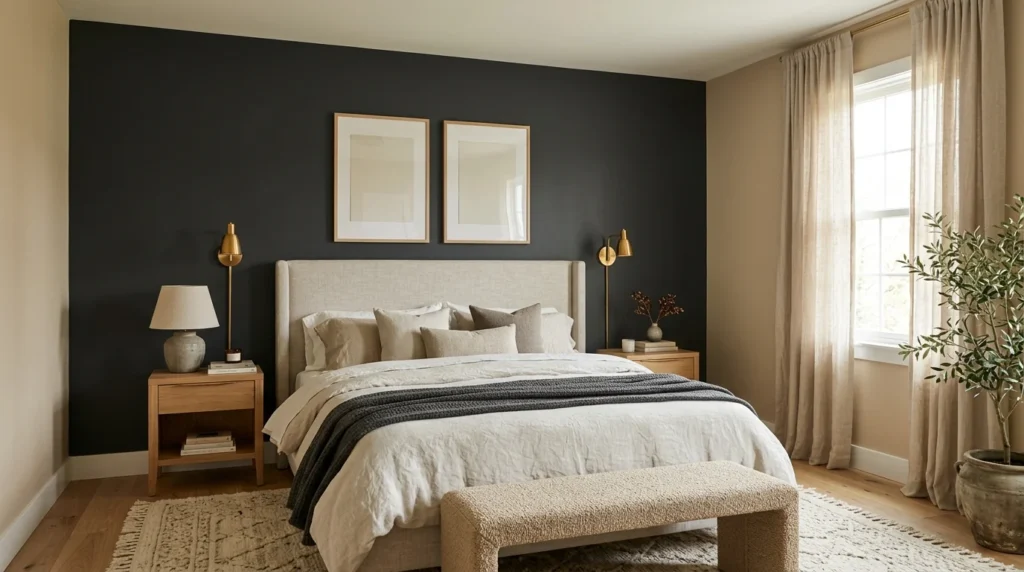
| Walls | Accessible Beige SW 7036 (LRV 58) |
| Accent | Peppercorn SW 7674 (LRV 10) on the headboard wall or a painted headboard panel |
| Trim and ceiling | Pure White SW 7005 (LRV 84) |
| Pair with | White or oatmeal linen, oak furniture and black or bronze fixtures |
| Best for | Bedrooms with strong daylight |
| Skip it if | The room is small and dim and you would paint more than one wall |
Peppercorn is a deep charcoal gray with an LRV of about 10. Accessible Beige is the same neutral used as the accent in idea 1, and here it carries the walls. The gap between the two is about 48 points, which is strong contrast but softer than navy against white.
Keep the charcoal to one wall or a painted headboard panel. The beige walls reflect enough light to keep the room from closing in, and white or oatmeal bedding in front of the dark wall gives the bed a clean outline.
How to Choose the Right Bedroom Color
Start With Your Window Direction
In the US, a north-facing bedroom gets cooler, dimmer light all day, so warm colors with an LRV above 55 keep it from looking flat and gray. A south-facing room gets bright, warm light for most of the day and can carry deeper colors such as Olive Grove or Cavern Clay. East-facing rooms are bright in the morning and dim by afternoon, while west-facing rooms are the reverse, with warm light in the evening.
Most people use a bedroom mainly in the morning and at night, so check every color under your bedside lamps as well as in daylight.
Use LRV to Judge How Light or Dark a Color Will Look
LRV runs from 0 for black to 100 for pure white and measures how much light a color reflects. Sherwin-Williams lists it on every color page. As a working rule, walls between LRV 55 and 85 make a small or dim bedroom feel open, colors between 20 and 55 suit medium and large rooms with decent daylight, and anything under 20 works best on a single accent wall. By that rule, Alabaster (82) opens up a room, Softened Green (49) suits a mid-size room, and Naval (4) belongs on one wall.
Match Undertones to the Furniture You Are Keeping
Your bed frame, nightstands and dresser are the hardest pieces to change, so pick wall colors that suit their wood tone. Warm woods such as oak, walnut and cherry pair well with warm whites, beiges and olive. Very dark furniture looks lighter against walls at LRV 60 or above.
If you rent or expect to replace furniture soon, Alabaster is the easiest base, since beige, gray, blue and green bedding all sit well against it.
Follow the 60-30-10 Split
A simple way to balance a palette is to use the main color on about 60 percent of the room, mostly the walls and ceiling. A second color covers about 30 percent, through bedding, curtains and a rug. An accent covers the last 10 percent, through pillows, art and lamps. In the nine ideas above, the wall color is the 60 and the accent color is the 30.
Pick the Right Sheen
Matte or eggshell works best on bedroom walls. Both soften lamp light, and matte hides small wall flaws better than higher sheens. Use satin or semi-gloss on trim and doors, since they wipe clean more easily.
Test a Sample Before You Buy a Gallon
Paint a 2 foot square sample, or stick up a large peel-and-stick sample, on two different walls: one near the window and one in the darkest corner. Look at both in the morning, in the afternoon and at night under your lamps, and leave them up for at least 24 hours. Hold the sample next to your bedding and furniture, because the colors around a paint change how it looks.
Bedroom Color Mistakes to Avoid
Choosing from a paint chip or a screen. A 2 inch chip under store lights or a color on a phone screen cannot show how a color reads across a full wall. Use a large sample on the wall instead.
Skipping the lamp test. Bedroom light comes from lamps for much of the day. Warm 2700K bulbs make beige and cream look warmer, and cool-white bulbs make gray-blues look colder.
Painting a small, dim room a color with an LRV near 20 or lower. Naval, Peppercorn, Cavern Clay and Olive Grove absorb most of the light that hits them. On all four walls of a small north-facing room, they make the space feel closed in. Limit them to one wall.
Matching the walls and bedding exactly. A bed that matches the wall color disappears into it. Shift the bedding a few LRV points lighter or darker, or change the texture, so the bed stands out.
Pairing a cool white with a warm wall. A bright, cool white on the ceiling or trim next to Creamy or Alabaster can make the walls look yellow. Stay with the whites used in the ideas above, which share a warm undertone.
Frequently Asked Questions
What color should I paint a bedroom ceiling?
White with an LRV of 80 or higher, such as Pure White (SW 7005, LRV 84) or Alabaster (SW 7008, LRV 82), in a flat or matte finish. A light ceiling bounces light back into the room, and a flat finish hides small flaws better than a glossy one.
Is an accent wall a good idea in a bedroom?
Yes, in most bedrooms. The wall behind the headboard is the best spot because it frames the bed. Choose a wall without a window, since a window in a dark wall creates a harsh contrast with the daylight.
How much paint do I need for a bedroom?
A 12 by 12 foot bedroom with 8 foot ceilings has about 384 square feet of wall area before you subtract doors and windows. A gallon usually covers 350 to 400 square feet, so two coats take about two gallons.
Can I use these colors with a different paint brand?
Yes. Most paint stores can match a Sherwin-Williams color by name or code in another brand. Results shift slightly with the formula and sheen, so buy a sample in the brand you choose before you paint the room.
Conclusion
The best bedroom color depends on the light in your room, the furniture you are keeping and how much contrast you want. If you want one safe choice, start with Alabaster (SW 7008). If you want contrast, add a single accent wall in Naval or Peppercorn. Whichever palette you pick, test a sample under daylight and your own lamps before you buy paint.
Planning other rooms next? Our living room color combinations and dining room color palettes guides apply the same method to rooms used for entertaining.




Leave a Reply