

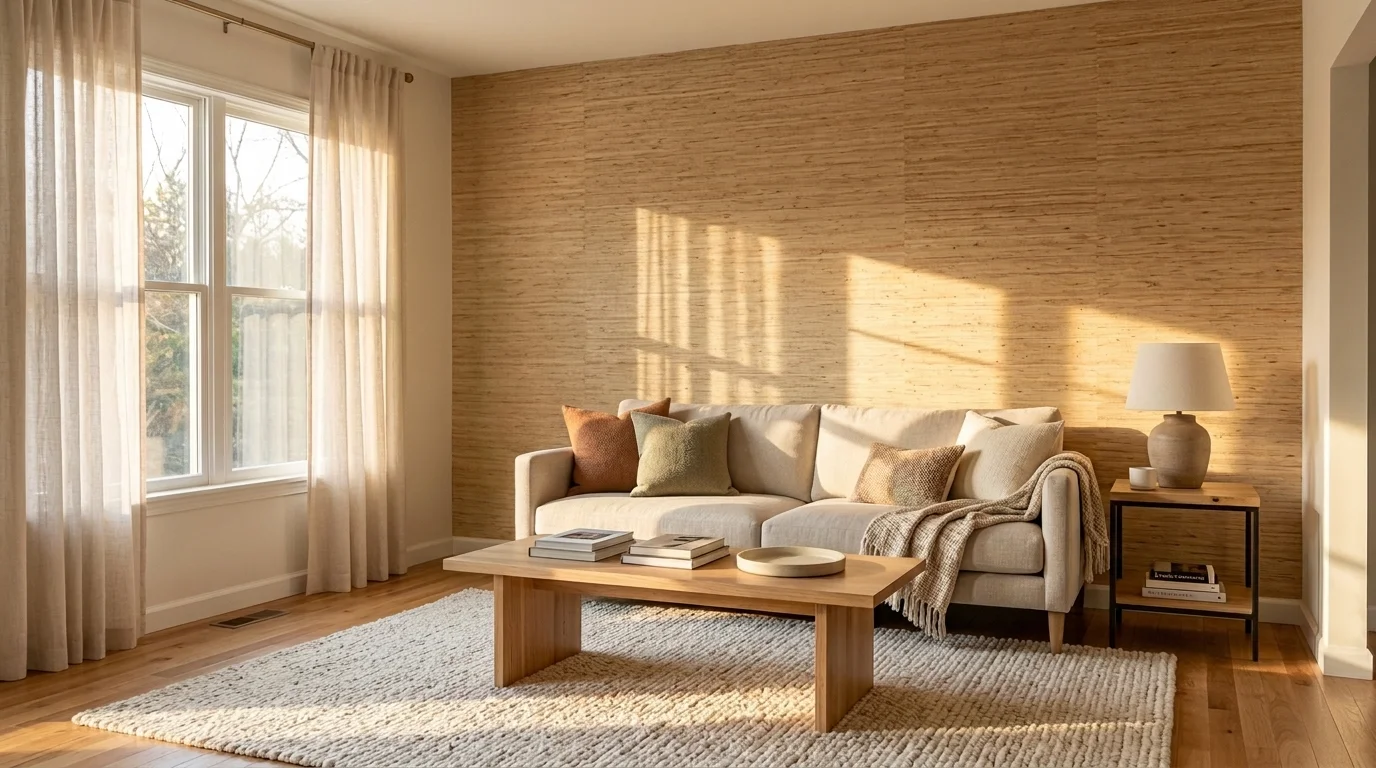
A flat, perfectly smooth wall can start to feel sterile, especially in homes built around clean lines and neutral palettes. Texture is one of the easiest ways to fix that without touching color at all, and textured wallpaper has become one of the fastest ways to introduce it. Grasscloth, embossed vinyl, woven fiber, and flocked finishes add a tactile, dimensional quality that paint can’t replicate: light catches them differently throughout the day, shadow pools in the weave, and a wall that used to disappear into the background suddenly has presence.
If you’re searching for textured wallpaper ideas, it helps to know which kind of “texture” you’re solving for. This guide covers wallpaper that carries its own texture, the raised, woven, or flocked kind you apply to the wall. If your walls themselves are uneven or already textured, think stucco, orange peel, or a popcorn finish, and you’re trying to figure out what will lie flat over them.
Here are five ways to use textured wallpaper, room by room, to add warmth, depth, and a quiet sense of luxury.
Idea 1: Statement Accent Walls in Bedrooms and Living Rooms
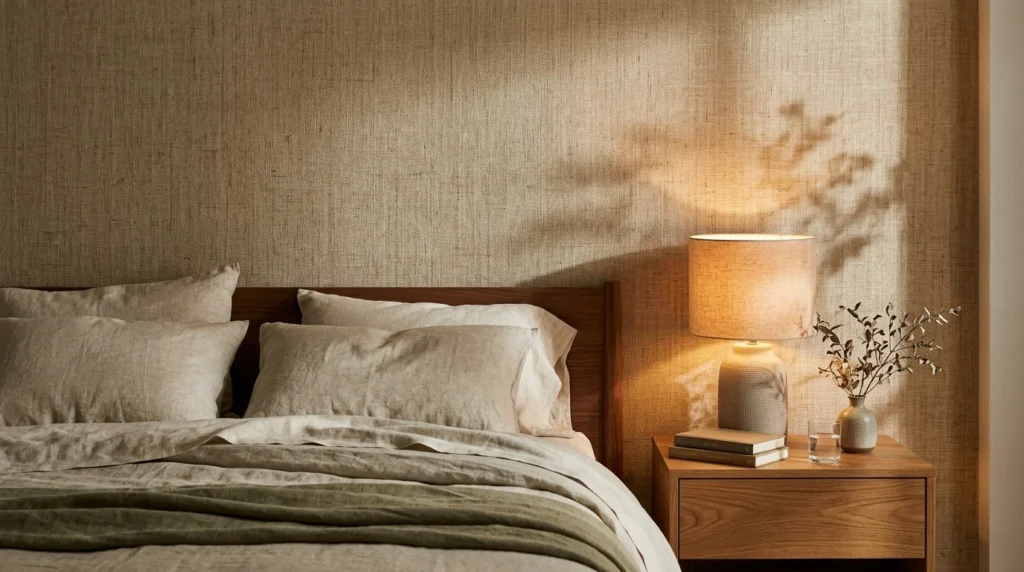
Of the five ideas here, this is the most forgiving place to start. Grasscloth, woven raffia, and faux-linen wallcoverings turn one wall, usually the one behind a headboard or a sofa, into the visual anchor of the room, without committing the whole space to a bold color or pattern.
What makes grasscloth wallpaper work so well as an accent is how it behaves under light. Woven natural fibers are never perfectly flat, so as sunlight moves across the wall through the day, or a lamp switches on in the evening, the surface catches shadow in the weave and shifts in tone. A matte-painted wall looks the same at 9 a.m. and 9 p.m.; a grasscloth or raffia wall doesn’t.
In a bedroom, this works especially well behind the headboard, where the texture reads as intentional rather than decorative noise, and pairs naturally with linen bedding and warm wood furniture. In a living room, the same approach works behind a sofa or around a fireplace, giving the eye somewhere to land without competing with artwork or shelving nearby.
If you want the look with less commitment, faux-linen textured wallpaper, a printed or embossed vinyl that mimics woven fabric, gives similar depth at a lower price point and is more forgiving to install and maintain than true grasscloth. It’s a sensible starting point if you’ve never worked with a textured material before.
Idea 2: Jewel-Box Powder Rooms and Entryways
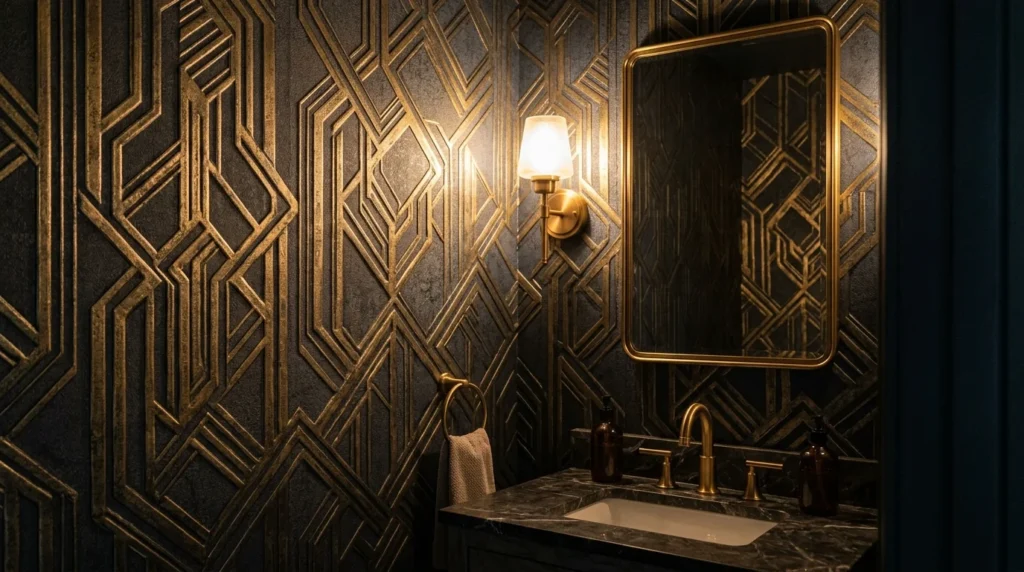
Small, windowless rooms are usually treated as an afterthought, but they’re actually the best place in the house to use a textured wallpaper you’d never commit to in a larger space. A powder room or entryway has a small enough surface area that an embossed foil, metallic weave, or heavily dimensional pattern reads as a deliberate, jewel-box moment rather than an overwhelming one.
This is where 3D textured wallpaper earns its keep. Raised geometric patterns, hammered-metal finishes, and metallic-threaded weaves catch whatever light is available, usually a single sconce or pendant, and bounce it around the room in a way that makes the space feel considered rather than cramped. Because there’s no daylight washing it out, the texture and sheen stay visible from morning to night.
The other advantage is cost and risk. Papering a powder room or entryway typically takes one or two rolls, which makes it the lowest-risk place in the home to try a wallpaper you’re genuinely unsure about. If it feels too bold a year from now, you’re repapering a small space, not a living room, so it’s worth being more adventurous here than you’d be anywhere else in the house.
Idea 3: Cozy Sophistication in Dining Rooms and Home Offices
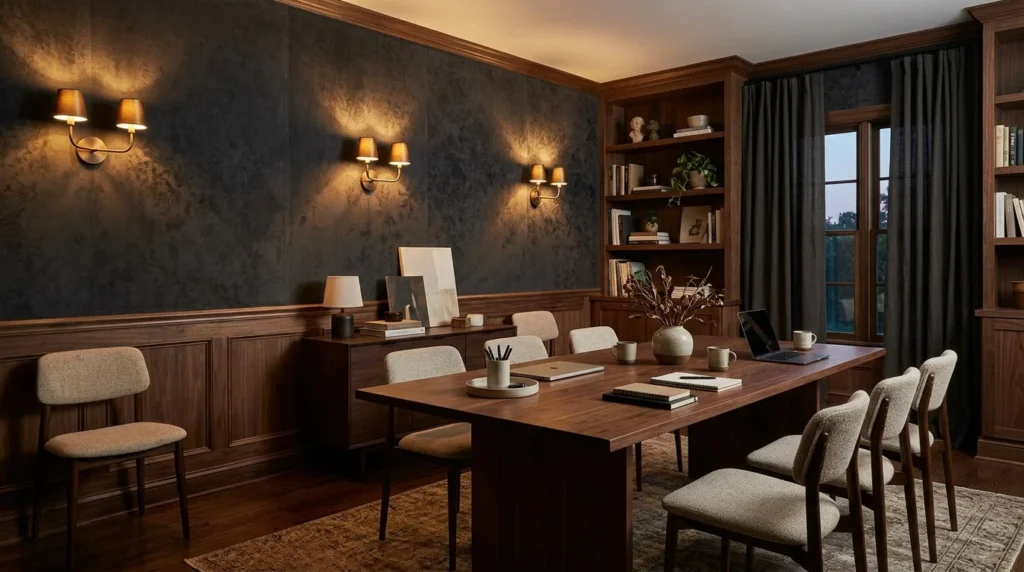
Dining rooms and home offices both benefit from a mood that’s harder to get from paint alone: intimacy. Dark, textured wallcoverings like suede-finish vinyl, felt, or flocked wallpaper absorb more ambient sound and light than a flat painted wall, which makes a dining room feel more enclosed and conversational in the evening, and a home office feel more focused during the day.
Flocked wallpaper in particular has a velvet-like texture, short fibers applied in a pattern, that’s especially effective at softening a room acoustically, which matters more than most people expect in a home office used for calls. Pair it with warm, low lighting (sconces or a dimmed pendant rather than overhead flood lighting), existing wood trim or wainscoting, and simpler, modern furniture that doesn’t compete with the wall for attention.
A dark, richly textured wall works best as the quietest, most expensive-feeling thing in the room, not one pattern among several, so resist the urge to add a second bold print nearby.
Idea 4: Elevating the Ceiling (“The Fifth Wall”)
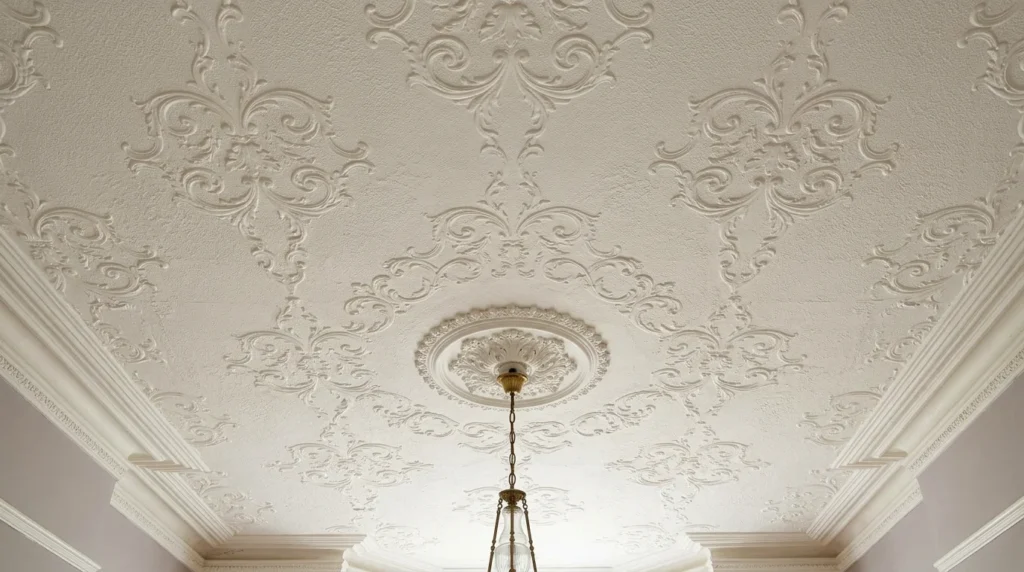
Ceilings are the most overlooked surface in most homes, which is exactly why a subtly textured wallpaper overhead has an outsized effect. Interior designers often call the ceiling “the fifth wall” for this reason: it’s a large, usually blank plane that most people never think to treat at all.
A soft geometric or metallic-finish textured wallpaper on the ceiling draws the eye upward and adds a sense of architecture to a plain, boxy room, especially one with low or unremarkable ceilings that would look even lower with a bold pattern on the walls instead. This works best as a restrained choice: a subtle metallic sheen or a fine embossed texture rather than the boldest, busiest pattern in the room, since you’re viewing it from several feet below rather than at eye level.
It’s a particularly good fit for formal dining rooms, primary bedrooms, and reading nooks, spaces where people spend enough time looking up or sitting still to actually notice it.
Idea 5: Framed Wallpaper Panels and Moldings
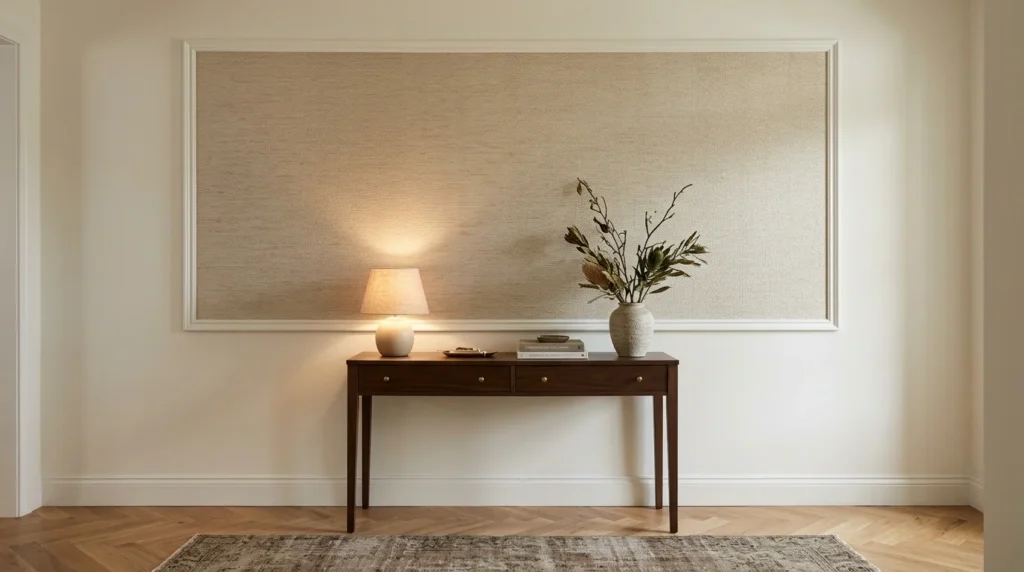
Not every room needs, or can afford, to be fully papered in a premium textured wallcovering. Framing a single panel, or a few panels, of textured wallpaper inside picture-frame wainscoting or simple molding is the budget-friendly version of the same idea: it turns leftover scraps or a single roll into what reads as custom art.
This approach is especially practical if you’ve already used a dimensional or grasscloth wallpaper elsewhere in the house and have partial rolls left over. Rather than discarding them, frame a panel or two in a hallway, above a console table, or between two windows. The molding itself does a lot of the visual work, giving the wallpaper a defined edge that makes even a small, inexpensive remnant look intentional and finished, rather than like a leftover sample.
It’s also the lowest-commitment way to test a bold texture, an embossed foil, a metallic weave, even a pattern you’re on the fence about, before deciding whether you want it covering a full wall.
Styling and Maintenance Tips for Textured Wallpaper
Textured wallpaper does a lot of visual work on its own, so the rest of the room should stay relatively quiet. Pair it with furniture and fabrics in simpler, solid materials, smooth leather, plain linen, unpatterned upholstery, rather than layering another bold pattern or heavy texture on top. One dimensional, textured surface per room is usually the limit before a space starts to feel busy rather than rich.
Care depends heavily on the material. Natural grasscloth and woven raffia should be dusted or vacuumed with a soft brush attachment; because the fibers are woven rather than sealed, wiping them with a wet cloth can stain or warp the surface permanently. Velvet flocking should only ever be spot-cleaned, and even then cautiously, since water tends to flatten the pile. Embossed vinyl wallpapers are the most forgiving of the group and can usually be wiped down with a damp cloth, which makes them a practical choice for higher-traffic spots like entryways and powder rooms.
One more consideration before you commit to any of these: the surface underneath matters as much as the wallpaper itself. If the wall isn’t fully smooth to begin with, see choosing wallpaper for textured walls for how to prep it properly first.
Frequently Asked Questions
What is textured wallpaper?
Textured wallpaper is a wallcovering with a raised, woven, or dimensional surface rather than a flat printed pattern. Common types include grasscloth, flocked (velvet-textured), embossed vinyl, and woven fiber wallpapers, each adding physical depth you can see and feel, not just a printed design.
Is textured wallpaper still in style in 2026?
Yes. Textured wallpaper has moved from a niche design choice to a mainstream one as homeowners lean into sensory, tactile interiors rather than relying on paint color alone. Grasscloth and dimensional finishes in particular have stayed popular because they read as timeless rather than trend-driven, unlike a bold printed pattern that can date a room.
Which rooms work best for textured wallpaper?
Small, low-traffic spaces like powder rooms, entryways, and accent walls in bedrooms are the easiest places to start, since they limit cost and let you commit to a bolder texture with less risk. Ceilings, dining rooms, and home offices are strong choices too, once you’re comfortable with how a specific material performs in daily use.
Is textured wallpaper hard to clean or maintain?
It depends on the material. Embossed vinyl is fairly low-maintenance and can be wiped down with a damp cloth, while natural grasscloth and flocked wallpaper need gentler, dry care, since water and harsh cleaners can stain or damage the fibers permanently.
Conclusion
Texture is one of the fastest ways to take a flat, forgettable wall and turn it into a designed moment, without touching the color palette at all. Whether that means a single grasscloth accent wall, a jewel-box powder room, or a subtly textured ceiling, each of these five ideas is a relatively low-risk, high-impact place to start: most require just one wall, one small room, or a single leftover roll.




Leave a Reply