

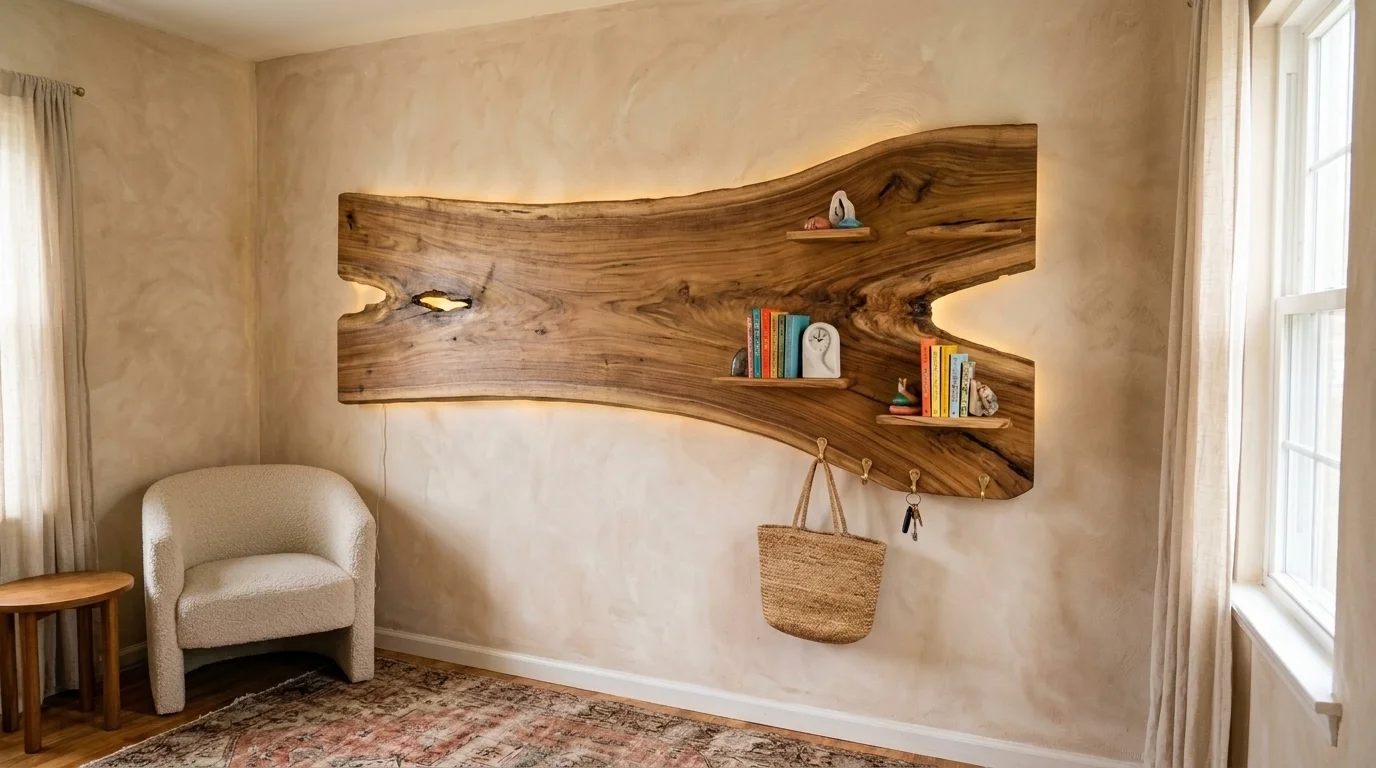
Creative home accessory ideas can transform a room without a full renovation, from a few new cushions to a well-placed mirror or a coordinated set of trays. Below are practical ideas for six rooms in your home, along with guidance on choosing accessories that fit your style, your existing colors, and the size of your space.
Step-by-Step Guide: Selecting the Best Accessories for Your Home
Match Accessories With Your Interior Style
Before buying anything new, look at the style you already have, minimalist, modern, traditional, or eclectic, and choose accessories that reinforce it rather than fight it. A woven basket and a sleek metal vase can both be beautiful on their own, but mixing too many different styles in one room can make it feel unplanned rather than curated.
Balance Colors, Textures, and Materials
Accessories are one of the easiest ways to add color and texture to a room without repainting, since cushions, throws, and small decor items are far less expensive to change than walls or furniture. If you’ve already settled on a color scheme, use accessories to repeat your accent colors in small doses rather than introducing new ones.
Mix materials and textures, wood, woven fiber, ceramic, metal, glass, so the room doesn’t feel flat even within a narrow color palette.
Choose Accessories That Fit Your Space
Scale matters as much as style. A handful of tiny accessories can get lost in a large room, while a few oversized pieces can overwhelm a small one. As a rough guide, fewer, larger accessories usually read as more intentional than many small ones scattered across a room.
Consider how the room is actually used, too. A high-traffic entryway needs more durable, easy-to-clean accessories than a formal dining room that sees occasional use.
Creative Home Accessory Ideas for Every Room
Living Room: Decorative Cushions, Throws, and Vases
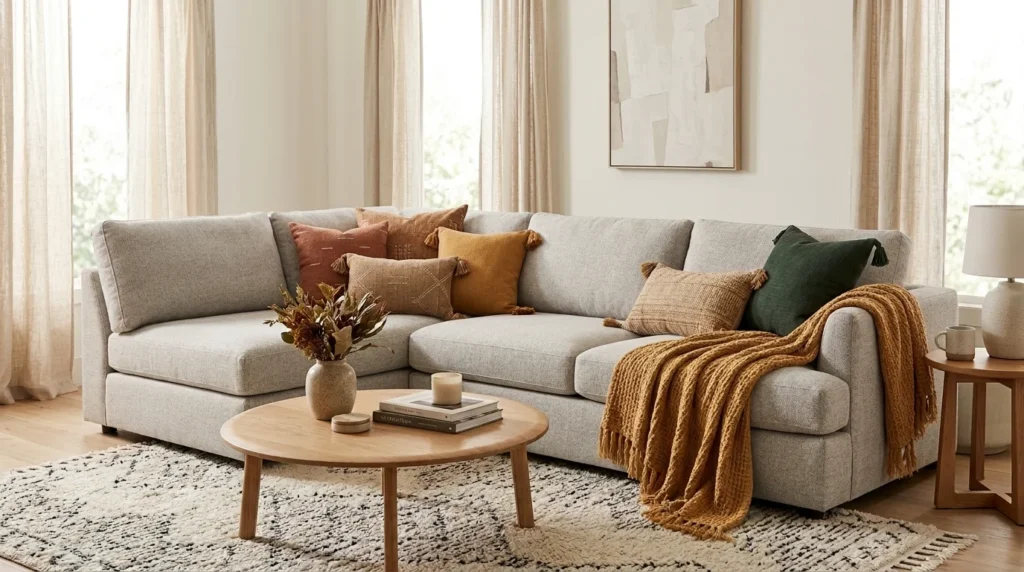
Cushions and a throw blanket are the easiest way to add color, pattern, and texture to a sofa without committing to new upholstery. Vary the cushion sizes and at least one pattern or texture so the arrangement doesn’t look too matched.
bedroom color ideasA tall vase, with or without greenery, adds height to a side table or console, while a low, wide vase works well as a coffee table centerpiece. If you want ideas for pairing these accents with specific wall and furniture colors, our living room color combinations guide covers nine palettes to build around.
Bedroom: Bedside Decor, Mirrors, and Soft Textiles
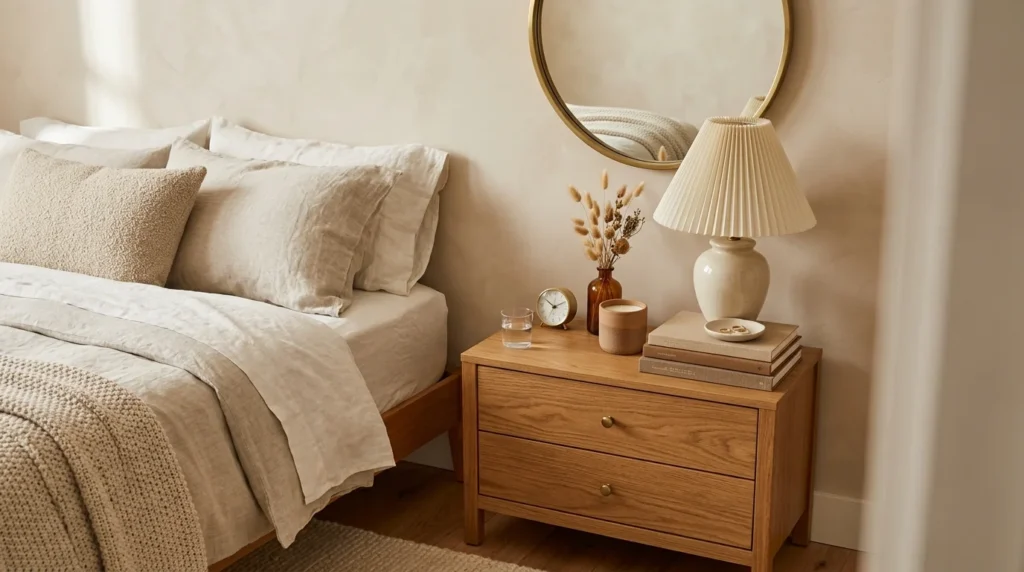
Keep nightstand decor simple: a lamp, a small tray for everyday items, and a book or a small plant are usually enough. A cluttered nightstand undercuts the calm a bedroom is meant to provide.
A mirror, leaning against a wall or hung above a dresser, reflects light and makes the room feel larger. Layer in a few soft textiles, an extra throw at the foot of the bed, a couple of accent pillows, to add texture without overwhelming the space.
Dining Room: Centerpieces, Table Runners, and Candle Holders
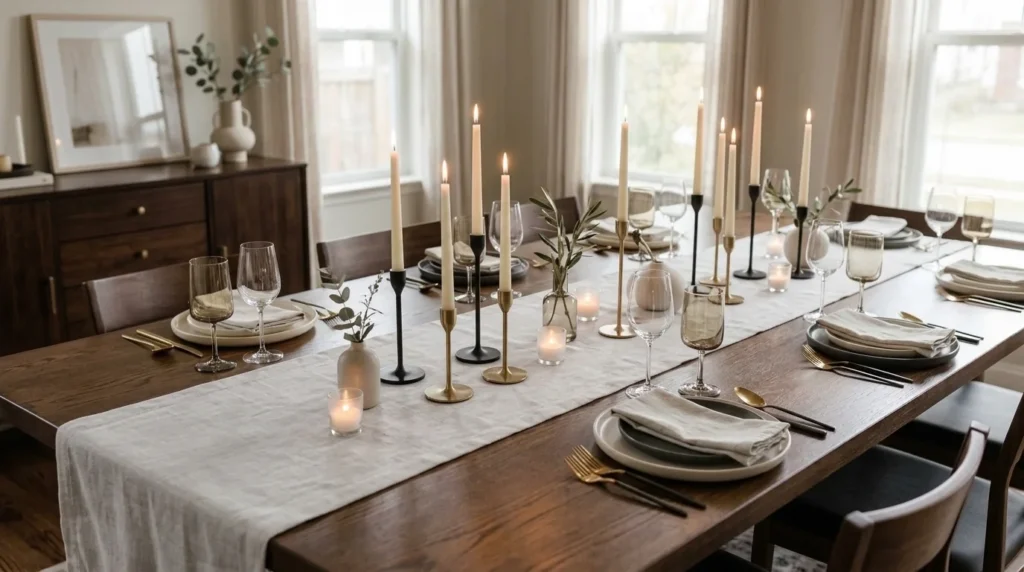
A centerpiece should stay low enough that guests can see each other across the table, a shallow bowl of fruit, a low arrangement of greenery, or a cluster of small candle holders all work well. A table runner adds color and texture without requiring a full tablecloth, and it’s easy to swap out seasonally.
Since dining rooms often get the most use in the evening, a few candle holders at different heights add warmth under the lower light.
Kitchen: Stylish Storage Jars, Trays, and Wall Decor
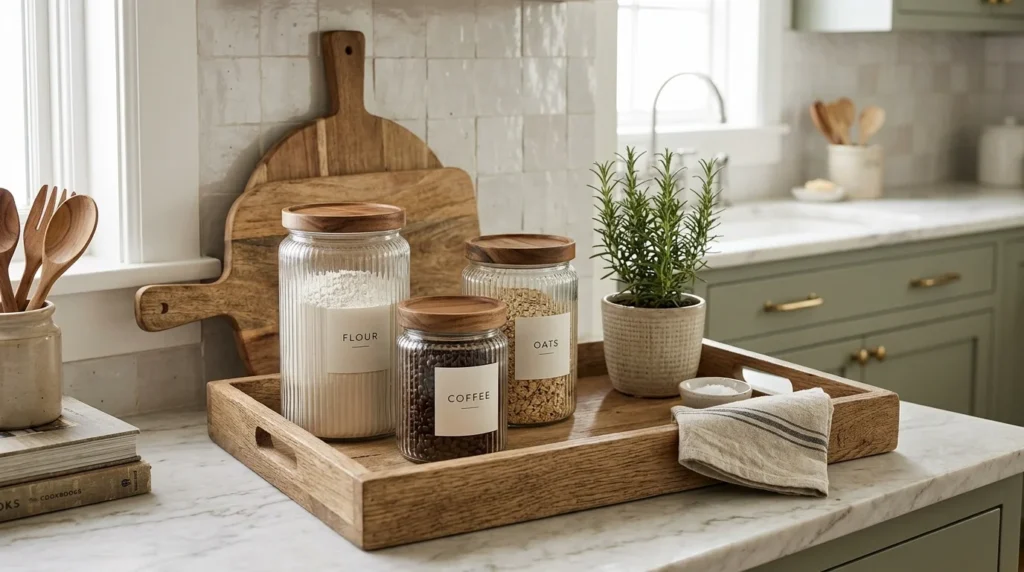
Matching storage jars for staples like flour, sugar, or coffee double as decor on open shelving or countertops, and they keep everyday items looking intentional rather than cluttered. A tray under a stand mixer or a cluster of oils and utensils corrals small items into one visually tidy spot.
A small piece of art, a shelf, or a row of hooks fills otherwise blank wall space near a sink or stove without interfering with daily use.
Bathroom: Coordinated Dispensers, Baskets, and Towels
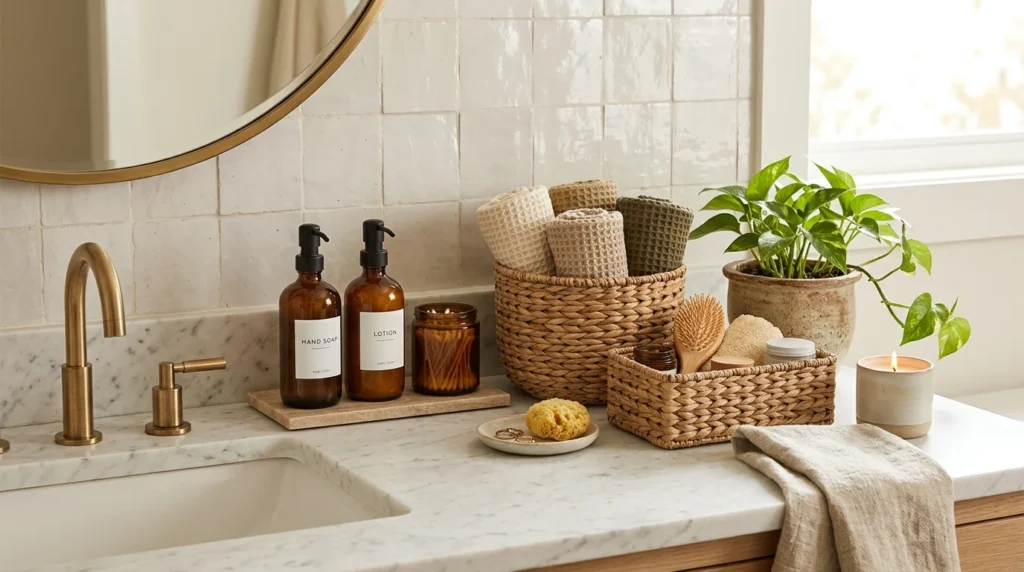
A matching soap dispenser and tray instantly make a bathroom counter look more put together than a row of mismatched bottles. Woven baskets are useful for towels, extra toilet paper, or toiletries, and keep storage looking intentional rather than purely functional.
Towels are one of the simplest ways to add color to a bathroom, since they’re inexpensive to swap out and don’t require any painting or new fixtures.
Entryway: Decorative Mirrors, Key Trays, and Small Console Decor
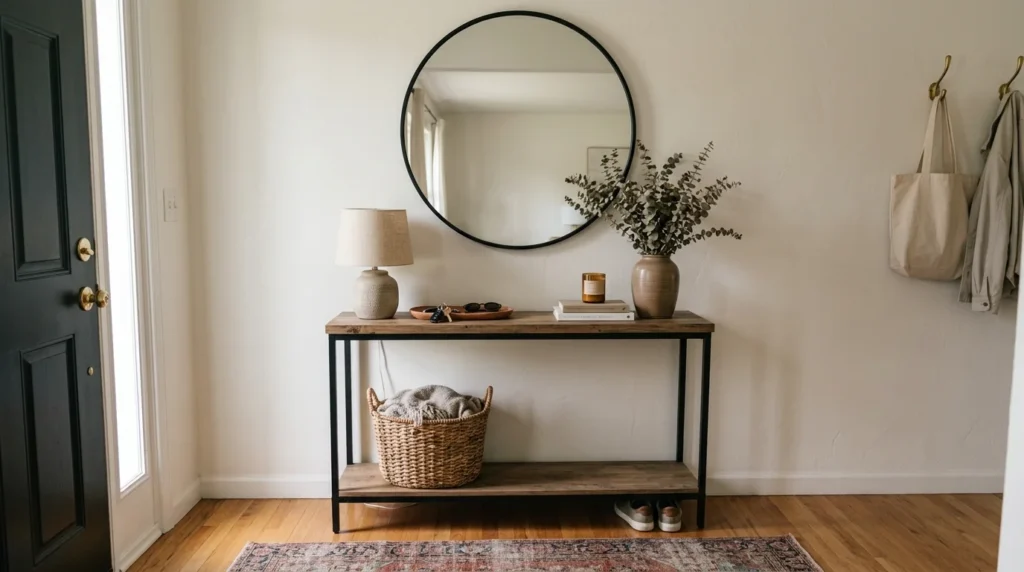
A mirror near the entryway is both functional, a last check before heading out, and visually useful, since it reflects light and makes a small entry feel larger. A small tray or catch-all by the door keeps keys, mail, and sunglasses from piling up loose on the surface.
If you have a console table, keep its styling simple: a small lamp, a bowl or small sculptural object, and one or two personal items. An entryway gets used constantly, so accessories here should hold up to daily use, not just look good.
Affordable Home Accessories That Make a Difference
You don’t need a large budget to make a noticeable difference in a room.
Swap covers, not cushions. Buying new cushion covers instead of entirely new cushion inserts costs a fraction as much and lets you change color schemes seasonally.
Shop secondhand for vases, frames, and trays. Thrift stores and secondhand marketplaces are often full of well-made ceramic and metal pieces at a fraction of retail price, especially for vases, picture frames, and serving trays.
Choose one statement piece over several small ones. A single well-chosen mirror or piece of art often has more visual impact, and costs less overall, than a handful of smaller, less considered accessories.
Rearrange before you buy. Moving existing accessories between rooms, a vase from the bedroom to the living room, art from one wall to another, can refresh a space without spending anything at all.
Common Home Decorating Mistakes to Avoid
Adding too many small accessories at once. A room filled with many small, unrelated items usually reads as cluttered rather than curated. Fewer, more intentional pieces generally look more put together.
Ignoring scale. Accessories that are too small for a large room, or too large for a small one, throw off the room’s proportions. Step back and view the room as a whole before finalizing placement.
Buying accessories before settling on a color direction. Accessories chosen one at a time, without a color plan, can end up fighting each other rather than working together. Decide on a base palette first, then choose accessories that support it.
Forgetting function. A beautiful but impractical accessory, a tray too small for what you actually set on it, a basket that doesn’t fit your actual storage needs, ends up unused. Choose pieces that work for how you actually live, not just how they look in a photo.
Matching everything too closely. A room where every accessory shares the exact same color and material can look flat. Vary the texture and finish even within a coordinated palette.
Frequently Asked Questions
What accessories make a home look more stylish?
A few well-chosen, well-placed pieces, a statement mirror, a textured throw, a considered vase, usually make more of a difference than many small, unrelated accessories. Consistency in color and material across a room also reads as more stylish than a mix of unrelated styles.
How can I decorate my home without spending too much?
Swap cushion covers instead of buying new cushions, shop secondhand for vases and frames, and rearrange accessories you already own between rooms before buying anything new. A single well-chosen piece often costs less overall than several smaller ones.
How do I make a room look expensive with simple accessories?
Focus on fewer, larger pieces rather than many small ones, keep materials and colors coordinated, and pay attention to scale, oversized accessories in a small dose often read as more considered than many tiny ones scattered around.
How many decorative accessories should a room have?
There’s no fixed number; it depends on the room’s size and function. As a rough guide, fewer, larger accessories usually look more intentional than many small ones, so edit down rather than adding more if a space feels busy.
How can I decorate a small room without making it look cluttered?
Choose fewer, slightly larger accessories instead of many small ones, keep a consistent color palette, and use mirrors to add light and the appearance of more space. Avoid covering every surface; leaving some visual breathing room matters more in a small space than in a large one.
Conclusion
The right accessories depend on your existing style, your room’s scale, and how the space actually gets used, not a fixed shopping list. Start with one or two rooms, choose a few intentional pieces rather than many small ones, and build from there as your style and budget allow.




Leave a Reply