

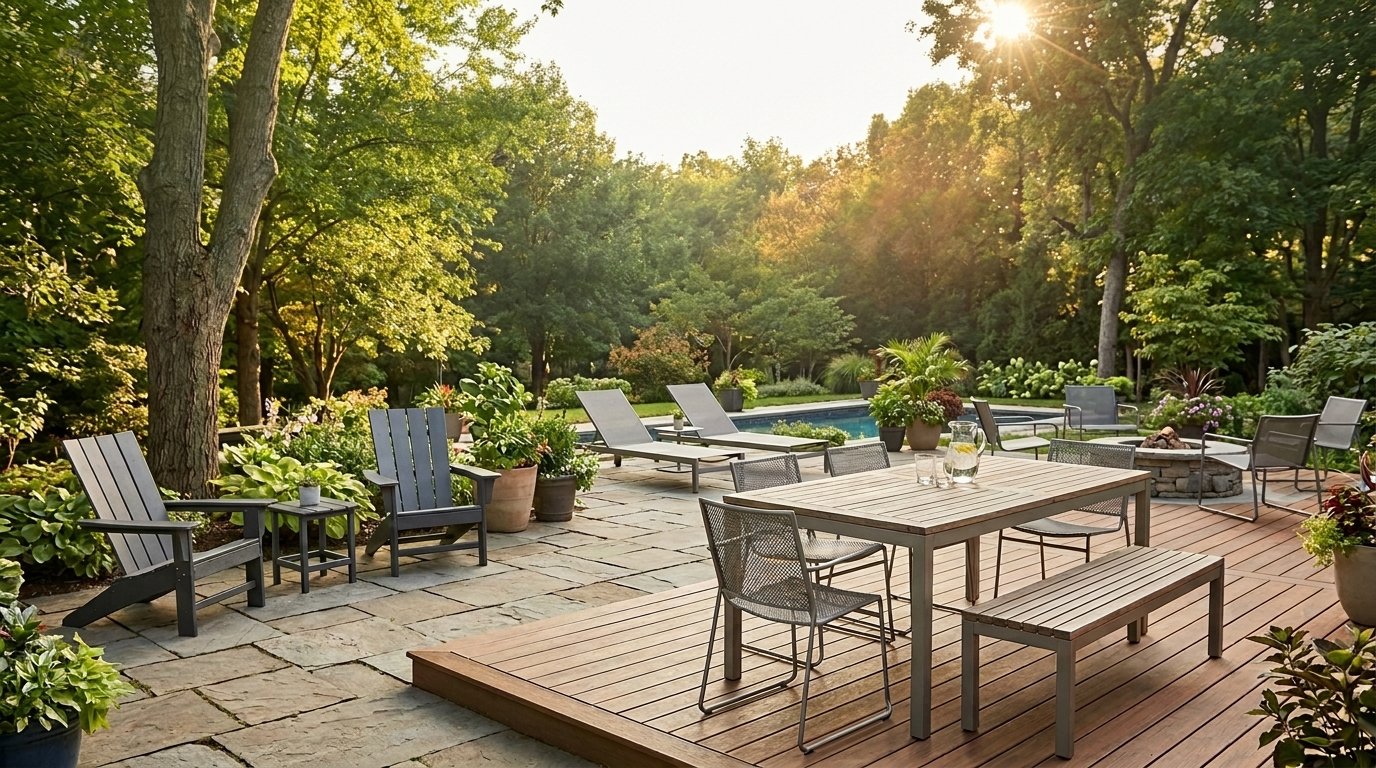
The Cushion Problem
Outdoor cushions soak up rain, trap mildew, and fade within a season, then need to be carried inside every time the weather turns.
Cushionless outdoor furniture solves this at the material level. HDPE lumber, sling mesh, rope weave, cast aluminum, and teak all hold their shape and comfort without a foam insert.
This guide covers 10 cushionless styles: what each costs, what it suits, and how to add comfort back in without reintroducing the maintenance.
Why Choose Cushionless Outdoor Furniture
- No weather scramble. Leave it out in rain, snow, or heat. Nothing to rush indoors before a storm.
- No mold or mildew. Damp foam padding is the main cause of outdoor mildew. Remove the foam, remove the risk.
- Longer lifespan. Frame-integrated materials like HDPE, teak, and cast aluminum typically outlast foam cushions by years, not seasons.
- Faster cleaning. A garden hose and mild soap handles most of it. No fabric to spot-treat or replace.
Quick Comparison
| Style | Material | Price Range | Maintenance | Best For |
| HDPE Adirondack chairs | Recycled HDPE lumber | $239 to $800+ | Very low | Fire pits, pool decks |
| Sling-mesh dining and loungers | Textilene/PVC mesh, aluminum | $150 to $600 | Low | Poolside, daily dining |
| Rope-woven sofas | Synthetic rope, aluminum | $800 to $10,000+ | Low | Modern patios, sectionals |
| Cast aluminum deep seating | Powder-coated cast aluminum | $1,200 to $4,000 | Low | High-wind areas, formal patios |
| Teak benches and dining sets | Grade-A teak | $700 to $6,000+ | Moderate | Natural gardens, timeless dining |
| Resin wicker benches and armchairs | HDPE wicker, metal frame | $400 to $2,500 | Low | Covered porches, balconies |
| Steel rocking chairs | Powder-coated tubular steel | $250 to $700 | Very low | Front porches, decks |
| Concrete/terrazzo dining sets | Cast concrete or terrazzo | $500 to $2,500+ | Very low | Minimalist, windy coastal yards |
| Mesh folding/stacking chairs | Mesh, steel or aluminum frame | $40 to $150 | Very low | Small spaces, extra seating |
| Molded polypropylene loungers | UV-stabilized polypropylene | $150 to $700 | Very low | Pool decks, modern terraces |
Prices are approximate retailer ranges as of October 2026 and vary by brand, size, and season.
The 10 Best Cushionless Options
1. HDPE Poly-Lumber Adirondack Chairs
Recycled high-density polyethylene lumber resists cracking, fading, and splintering in sun, snow, or salt air, and never needs painting or sealing.
Comfort: Contoured, slatted seat with a reclined back. Best for: Fire pits, pool decks, open patios. Price: $239 to $299 for a standard chair, up to $800 or more for wide Grand or Heritage models, from brands like POLYWOOD, which backs its chairs with a 20-year residential warranty. Pros: Zero maintenance, wide color range, made in the USA. Cons: Less give than woven or sling styles, so a lumbar pillow helps on very hot or cold days.
2. Sling-Mesh Dining Chairs and Loungers
Textilene or PVC-coated polyester mesh, stretched taut over a lightweight aluminum frame, flexes with the body and dries in minutes after rain.
Comfort: Breathable weave gives instant pressure relief. Best for: Poolside lounging, everyday outdoor dining. Price: Typically $150 to $250 per dining chair, $300 to $600 for a chaise lounge, from brands like Tropitone and Telescope Casual. Pros: Dries fastest of any option here, lightweight to rearrange. Cons: Mesh can sag after many years and may need re-stringing.
3. All-Weather Rope-Woven Sofas and Sectionals
High-density synthetic rope, hand-woven over a rustproof aluminum frame, creates a flexible seat with no padding needed.
Comfort: The rope flexes under weight while staying taut. Best for: Modern patios, cushionless sectionals. Price: Entry rope-weave pieces start around $800 to $1,500. Designer sets from Dedon, the brand that pioneered the category, run $3,000 to $10,000 or more per sectional. Pros: Distinct, contemporary look; holds up outdoors for years. Cons: Among the pricier options at the designer end.
4. Cast Aluminum Deep-Seating Sets
Heavy, powder-coated cast aluminum won’t rust, warp, or chip, and its weight keeps it stable in wind.
Comfort: Curved seat plates and contoured lumbar backrests. Best for: High-wind regions, formal garden patios, traditional dining. Price: A deep-seating set typically runs $1,200 to $4,000, from brands like Hanamint and Castelle. Pros: Extremely stable in wind, decades-long lifespan. Cons: Heavier to rearrange than other styles.
5. Grade-A Teak Slatted Benches and Dining Sets
Teak’s natural oils make it resistant to moisture, insects, and rot without any sealant.
Comfort: Smooth, curved slats that stay close to room temperature even in direct sun. Best for: Natural garden settings, timeless dining layouts. Price: Individual benches and chairs from brands like Kingsley Bate and Barlow Tyrie run roughly $700 to $1,500, with full dining sets from $2,500 to $6,000 or more. Pros: Ages gracefully to a silver-grey patina, extremely durable. Cons: Highest upfront cost on this list; needs occasional oiling to keep the original color.
6. Woven Resin Wicker Benches and Armchairs
All-weather HDPE wicker strands, wrapped over a reinforced metal frame, resist UV cracking and hold up to repeated wetting.
Comfort: The multi-strand weave flexes slightly under weight for a supportive, semi-cushioned feel. Best for: Covered porches, small balconies, garden nooks. Price: Typically $400 to $2,500 per piece, from brands like Lloyd Flanders. Pros: Closest in feel to upholstered furniture without any fabric. Cons: Lower-end woven resin can fade faster than HDPE lumber or teak; check the warranty before buying.
7. Curved Powder-Coated Steel Rocking Chairs
High-strength tubular steel, finished with a multi-stage outdoor powder coat, resists corrosion through repeated wet-dry cycles.
Comfort: A smooth rocking motion paired with a lumbar-curved back. Best for: Front porches, cozy back decks. Price: Roughly $250 to $700, from brands like Woodard. Pros: Classic porch look, very low maintenance. Cons: Metal can get hot in direct summer sun; better suited to shaded porches.
8. Concrete and Terrazzo Dining Sets
Cast concrete or terrazzo tabletops pair industrial-modern style with serious wind resistance.
Comfort: Wide, molded seating bases rather than a narrow slat or frame. Best for: Minimalist backyards, windy coastal homes. Price: Typically $500 to $2,500 per piece from boutique and designer makers; full sets run higher. Pros: Virtually indestructible outdoors, striking modern look. Cons: Very heavy; confirm a deck or patio can bear the weight before buying.
9. Mesh-Back Folding and Stacking Patio Chairs
Breathable mesh over a folding or stacking steel or aluminum frame is built for small spaces and easy storage.
Comfort: Ventilated fabric prevents heat buildup in warm weather. Best for: Small-space dining, balconies, flexible guest seating. Price: The most affordable option here, typically $40 to $150 per chair, from brands like Hampton Bay. Pros: Cheapest entry point, folds flat for winter storage. Cons: Shortest lifespan of the styles on this list; expect to replace within 3 to 5 years of regular use.
10. Sculptural Molded Polypropylene Lounge Chairs
UV-stabilized, single-mold polymer construction is lightweight, waterproof, and resistant to fading.
Comfort: A smoothly contoured bucket seat designed for full-body support. Best for: Modern pool decks, urban terraces, mid-century-style layouts. Price: Typically $150 to $700 per chair, from design-forward brands like Kartell. Pros: Stackable, easy to move, distinctive design-led look. Cons: Less structural heft than aluminum or teak; not ideal for very high winds.
What to Look For When Shopping
- Material breathability. Mesh or woven styles shed heat faster in hot climates than solid HDPE or wood.
- Ergonomic contouring. A curved seat base and supportive backrest matter more here than on cushioned furniture, since there is no padding to compensate.
- Frame hardware. Confirm the frame and fasteners are rustproof (powder-coated aluminum, stainless steel, or HDPE).
- Drainage. Slatted seats let rainwater pass through instantly instead of pooling.
Making Cushionless Furniture More Comfortable
- Add quick-dry outdoor pillows. A couple of Sunbrella-fabric lumbar pillows add softness without full-cushion maintenance, since they are small enough to grab and store in seconds.
- Keep a lightweight throw nearby. An acrylic outdoor blanket covers cooler evenings without seasonal cushion storage.
- Pair with a footrest or ottoman. A matching footstool redistributes leg pressure during longer sitting.
Cleaning and Maintenance
- Routine cleaning. A seasonal wash with mild dish soap, warm water, and a soft-bristle brush covers most materials here.
- Debris removal. A garden hose or leaf blower clears pollen and dirt from woven grooves and slats faster than wiping by hand.
- Winter storage. A breathable patio cover protects finishes through the off-season without requiring the furniture to come indoors.
FAQ
Is furniture without cushions comfortable?
Yes, when the material itself is contoured. Sling mesh, rope weave, and shaped HDPE or teak are designed to flex and support the body without a foam layer.
Can I add cushions later if I change my mind?
Most cushionless furniture accepts standard or custom cushions later. Check the seat dimensions first and choose a weather-resistant fabric like Sunbrella if you add them.
Does cushionless furniture work in cold climates?
Yes. HDPE lumber, powder-coated aluminum, and teak all tolerate freezing temperatures. A throw blanket covers the comfort gap on cold evenings.
How do I clean cushionless outdoor furniture?
Most materials clean with mild soap, warm water, and a soft brush. Rinse with a hose and let it air-dry.
What is the most durable material without cushions?
Teak and HDPE poly-lumber have the longest track records outdoors, often lasting 15 to 20 years or more with minimal care.
Is cushionless furniture less comfortable for long periods of sitting?
For extended lounging, sling mesh and rope weave come closest to cushioned comfort because the material itself flexes under body weight.
Final Recommendation
For maximum comfort without cushions, choose sling mesh or rope weave, since both flex under body weight. For maximum weather resistance with the least thought required, HDPE poly-lumber and teak lead the category.
Match the material to the local climate and how the space gets used, then skip the seasonal cushion routine for good.




Leave a Reply