


Most busy families know the cycle well. You spend a precious Saturday scrubbing, dusting, and vacuuming, and by Tuesday the house looks like you did nothing at all. The mental load of tracking every messy corner, the guilt when you snap at the kids for leaving shoes out, the exhaustion of trying to keep up with laundry and dishes and pet fur. It all adds up. The problem is not that you are lazy or disorganized. The problem is that many cleaning plans are built for a life that does not exist: one with empty homes, endless free time, and cooperative children who never leave a trail of crumbs. Your life is full of work meetings, school pickups, soccer practice, and a dog who tracks in mud. You need a system that bends with that reality, not one that breaks when you miss a day.
A realistic cleaning routine can transform your home from a source of stress into a place of rest. It does not demand perfection. It gives you a gentle, predictable rhythm that keeps the mess at a manageable level without stealing your weekends or your sanity. This guide lays out a complete three-level system: a daily quick reset, a weekly focused schedule, and a monthly deep cleaning check-in. Together, these layers prevent buildup, reduce mental load, and make cleaning something the whole family can share. You will find practical tasks with time estimates, tips to get everyone involved, and honest troubleshooting for the weeks when life gets messy. By the end, you will have a personalized plan that fits your home and your energy, not a rigid chart that shames you.

When you build this rhythm, you pair it with smart organization and targeted weekly resets. For example, after a thorough declutter using a guide like Organize Your Home Step by Step, you will find that daily cleaning takes half the time. A dedicated Weekly Home Reset Routine can help you blast through weekly tasks in one power hour. And the Daily Cleaning Routine 30 Minutes that many families use becomes the heartbeat of your whole home. If you prefer a visual plan, a Weekly Cleaning Schedule Printable can live on the fridge and keep everyone on the same page. This article connects all those pieces into one cohesive system that works for real families in 2026.
Why Most Cleaning Routines Fail Busy Families
If you have tried and abandoned more than one cleaning schedule, you are not alone. There are clear reasons why those pretty checklists end up in the recycling bin.
Unrealistic time demands. Many routines ask for 45 minutes of daily scrubbing or a full morning of deep cleaning midweek. For working parents, that time simply does not exist. When a plan demands hours you do not have, you feel defeated before you start.
No flexibility for real life. Kids get sick. Work crises erupt. A routine that collapses the moment you miss a day creates a guilt spiral that makes it harder to restart. A good system welcomes you back without punishment.
The entire load falls on one person. Usually Mom. When one adult carries the mental and physical weight of the whole house, the routine burns out fast. A sustainable plan spreads the work across the family in age-appropriate ways.
Cleaning around clutter. Trying to vacuum a floor littered with toys or wipe a counter buried in mail wastes time and energy. Until items have designated homes, cleaning becomes a frustrating game of shifting piles. Organization is the essential first step.
No visual cue. A schedule that lives in an app or in one person’s head is invisible. The best plans are displayed where everyone can see them, with clear, simple tasks.
All-or-nothing thinking. When a routine treats a missed day as a failure, people give up. A healthy rhythm sees a missed day as a small blip and picks up where it left off.
Once you understand these pitfalls, you can build a system that sidesteps them. The framework that follows is forgiving, flexible, and designed specifically for homes with kids, pets, and packed calendars.
The Foundation: Organize First, Then Clean
Before you dive into daily habits, it is worth saying directly: you cannot out-clean a clutter problem. Every minute you spend moving piles out of the way is a minute you are not actually cleaning. When surfaces are clear and every item has a home, dusting, vacuuming, and wiping become fast, almost mindless acts.
This does not mean you need a perfectly minimalist home. It means you need a reasonable amount of order. If your counters are buried, your closets are stuffed, and your floors are obstacle courses, then the most effective first step is a gentle, room-by-room declutter. The Organize Your Home Step by Step guide walks you through that process in a way that respects your time and emotional energy. Once the clutter is tamed, your cleaning time drops dramatically, sometimes by half. You spend less time tidying and more time actually cleaning. That foundation makes the three-level system that follows truly sustainable.
Level 1: Daily Cleaning Routine (15-30 Minutes)
The daily routine is your safety net. It prevents the small, everyday messes from piling into an overwhelming weekend marathon. The goal is not a spotless house. It is a house that feels calm and functional when you wake up in the morning. This layer splits into a morning quick pass and an evening family reset.
Morning Quick Pass (5-10 minutes)
These tiny actions set a positive tone and take almost no time.
- Make the beds (2 minutes). A made bed instantly makes bedrooms look tidier. Kids as young as four can pull up a comforter.
- Bathroom counter swipe (1 minute). Use a dry microfiber cloth to wipe hair, toothpaste spots, and water splashes before they dry.
- Empty the dishwasher (4 minutes). If you ran it overnight, unloading it while coffee brews clears the sink and counters for the day.
- Quick floor spot-sweep in kitchen and entry (2 minutes). A cordless stick vacuum or small broom catches breakfast crumbs and overnight pet hair in high-traffic zones.
Evening Reset (10-20 minutes)
This is the single most powerful habit to adopt. A tidy kitchen and living area at night means the next morning starts fresh.
- 5-minute family pickup. Give each person a basket. Walk through the main living spaces and collect everything that belongs elsewhere. Toys, shoes, mail, stray cups. Return them to their homes.
- Kitchen surface reset (5 minutes). Load and start the dishwasher. Wash any remaining pots or wipe them and stack. Wipe counters, stove, and kitchen table with an all-purpose spray.
- Quick sweep of high-traffic floors (3 minutes). Run the stick vacuum under the kitchen table and in the main walkway. If you have pets, a rubber broom grabs fur fast.
- Set up for tomorrow (3-4 minutes). Lay out coffee mugs, pack non-perishable lunch items, and glance at the calendar. This act clears your mind and smooths the morning rush.
Together these two blocks take about 20 to 30 minutes total. They keep the house at a livable baseline. For a deeper dive into each step, including a printable checklist and tips for making this habit stick, the Daily Cleaning Routine 30 Minutes resource is a perfect companion.
Level 2: Weekly Cleaning Schedule
The daily routine handles surface mess. The weekly schedule tackles the dirt and grime that build up over several days: soap scum, dust, full vacuuming, and bathroom scrubbing. You have two effective approaches: a day-wise schedule or a single weekly reset block. Choose what fits your family best, or blend both.
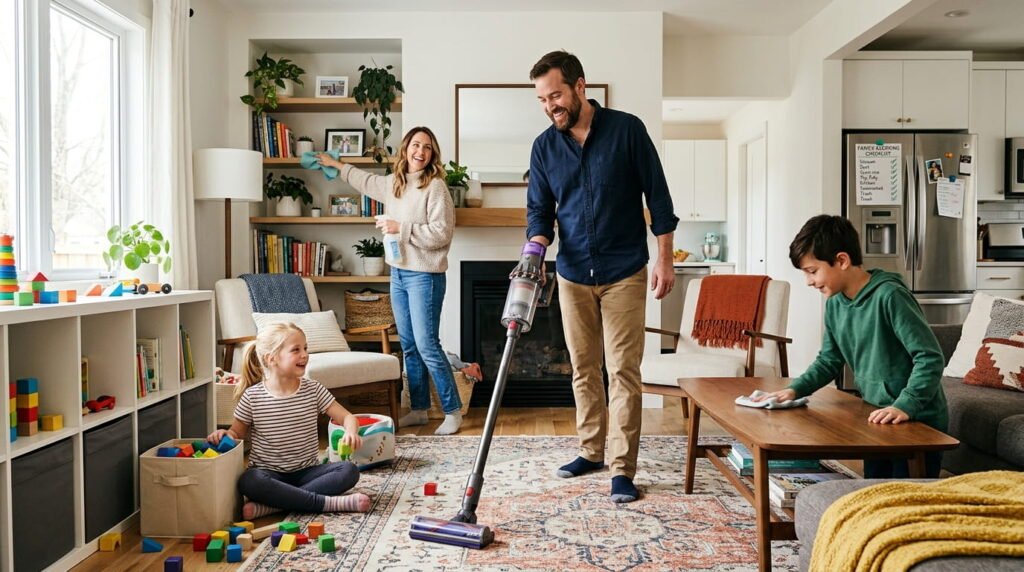
Day-Wise Schedule (20-30 minutes per day)
This method assigns one small focus to each weekday, keeping weekends lighter.
| Day | Focus Area & Key Tasks | Time |
| Monday | Bathrooms: Scrub toilets, wipe mirrors and counters, clean shower/tub, swap towels. | 25 min |
| Tuesday | Dusting: Dust all living area and bedroom surfaces with a microfiber cloth. | 15 min |
| Wednesday | Floors: Vacuum all carpets and rugs thoroughly, mop hard floors. | 25-30 min |
| Thursday | Kitchen deepening: Wipe appliance fronts, microwave interior, cabinet doors near stove, sanitize sink. | 20 min |
| Friday | Catch-up & laundry: Fold laundry, spot-clean walls, tidy hot spots. | Flexible 20 min |
| Saturday | Family blitz: 30-minute whole-family speed clean on outdoor toys, pet areas, bedrooms. | 30 min |
| Sunday | Rest & light reset: Minimal tasks. Quick kitchen wipe and five-minute declutter only. | 5-10 min |
This plan ensures no single day is overwhelming. Monday tackles bathrooms so you start the week fresh. Wednesday handles all floors at once. Friday catches whatever slipped, and Saturday is a team effort. You can follow this exact layout or use a Weekly Cleaning Schedule Printable to hang on your fridge with checkboxes.
The Single Weekly Reset Block
Some families prefer to do all weekly cleaning in one focused session. The Weekly Home Reset Routine is a structured power hour and a half that moves through the entire house: dust, vacuum, mop, bathrooms, kitchen wipe-down, and a quick tidy. This works beautifully if you can protect that time on a weekend morning or a quiet evening. Many families find that a combination works well: they follow the daily resets and then do a condensed 30-minute reset block on Friday to keep the weekend wide open.
Involving the Family in Weekly Tasks
Kids as young as seven can empty bathroom trash bins or dust low surfaces. Older kids can take on a weekly job like vacuuming stairs or cleaning their own bathroom. The Saturday blitz becomes a fun team sprint when you set a timer and play music. Involve your spouse by asking which task they mind least and letting them own it. When everyone has a small role, the load lightens significantly.
Level 3: Monthly Deep Cleaning Checklist
Monthly tasks catch the hidden grime that daily and weekly cleaning miss. These jobs keep your home truly fresh and prevent buildup that can cause odors or damage over time. You do not need to tackle all of them at once. Pick 4 to 5 items each month and scatter them across weekends. Rotate through the full list over a season.
Monthly Deep Clean Tasks
- Wipe kitchen cabinet fronts, range hood filter, and backsplash.
- Clean interior windows, windowsills, and window tracks.
- Wash shower curtain liners and bath mats.
- Vacuum under sofa cushions, beds, and large furniture.
- Descale coffee maker and clean dishwasher filter.
- Dust ceiling corners, light fixtures, and ceiling fan blades.
- Sanitize door handles, light switches, and remote controls.
- Clean out the refrigerator completely: toss old food, wipe shelves.
- Wipe baseboards and door frames throughout the house.
- Organize one problem zone: mudroom bench, entry shoe bin, or craft stash.
Seasonal Adjustments
In winter, add extra rug shaking for road salt and a boot tray for wet shoes. In summer, clean patio furniture and manage sand and grass. In fall, vacuum behind appliances and prepare the mudroom for heavier coats. These tweaks keep your monthly rhythm aligned with how you actually live.
Print a simple checklist and keep it inside a cabinet door. Check off tasks as you go. If you only manage two tasks some months, that is still progress. The goal is consistency, not perfection.
How to Customize This System for Your Family
The three-level framework is a starting point, not a rigid law. Spend fifteen minutes tailoring it to your real life.
Identify your biggest pain point. Is it the kitchen explosion after dinner? The mountain of shoes by the front door? Strengthen the routine that addresses that first. For many families, the evening kitchen reset is the most impactful place to begin.
Match tasks to your energy. If you are a morning person, shift some evening tasks to a calm early morning routine. If you work nights, anchor your daily routine to your waking hours rather than a clock.
Define your non-negotiable minimum. Ask yourself what three things make you feel okay when you walk in the door. It might be an empty sink, a clear kitchen table, and a picked-up living room floor. On exhausted days, protect those three tasks and let the rest go.
Assign zones or tasks to family members. Write names next to tasks on the schedule. Visual ownership increases accountability and reduces the mental load on one person.
Display the schedule prominently. A simple sheet on the fridge or a small whiteboard in the kitchen keeps the plan visible and makes it feel like a shared family rhythm.
Getting Kids and Spouse to Help Consistently
A system carried by one person eventually crumbles. Here is how to build family participation without constant nagging.
For kids ages 7-10: Use picture checklists with clear, simple tasks like “put toys in bin” or “wipe bathroom sink.” Turn cleanup into a game with a timer. Offer small rewards like a sticker chart that leads to a family movie night. Praise effort, not perfection.
For preteens and teens (11-15): Give them ownership. Show them how to do a task once, then let them handle it. Avoid redoing their work. Connect the chore to their own comfort: “If you vacuum the living room, you will have a nicer space to hang out with your friends.” Let them choose their cleaning day within reason.
For your spouse or partner: Approach the conversation as a partnership, not a complaint. Use “I” statements. “I feel really overwhelmed trying to keep up with the kitchen after dinner. Could we find a way to tackle it together so we both get more downtime?” Trade tasks based on preference. Mark discovered he did not mind loading the dishwasher and wiping counters while listening to a podcast. Sarah preferred folding laundry. They swapped, and the evening load felt lighter. Say thank you often. Appreciation fuels consistency far more than criticism.
When everyone does a small part, the house stays cleaner and the emotional load becomes shared.
Best Budget-Friendly Cleaning Tools & Products
You do not need a closet full of expensive gadgets. A lean, versatile kit makes cleaning faster and easier. Keep these items in a portable caddy.
- Microfiber cloths (a multi-color pack). Use different colors for kitchen, bathroom, and dusting to avoid cross-contamination.
- All-purpose cleaner (a non-toxic concentrate you refill with water). Safe around kids and pets.
- Cordless stick vacuum. The grab-and-go ease is essential for daily quick sweeps. Look for a model with a pet hair attachment.
- Rubber broom. Excellent for pulling embedded pet hair from carpets and sweeping hard floors.
- Squeegee. A ten-second shower swipe after the last bath drastically reduces soap scum.
- Scrub brush with a long handle. Saves your back when cleaning tubs and showers.
- Melamine foam sponges (magic erasers). Perfect for scuffs on baseboards and walls.
- A couple of sturdy laundry baskets. Use them for the five-minute family pickup.
These simple tools, plus common household items like baking soda and white vinegar, handle the vast majority of cleaning tasks. Simplicity reduces decision fatigue and keeps the actual cleaning moving fast.
Troubleshooting When Life Gets in the Way
No routine survives contact with a stomach bug, a work crisis, or a week of late-night soccer practices. The key is knowing how to bend without breaking.
When you are too exhausted for the full routine. Drop to the five-minute emergency tidy. Load and start the dishwasher, wipe the kitchen table, and clear a path in the living room. That is enough. Go rest.
When you miss several days in a row. Resist the urge to catch up all at once. Set a timer for twenty minutes and tackle one zone. Then do the evening reset that night. The next day, return to your normal rhythm. The system welcomes you back without judgment.
When kids or partner are not helping. Revisit the conversation calmly. Maybe the plan is too complicated. Simplify. Assign one clear task to each person and thank them when they do it. Small wins rebuild teamwork.
When you feel like the only one who cares. This loneliness is heavy. Make the invisible load visible by writing down all that you do. Then ask for one small, consistent commitment from each family member. The goal is progress, not overnight transformation.
Weekends and holidays. Let the reins loosen. Do a light ten-minute morning reset and enjoy the day. The system is a tool to serve your life, not a master to rule it.
Long-Term Benefits of Following This Routine
When you stick with a realistic rhythm, the rewards go far beyond a clean floor.
- Less morning chaos. Keys, backpacks, and shoes have homes. Mornings feel calmer because you are not starting from a state of disorder.
- Reduced mental load. The schedule tells you what to do and when. You stop holding the whole house in your head.
- Fewer arguments about chores. Clear expectations and visible checklists reduce friction and resentment.
- Kids build life skills. They learn to care for a space, manage laundry, and contribute to a shared home.
- Weekends become restorative. Instead of spending Saturday catching up on cleaning, you have time for rest, hobbies, and family connection.
- A calmer home environment. When your space feels orderly, your nervous system relaxes. You host playdates without panic, find important papers quickly, and enjoy a quiet cup of coffee in a clean kitchen.
Track the small wins, not just the checkboxes. Keep a shared note where family members can jot down moments when the tidy space made life easier. Over time, these small victories accumulate into a profound shift in how your home feels.
Frequently Asked Questions
Q: How do I stick to this routine when I am completely exhausted after work?
A: Scale back to a 10-minute bare minimum: load the dishwasher, wipe the table, and clear the living room floor. Rest is more important than perfection.
Q: What if I miss several days in a row?
A: Don’t try to catch up all at once. Set a timer for 20 minutes to reset one zone, then simply resume your normal routine that evening.
Q: Is 30 minutes of daily cleaning really enough for a family with kids and pets?
A: Yes. Daily sessions manage surface clutter, while the weekly and monthly schedules handle deeper grime and hidden buildup.
Q: How can I get my kids and spouse to help consistently?
A: Frame it as teamwork. Assign small, specific tasks based on preference, use a visible checklist, and focus on appreciation rather than criticism.
Q: Can I adjust this routine for a smaller/larger home or a different work schedule?
A: Absolutely. Adjust the time blocks based on your square footage and anchor the steps to your natural waking and sleeping hours, not a 9-to-5 clock.
Conclusion: Your 30-Day Cleaning Challenge
A peaceful home is not the result of a heroic Saturday push. It is the result of small, kind, repeated actions spread across the days and shared among the people who live there. This three-level system gives you a clear, forgiving framework. The daily routine keeps the house livable. The weekly schedule handles the grime. The monthly checklist refreshes the hidden spaces. Together they create a rhythm that works with your life, not against it.
I invite you to try this system for 30 days. Here is a gentle plan to get started.
Week 1: Foundation. Spend a few days decluttering one hot spot using Organize Your Home Step by Step. Then establish the daily bed-making and evening kitchen reset. Print the Daily Cleaning Routine 30 Minutes checklist and try it three times this week.
Week 2: Add the weekly layer. Choose your weekly style. Either follow the day-wise schedule described here or try the Weekly Home Reset Routine block. Download a Weekly Cleaning Schedule Printable and put it on the fridge. Celebrate with a family movie night if you complete three weekly tasks together.
Week 3: Deepen with monthly tasks. Pick two monthly deep clean items from the checklist and tackle them on a weekend. Have each child choose a zone captain job. Sit down with your partner and trade tasks based on preference.
Week 4: Refine and celebrate. Notice what worked and what felt heavy. Adjust the plan. Hold a family check-in over pizza. Write down five moments when a tidy space made your day smoother. Commit to carrying this rhythm forward without perfectionism.

You do not have to do it all at once. A small, consistent rhythm transforms a home more than any frantic weekend ever could. Pick one piece of this system and start tonight. Make the beds tomorrow morning. Wipe the kitchen counters after dinner. These tiny acts are the seeds of a calmer, more connected family life. You are not behind. You are not failing. You are a real parent building a home that supports the people you love, one gentle habit at a time. And when you are ready, the next steps are waiting: a deeper dive into daily routines, a printable weekly schedule, and a full guide to organizing every room. You have got this.





Leave a Reply