

Synthetic glass cleaners promise a streak-free shine, yet many leave behind a hazy film that shows up the moment light hits the surface. The residue often comes from added fragrances, surfactants, and polymers that cling to the glass instead of evaporating cleanly. The good news is you do not need those products. A few low-cost kitchen and bathroom staples—much like our top-rated best cleaning hacks that work—can deliver crystal-clear, streak-free mirrors with less effort and no chemical buildup.
This guide shows you exactly how to clean a mirror using natural household ingredients. You will learn why these simple components work so well, how to mix an effective DIY cleaner, and the precise wiping technique that prevents streaks.
Why Natural Ingredients Work Better
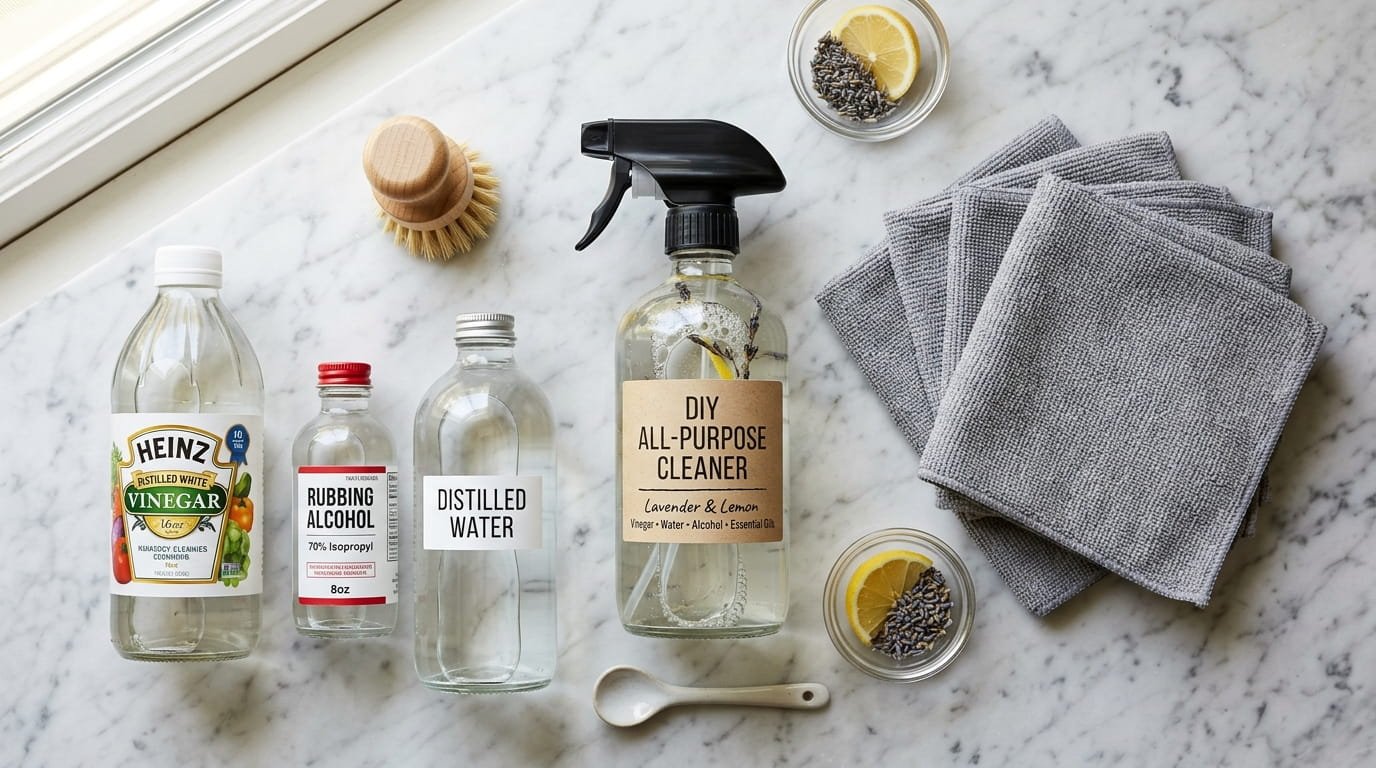
Three everyday items form the foundation of an effective natural mirror cleaner.
Distilled White Vinegar
The acetic acid in white vinegar cuts through grease, hard water spots, soap scum, and the light film left by previous commercial cleaners. It dissolves mineral deposits that plain water cannot touch and evaporates without leaving a soapy residue.
Rubbing Alcohol (Isopropyl Alcohol)
Alcohol speeds up drying time, which is one of the most important factors in avoiding water spots. It also dissolves sticky residues such as hairspray, toothpaste splatter, and fingerprint oils that vinegar alone may not fully remove.
Distilled Water
Tap water contains minerals that dry into visible spots and streaks. Distilled water has those minerals removed, so it leaves nothing behind as it evaporates. Using distilled water is one of the simplest upgrades you can make to any glass-cleaning routine.
Together these three ingredients create a cleaner that cuts grime, dries quickly, and leaves no film.
Simple DIY Natural Cleaner Recipe
Formula
- 1 cup distilled water
- 1 cup distilled white vinegar
- ¼ cup rubbing alcohol (70% or 91% isopropyl alcohol both work)
Preparation
Add the ingredients to an empty, clean spray bottle. Shake gently to combine. Label the bottle clearly and store it in a cool place. The mixture stays effective for several weeks. Shake lightly before each use.
This solution is strong enough for bathroom and bedroom mirrors yet mild enough for regular use. If you prefer a lighter mix for delicate frames, reduce the vinegar to ¾ cup and increase the distilled water slightly.
Step-by-Step Streak-Free Method
Follow these four steps for consistently clear results.
Step 1: Spot-Treat Buildup
Look for stubborn spots such as dried hairspray, toothpaste, or water marks. Dampen a cotton pad or soft cloth with plain rubbing alcohol and gently rub the area until the residue lifts. This pre-treatment prevents you from spreading sticky material across the whole mirror.
Step 2: Mist the Cloth
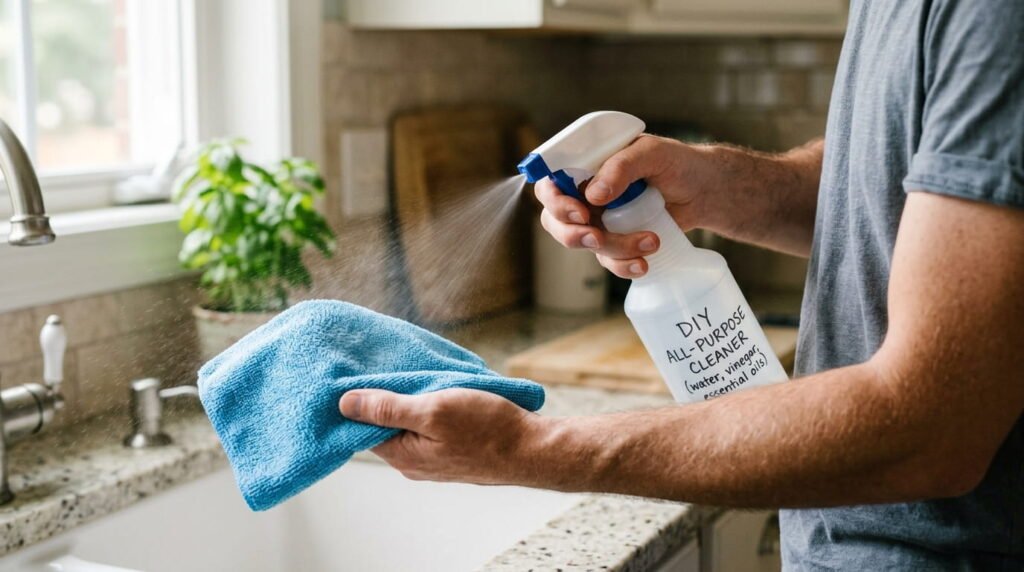
Mist a small amount of the natural cleaner onto a flat-weave microfiber cloth. Never spray directly onto the mirror. Overspray can drip into the frame, seep behind the glass, or land on nearby surfaces that may be sensitive to vinegar.
Step 3: The S-Pattern Wipe
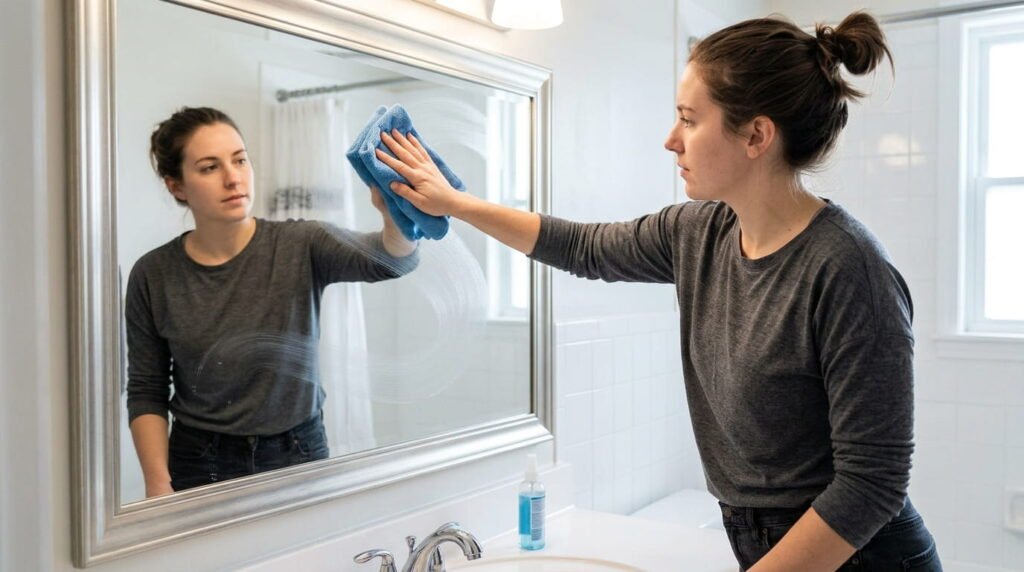
Starting at the top of the mirror, wipe in a continuous “S” or overlapping horizontal motion, working your way down. Keep the cloth flat against the glass and use light, even pressure. The continuous motion prevents the dirty edge of the cloth from redepositing grime on areas you have already cleaned.
Step 4: Dry Buff
Right after that, go over the area again with a second, dry microfiber cloth Buff the surface using the same top-to-bottom pattern until the glass is completely dry and streak-free. The quick dry-buff is what locks in the clear finish. If any light haze remains, a final pass with a dry section of the cloth usually removes it.
For very large mirrors, work in sections so the cleaner does not dry on the surface before you can buff it. Adding this quick mirror check into your 30-minute daily cleaning routinekeeps your bathrooms and entryways looking polished with minimal extra time.
Essential Do’s and Don’ts
Do
- Use flat-weave microfiber cloths designed for glass or windows. These pick up dirt without scratching or leaving lint.
- Choose distilled water for both the cleaner and any rinsing.
- Clean mirrors when they are cool and out of direct sunlight so the solution does not evaporate too quickly.
- Wash microfiber cloths regularly without fabric softener, which can leave a residue that causes streaking. Setting up dedicated supply bins when you organize a small laundry room makes keeping your glass-cleaning cloths separate from greasy kitchen rags effortless.
Don’t
- Use paper towels or facial tissues. They often leave lint and can create fine scratches over time.
- Rely on tap water. The minerals it contains are a common cause of spots and streaks.
- Spray cleaner directly onto the mirror, especially near wooden, metallic, or ornate frames.
- Use abrasive scrubbers or powdered cleaners that can damage the glass surface or the mirror backing.
Frequently Asked Questions
Can I clean a mirror with lemon juice?
Yes. The citric acid in lemon juice breaks down grease in a way similar to vinegar. Strain the juice carefully to remove all pulp and dilute it with distilled water (roughly equal parts) before use. Lemon juice can leave a slight sticky residue if it is too concentrated, so the dilution step matters. Many people prefer vinegar because it is clearer, less likely to attract dust, and has a longer shelf life in a spray bottle.
Why does my mirror look streaky even after using vinegar?
Streaks after a vinegar cleaning often mean older wax, silicone, or polymer residue from commercial glass cleaners is being lifted and redistributed. Remove that buildup first by wiping the entire mirror with pure rubbing alcohol on a microfiber cloth. Once the old film is gone, the natural vinegar-and-alcohol spray will produce a clearer result.
Is vinegar safe for all mirror frames?
Vinegar is acidic, so it can damage certain materials if it runs into the frame. It may etch marble or stone vanities, tarnish delicate gold leaf, or affect unfinished or raw metal frames. The safest approach is always to spray the cleaner onto the cloth rather than directly onto the mirror. This gives you full control and keeps the solution away from sensitive edges and surrounding surfaces.
Conclusion
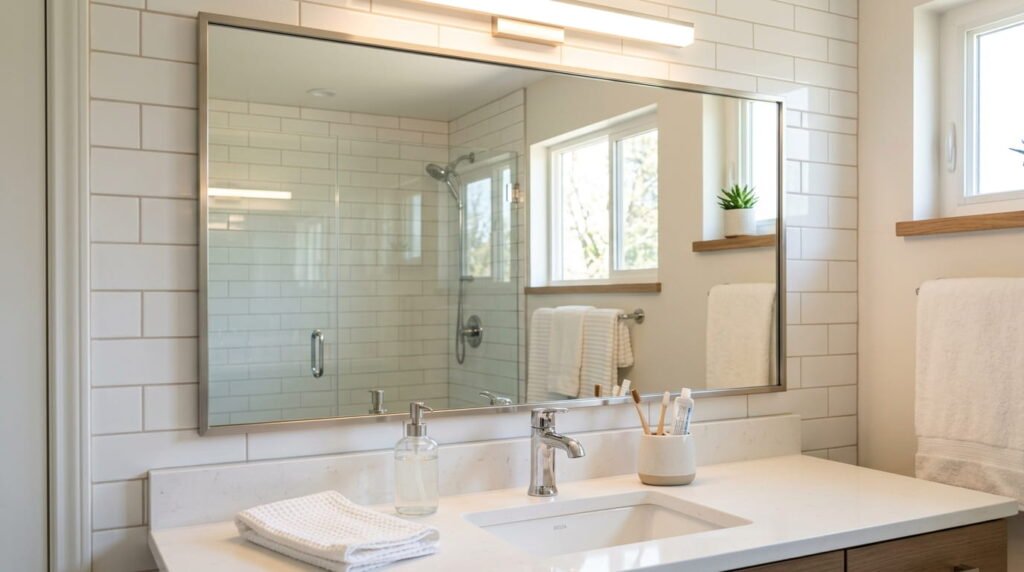
Crystal-clear mirrors do not require store-bought chemical sprays. Distilled white vinegar cuts through grime, rubbing alcohol speeds drying and removes sticky residue, and distilled water prevents mineral spots. Combined with the right microfiber technique—spot-treating first, wiping in an S-pattern, and buffing dry—you can achieve a streak-free shine using ingredients most people already have at home.
Switching to this simple method reduces chemical exposure, lowers cost, and eliminates the hazy film that many commercial cleaners leave behind. Try the recipe on your most-used mirror first. Once you see the difference, you may find yourself reaching for the vinegar and alcohol bottle every time.





Leave a Reply