

Introduction
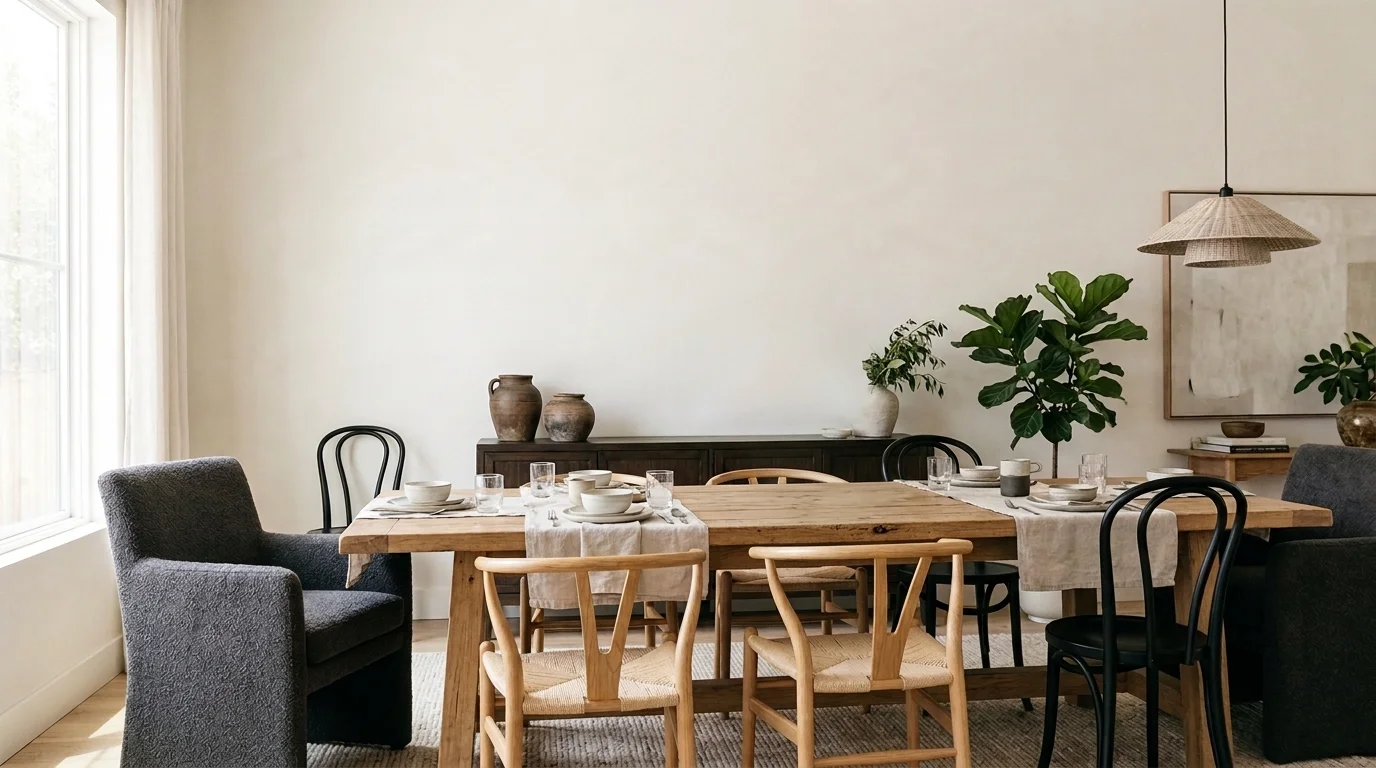
The matched dining set, same style, same finish, same six chairs lined up like soldiers, is losing its grip on modern dining rooms. In its place, homeowners and designers are mixing and matching dining chairs on purpose: pairing a bench with a run of side chairs, alternating colors down the table, or setting two armchairs at the heads of a row of simpler seats. Done well, a dining room with mixed chairs reads as curated rather than mismatched. Done carelessly, it just looks like the chairs never belonged together.
The good news is that you don’t need an interior design degree to pull this off. Mixing and matching dining chairs comes down to a handful of repeatable design formulas, the same ones professional designers lean on, and once you know them, you can apply them to almost any table.
This guide walks through the golden rules that keep mixed seating looking intentional, four proven formulas for pairing chairs, how to match chairs to the table itself, and how to bring a bench into the mix without throwing off the balance of the room.
Golden Rules of Mixing and Matching Dining Chairs
Before picking specific chairs, it helps to understand why some mixed dining rooms look pulled-together and others look accidental. It almost always comes down to these four rules.
Rule 1: Maintain a Consistent Height and Scale
Seat height is the one variable you can’t compromise on. Keep every chair’s seat within the standard 18 to 20 inch range from the floor, measured at the front edge of the seat. A half-inch or so of variation is invisible; a few inches is not; it throws off both comfort (elbows and knees end up at mismatched heights relative to the table) and the visual line running across the room. Scale matters too: a slim, low-backed chair next to an oversized wingback can look like two different rooms collided, even if the seat heights technically match.
Rule 2: Find a Common Unifying Element
Every successful mix-and-match dining room has one thread tying the pieces together, even when the chairs themselves are quite different. That thread can be a shared material (all wood, all rattan), a consistent color palette, a matching wood tone, or a repeated silhouette (tapered legs, curved backs). Pick one unifying element and let every other chair reference it. Without this anchor, mixed chairs just look like leftovers from different households.
Rule 3: Keep the Table as the Anchor
The table is the one piece every chair has to agree with, so it should set the tone rather than compete with it. If the chairs are already visually busy, a simple, understated table gives the eye somewhere to rest. If the table is a strong statement piece, such as a live-edge slab or a bold pedestal base, let the chairs stay relatively quiet. Treat the table as the fixed point and build the chair mix around it, not the other way around.
Rule 4: Prioritize Visual Weight and Proportions
Chairs carry different amounts of visual weight: a fully upholstered armchair reads as heavier than an open-back wood or metal frame, even at identical dimensions. Balance the two. Pairing several heavy, upholstered chairs with a few lighter, open-frame chairs keeps the room from feeling crowded, especially in smaller dining spaces. A good rule of thumb is to never let upholstered, heavy-looking chairs outnumber the lighter ones by more than two to one.
Proven Formulas for Mixing Dining Room Chairs
Once the golden rules are in place, you need an actual layout strategy. These four formulas cover most of what shows up in well-designed dining rooms, and each one is easy to replicate.
Formula A: The Host and Hostess Pairing
Two statement armchairs, often upholstered or with a more sculptural frame, anchor the two ends of the table, while sleeker, more minimalist side chairs run along the length. This is the most common mix-and-match formula because it mirrors how dining rooms were traditionally furnished (head chairs distinct from the rest) while still reading as deliberate. It also solves a practical problem: armchairs at the ends give whoever sits there more room to maneuver, while slimmer side chairs make better use of tighter spacing along the table’s long sides.
Formula B: Same Style, Different Colors
Using one chair model throughout the room but varying the color, either alternating seat by seat or grouping colors in blocks, keeps the silhouette consistent while adding visual interest. This formula is forgiving for beginners because the shared shape does most of the unifying work. A pastel mix (sage, blush, cream) reads soft and cohesive; a monochrome run of different shades of the same color (navy through powder blue) reads more tailored.
Formula C: Same Color, Different Styles
This is the inverse of Formula B: chairs of genuinely different styles, think a modern molded shell chair next to a mid-century spindle-back and a vintage bentwood, all finished in the exact same paint color or upholstery shade. The shared finish does the unifying work this time, which means the color choice needs to be confident rather than neutral. This formula tends to look best with three or four distinct chair styles, not more.
Formula D: The 50/50 Split
Two different chair designs alternate in equal numbers, most often placed directly across from each other on opposite sides of the table so the pattern reads clearly from any seat. This formula works well when you want a mix and match dining room chairs look that’s still symmetrical and formal rather than eclectic. It pairs especially well with a rectangular table, where the repeating pattern is easy to read down the length of the room.
How to Match Chairs with Your Dining Table
The formulas above cover how chairs relate to each other. Just as important is how the whole dining table mixed chairs grouping reads as one piece of furniture.
Matching Wood Tones Without Overdoing It
Wood tones don’t need to match exactly, but they do need to relate. A safe approach is to pick one dominant wood tone (light oak, for example) for either the table or the majority of the chairs, then let the remaining pieces sit within the same warm or cool family rather than matching the grain exactly. Mixing warm honey oak with cool gray-washed wood tends to look unintentional; mixing warm oak with warm walnut, or two different painted finishes in the same color family, reads as a deliberate palette.
Contrasting Materials
Contrast, used on purpose, is one of the easiest ways to make a dining table mixed chairs setup feel high-end rather than haphazard. Metal-framed or velvet-upholstered chairs around a warm wood table create a point of tension that keeps the room from feeling too matchy. The same logic works in reverse: wood or rattan chairs around a glass or marble table soften what could otherwise feel cold or showroom-like. The key is to pick one contrasting material and repeat it across most of the chairs, rather than introducing a different material with every seat.
Spacing and Footprint Considerations
Mixed chairs often have different widths and arm placements, so spacing needs more attention than it would with a matched set. Plan for roughly 24 to 26 inches of width per place setting at minimum, more if armchairs are in the mix, since arms typically add 2 to 4 inches of width per side. Measure your widest chair, usually the host or hostess armchairs in Formula A, and make sure it clears the table legs or pedestal base with at least an inch or two to spare when pushed in. If the table has legs at the corners rather than a pedestal, armchairs are best kept at the ends, where there’s no leg to clear, rather than along the sides.
How to Pair Dining Chairs with Benches
A bench is one of the easiest ways to mix and match dining chairs, since it’s a style decision and a practical one at the same time.
Why Add a Dining Bench?
Benches save floor space because they don’t need the clearance a chair with arms or a wide back requires, which matters in smaller dining rooms or open-plan layouts. They’re also more forgiving for families, since a bench can fit an extra person in a pinch and doesn’t come with the wear points (arms, individual legs) that dining chairs take the brunt of. Beyond the practical case, a bench on one side of the table instantly loosens up the room, giving an otherwise formal matched-chair setup a more casual, lived-in feel.
The Opposite Side Strategy
The most common and most reliable layout is to put the bench on one long side of the table and a row of individual chairs on the other, rather than spreading benches and chairs around the table unevenly. This keeps the asymmetry intentional: one side reads as casual and open, the other as more structured, and the contrast becomes a deliberate design choice instead of a logistical compromise.
Sizing the Bench
The bench should be noticeably shorter than the full length of that side of the table, generally 6 to 12 inches shorter so it can slide fully underneath when not in use. A bench that’s too long will visibly overhang the table at the corners, which reads as a sizing mistake rather than a style choice. As a rule of thumb, budget about 24 inches of bench length per seated person, the same width you’d plan for an individual chair.
Matching Styles
Tie the bench to the chairs on the opposite side using the same unifying element from Rule 2: matching wood tone, a shared upholstery fabric, or a similar leg shape. A wood bench paired with wood-framed chairs, or an upholstered bench cushion in the same fabric as upholstered chair seats, keeps the two sides of the table feeling like they belong to the same room rather than two different purchases.
Common Mistakes to Avoid
Most mixed dining rooms that don’t work fail in one of three predictable ways.
- Mismatched seat heights. Chasing a striking look at the expense of the 18 to 20 inch standard range makes the table physically uncomfortable to sit at, no matter how good the chairs look individually.
- Too many competing styles. Mixing four or more distinct chair designs without one clear unifying element (see Rule 2) stops reading as curated and starts reading as leftover furniture from different rooms.
- Ignoring room proportions. Bulky, heavily upholstered armchairs around every seat can overwhelm a small dining room. In tighter spaces, lean on Rule 4 and keep the heavier chairs to the ends or to a smaller share of the total seats.
Conclusion and Final Checklist
Mixing and matching dining chairs comes down to two decisions: pick one unifying element (color, material, wood tone, or silhouette) and keep every seat height within the 18 to 20 inch range. Everything in this guide, the four formulas, the table-matching advice, the bench strategy, is really just different ways of applying those two rules to a real room.
Before you buy, run through this checklist:
- Chosen one unifying element (color, material, wood tone, or silhouette) that every chair will reference
- Confirmed all seat heights fall within 18 to 20 inches of the floor
- Decided which formula fits the table: host/hostess, same style different colors, same color different styles, or the 50/50 split
- Checked that heavier, upholstered chairs don’t outnumber lighter, open-frame chairs by more than 2 to 1
- Measured the widest chair (including arms) against the table’s leg or base clearance
- If using a bench, sized it 6 to 12 inches shorter than that side of the table
- Limited the mix to three or four distinct chair styles at most





Leave a Reply