

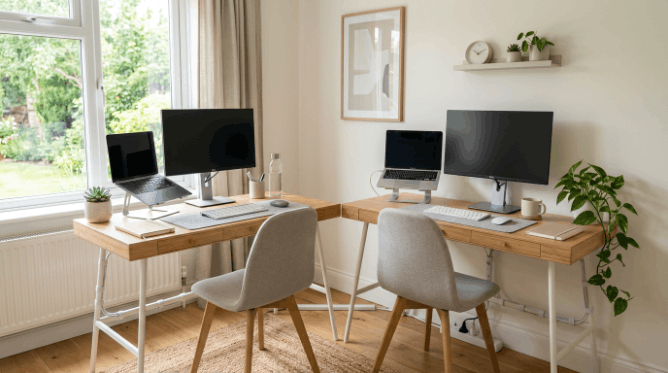
Sharing a small home office with another person can feel like a daily negotiation. One person needs quiet for deep focus while the other takes calls. Supplies spill across both sides of the desk. Cables tangle. Privacy disappears. What started as a practical solution often turns into a source of frustration.
The good news is that two people can share a tiny workspace successfully. The key is intentional design, clear boundaries, and systems that prevent clutter from taking over. This guide shares practical small home office ideas for two that prioritize function, fairness, and calm so both people can work productively without constant chaos.
Key Challenges of Sharing a Tiny Workspace
Before choosing furniture or layouts, it helps to understand the most common friction points:
- Limited surface area and storage quickly lead to clutter
- Noise and visual distractions reduce focus
- Different work styles and schedules clash
- Power outlets, lighting, and cables become contested resources
- Personal space feels compromised
Addressing these issues early makes every other decision easier.
Best Layout Ideas for Two People in a Small Home Office
The right layout has the biggest impact on how well a shared space works.
Side-by-Side Desks Along One Wall
Best for narrow rooms. Two compact desks placed next to each other create a clean, linear setup. Add a small shared shelf or drawer unit between them for supplies. This arrangement works well when both people prefer facing the same direction and want easy conversation.
L-Shaped or Corner Dual Setup
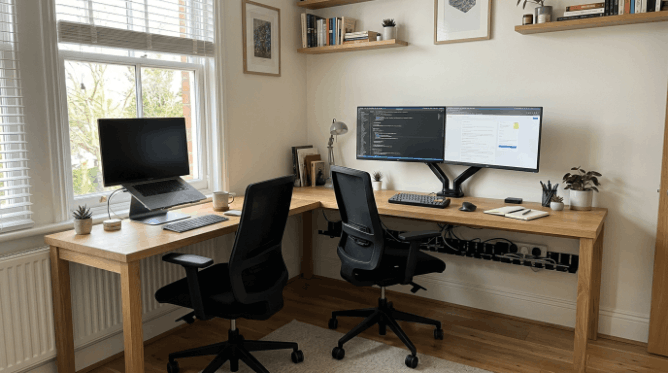
Ideal for square or slightly larger small rooms. An L-shaped desk or two desks meeting at a corner gives each person a defined zone while keeping the footprint efficient. One person can take the longer side if they need more surface area.
Facing Desks with a Low Divider
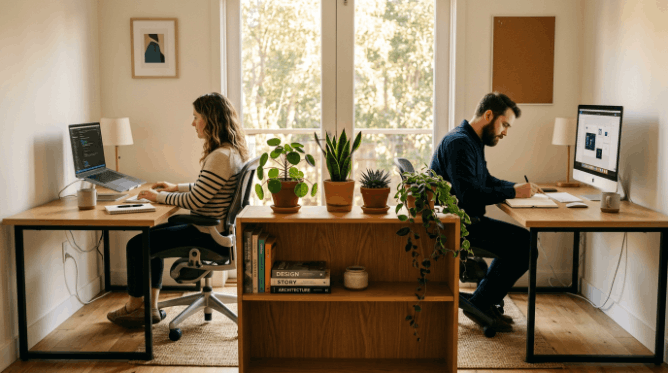
Desks placed opposite each other create a sense of separation. A low bookshelf, plant row, or slim monitor riser in the center provides a visual boundary without blocking light. This layout suits people who like a bit of face-to-face interaction but still need their own territory.
Back-to-Back Arrangement
Two desks placed back-to-back with a shared partition or open shelving in the middle maximize privacy in a compact footprint. This is especially effective when one or both people spend a lot of time on video calls.
One Permanent Desk + One Flexible Station
When space is extremely tight, give one person a full desk and the other a mobile workstation (rolling cart + laptop + fold-down wall desk). This approach works well when schedules rarely overlap completely.
Closet or Nook Dual Station
For the smallest spaces, convert a closet or unused nook. Install a long desk surface or two narrow desks, add wall-mounted storage, and use the door or a curtain for visual privacy when needed.
Smart Furniture and Storage Solutions
Furniture choices can either create calm or add to the chaos.
Choose compact desks with slim profiles and built-in storage when possible. Wall-mounted desks or fold-down surfaces free up floor space when not in use. Look for models that leave room for legs and a small filing cabinet or rolling drawer unit underneath.
Divide storage clearly. Give each person at least one drawer or bin that is exclusively theirs. Use shared vertical storage (pegboards, wall shelves, or a narrow bookcase) for communal supplies like paper, chargers, and pens. Rolling carts are especially useful because they can move between zones or tuck away completely.
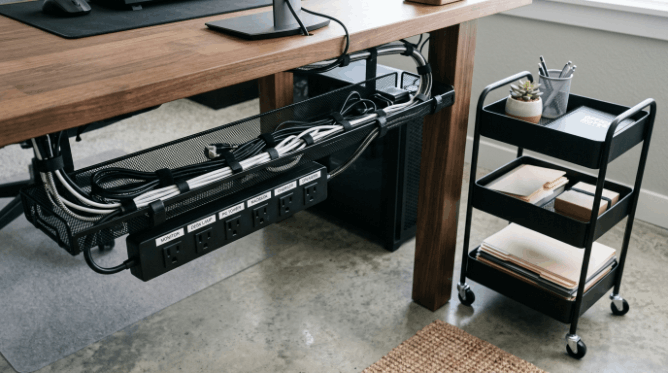
Cable management is essential in a tiny shared office. Use under-desk trays, adhesive clips, and a power strip with surge protection for each person. Label cords so ownership is obvious and troubleshooting is faster.
Creating Privacy and Reducing Distractions
Even in a small room, small boundaries make a big difference.
Physical dividers such as low bookshelves, freestanding panels, or tall plants create visual separation without closing off the space. Curtains or folding screens work well when you need occasional full privacy for calls.
Noise is often the bigger issue. Soft furnishings (a rug, curtains, and upholstered chairs) help absorb sound. High-quality headphones are one of the highest-value investments for shared offices. Some couples or roommates also set simple “quiet hours” or use a visual signal (like a small desk light or status card) to indicate when someone needs uninterrupted focus.
Lighting should support both people. Combine overhead ambient light with individual task lamps so one person can adjust brightness without affecting the other. Natural light is ideal, but position screens to avoid glare.
Organization Systems That Prevent Chaos
Good systems keep the space functional day after day.
Create clear personal zones and shared zones. Personal items stay on each person’s side or in their designated storage. Shared supplies live in one labeled area.
Build a short daily reset routine. At the end of the workday, both people spend two to three minutes clearing surfaces, returning items to their places, and managing cables. This small habit prevents clutter from compounding, and it works well alongside our weekly home reset routine if you want to extend the same habit to the rest of the house. Use simple inbox systems for paper and digital items.
A small tray or vertical file for each person keeps loose papers from spreading. Agree on where shared documents or household-related paperwork belong. Color-coding or labeling shared supplies reduces decision fatigue and misplaced items, a principle we cover in more depth in how to stay organized daily.
Real-Life Setup Examples
Studio Apartment Couple
Studio Apartment Couple: An L-shaped desk fits into one corner. One person takes the longer leg of the L. A slim rolling cart holds shared printers and supplies. A low plant shelf acts as a soft divider. Total footprint stays compact while giving each person a defined work zone, which mirrors the approach in our guide to decorating a studio apartment.
Roommates in a Spare Room
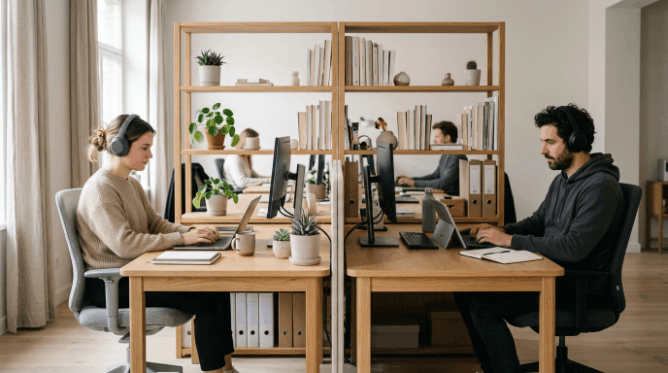
Back-to-back desks with a tall open bookshelf between them create privacy. Each person has a wall-mounted pegboard for personal items. A shared calendar on the wall helps coordinate calls and quiet times.
Parent and Teen Closet Office
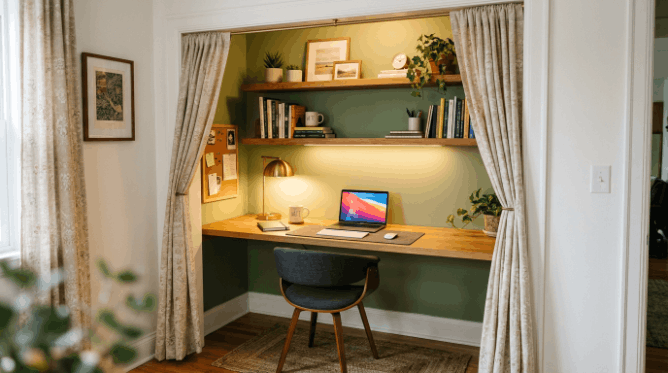
A long desk surface runs the width of a closet. One side has a full monitor setup; the other has a laptop zone with a fold-down secondary surface for homework overflow. Curtains replace the closet doors for a cleaner look and optional privacy.
Budget and Space-Saving Tips
Prioritize ergonomic chairs and good lighting first. These affect daily comfort more than decorative items. Desks and storage can often be found secondhand or built with simple materials.
Test layouts with painter’s tape on the floor before buying furniture. This quick step prevents costly mistakes in tight spaces.
DIY options such as wall-mounted desks, pegboards, and simple dividers can significantly reduce costs while giving you exact control over dimensions.
Frequently Asked Questions
How much space do you really need for two people to share a home office?
Many functional dual setups work in 50–80 square feet if the layout is efficient and storage is vertical. Less space is possible with one flexible station.
What is the best desk setup for two in a small room?
L-shaped and back-to-back arrangements tend to offer the best balance of surface area and personal space in compact rooms.
How can we reduce noise when working in the same tiny space?
Combine soft furnishings, quality headphones, and simple schedule agreements. Visual “do not disturb” signals also help.
Are there stylish ways to divide a small office without making it feel closed off?
Low bookshelves, open shelving, plants, and slim freestanding panels provide separation while keeping the room feeling open and light.
What if one person needs more focus time than the other?
Create a clear system for protected focus blocks and use headphones or a temporary screen when needed. Flexibility and communication matter as much as the physical setup.
Conclusion
A shared tiny workspace does not have to mean constant compromise or clutter. With a thoughtful layout, clearly divided storage, basic privacy strategies, and simple daily habits, two people can work productively side by side.
Start by choosing a layout that fits your room and work styles, then add storage and boundaries that support both people. Small adjustments often deliver the biggest improvements in daily calm.




Leave a Reply