

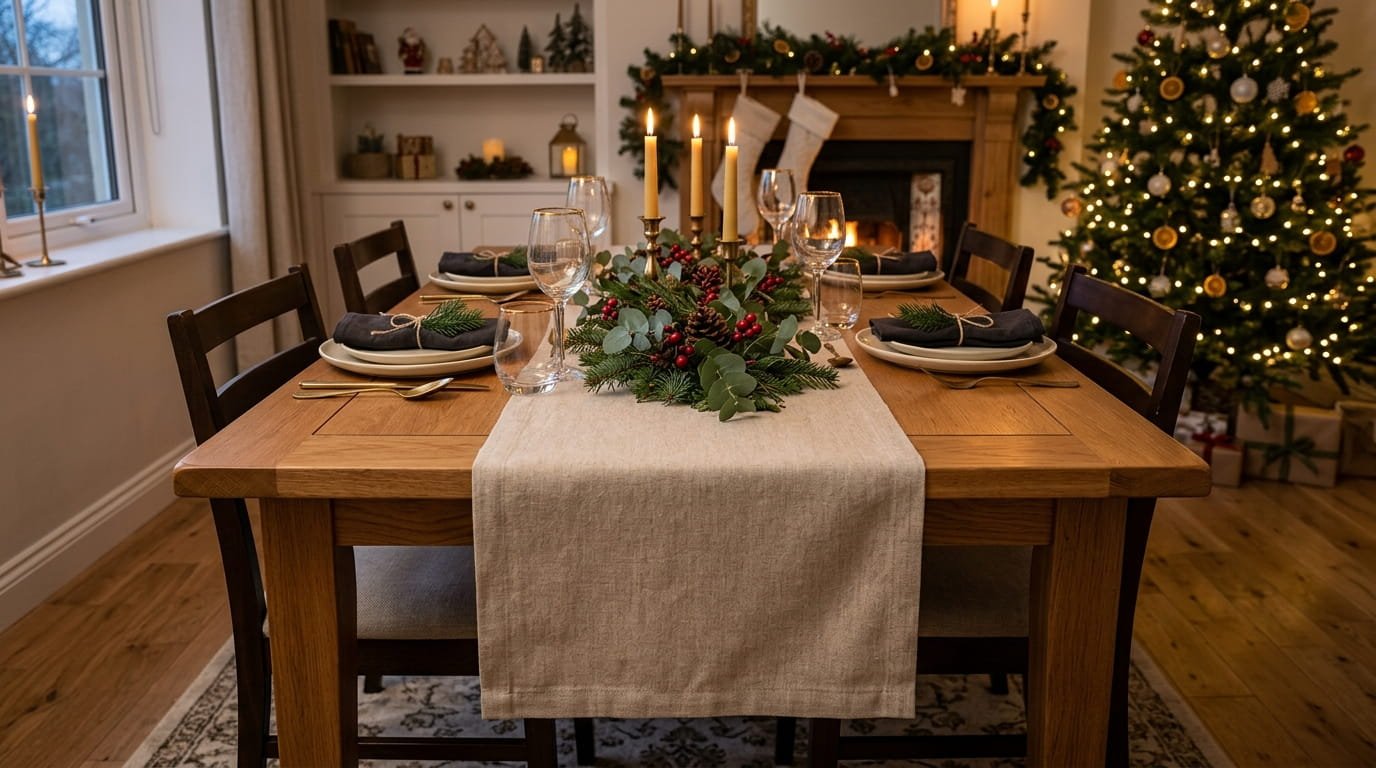
You’ve bought the candles, the greenery, maybe even a festive runner. But when you step back, the table still feels… off. Too busy in some spots, too empty in others. The centerpiece blocks everyone’s view. The napkins look like an afterthought.
Here’s the truth: beautiful christmas table decorations aren’t about buying more stuff. Just like styling the rest of your festive christmas home decor, it comes down to building up what you already own in a thoughtful sequence.
This guide gives you a simple “base, middle, top” system you can use on any table, with exact measurements and real-home examples. Follow it once, and your holiday table will look intentionally styled instead of randomly decorated.
Why Layering Matters for Christmas Table Decorations
Professional stylists rely on layering to bring dimension and visual weight to a table setting. Think of it like getting dressed: you start with a base (like a shirt), add a middle layer (a sweater or jacket), then finish with accessories (scarf, hat, jewelry).
For christmas table decorations, the three layers are:
- Base: tablecloth, runner, placemats, chargers
- Middle: centerpiece, candles, greenery
- Top: plates, napkins, flatware, glassware, small accents
When you layer in this order, everything has a place. The runner anchors the look. The centerpiece becomes the focal point without taking over. The place settings feel cohesive instead of scattered.
Good layering also improves the guest experience. People can see each other across the table, reach their food easily, and still enjoy a festive atmosphere.
Step 1: Start With the Base – Tablecloth, Runner, and Placemats
The base layer sets the tone for your entire tablescape. Master it early, and every layer you add after that comes together with far less effort.
Choosing Your Foundation
Start by deciding whether you want a full tablecloth or just a runner.
- Tablecloth: Best for formal dinners or when your table surface is scratched or worn. A neutral cloth (white, ivory, natural linen) lets your christmas table decorations shine without competing.
- No tablecloth, just runner: Great for casual gatherings or when you love the look of your table (farmhouse wood, modern glass, etc.). A runner adds color and texture without covering everything.
For most homes, a runner over a bare table or over a neutral cloth is the sweet spot. It’s less laundry, easier to style, and still looks polished.
Table Runner Size & Placement
Runner sizing is where many people go wrong. Use these rules:
- Width: The runner should cover about one-third of the table’s width.
- Example: For a 36-inch-wide table, choose a runner around 12–14 inches wide.hometosight+1
- Length: Add 12–24 inches to your table’s length to get a 6–12 inch overhang on each end.
- Example: For a 72-inch table, a 84–96 inch runner gives you a balanced drape.zencalculators+1
Placement: Lay the runner lengthwise down the center of a rectangular table. For round tables, you can skip the runner or use a round overlay in the center if you want extra texture.
A proper overhang (6–12 inches on each end) makes the table look finished instead of like the runner is “too short.”kitchendecorate+1
Placemats & Chargers
Next, decide on placemats or chargers.
- Placemats: More casual, kid-friendly, and easy to clean. Great for everyday holiday meals.
- Chargers: Larger decorative plates (usually 12–13 inches) that sit under the dinner plate. They add instant formality and work well for Christmas dinner or cocktail-style gatherings.
Layering order:
Table → runner → placemat/charger → dinner plate
If your table is small or you’re seating a lot of people, you can skip chargers and use simple placemats or nothing at all. The key is leaving enough room for plates and elbows.
Common Base Mistakes & Fixes
- Runner too short or too long: If it barely hangs over the edges, it looks accidental. If it almost touches the floor, it can feel too formal or get in the way. Aim for that 6–12 inch drop on each end.
- Clashing patterns: If your runner is patterned, keep placemats and napkins mostly solid. If your runner is solid, you can add subtle pattern in napkins or plates.
- Overcrowding: You don’t need a cloth, runner, placemats, and chargers all at once. Choose 2–3 base elements max so the table doesn’t feel heavy.
Step 2: Build the Middle Layer – Centerpieces That Don’t Block Conversation
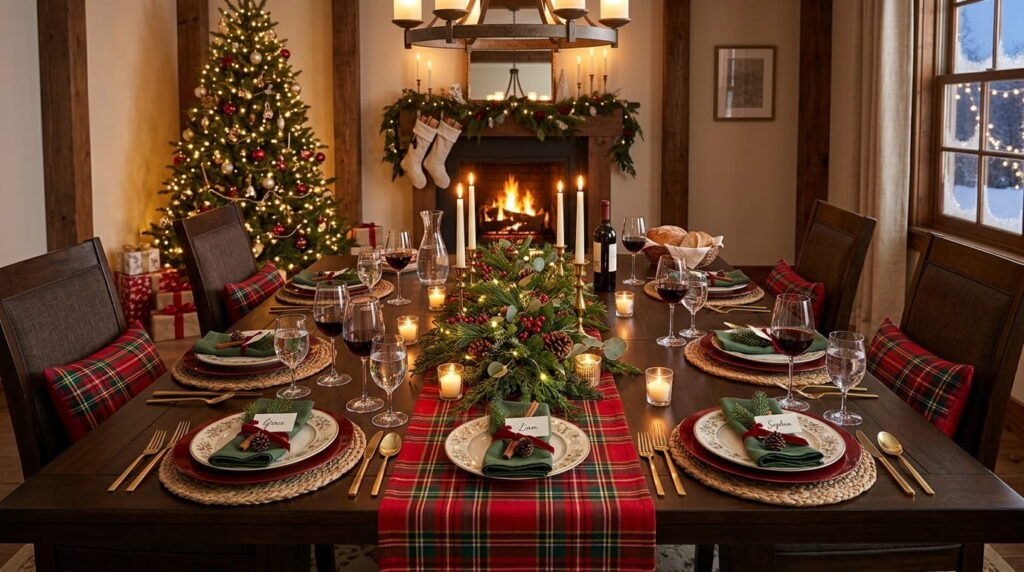
The middle layer is where your christmas table decorations really come to life. This is your centerpiece, candles, greenery, and any other decor that sits between the base and the place settings.
The Role of the Middle Layer
Your centerpiece serves as the focal point that anchors the entire table’s look. It draws the eye and sets the mood. But it also has a practical job: it must allow people to talk across the table without craning their necks.
Centerpiece Height Rules
This is the most important rule for dining tables:
- Keep centerpieces under 12–14 inches tall so guests can see each other comfortably.ideas.vishaldecor+2
- Alternatively, go over 18–24 inches for very tall, dramatic arrangements that people can see under (better for buffet tables or very large banquet-style setups).
For most home dining tables, staying under 12 inches is the safest bet. Anything taller than that starts to block sightlines and kills conversation.kitchendecorate+1
Centerpiece Length & Spacing
For rectangular tables:
- The centerpiece should span about one-third to one-half of the table’s length.ideas.vishaldecor+1
- Example: On a 72-inch table, aim for a decorated zone around 24–36 inches long in the center.
- Leave at least 12–18 inches of clear space at each place setting for plates, glasses, and elbows.
This prevents the “where do I put my plate?” problem and keeps the table functional, not just pretty.
Centerpiece Ideas by Style
You can adapt these ideas to your taste and budget.
Traditional:
- Evergreen garland down the center
- 3–5 pillar candles of varying heights (all under 12 inches or clearly above eye level)
- Scattered ornaments, pinecones, or small glass votives
Modern / Minimalist:
- Low ceramic or wooden bowl filled with candles and a few branches
- Single line of taper candles in simple holders
- Neutral runner with one strong focal point (e.g., a large candle cluster or sculptural piece)
Budget-Friendly:
- Grocery-store greenery (eucalyptus, pine sprigs) laid loosely down the runner. Combining natural elements with smart diy home decor ideas helps keep your holiday styling elegant without overspending.
- Thrifted candlesticks spray-painted gold or black
- Pinecones, cinnamon sticks, and a few ornaments you already own
The goal is a cohesive cluster, not a scattered “parade of decor” down the table.
Lighting as Part of the Middle Layer
Candles are essential for holiday ambiance.
- Real vs. LED: LED candles are safer around kids, pets, and dry greenery. Real candles give a warmer glow but need more supervision.
- Spacing: Keep flames at least a few inches away from fabric, greenery, and paper decor.
- Extra glow: For larger tables, add small string lights woven through the garland or a couple of mini lanterns at the ends.
Lighting turns a nice table into a cozy, inviting one.
Common Centerpiece Mistakes & Fixes
- Too tall: If guests are leaning around your centerpiece to talk, it’s too high. Swap tall vases for low bowls or shorter candle clusters.kitchendecorate+1
- Too wide: If there’s no room for plates, trim the arrangement or break it into smaller clusters with gaps in between.
- Too many elements: If you have greenery, candles, ornaments, figurines, and more, pick 1–2 to remove. A focused look always beats a cluttered one.
Step 3: Add the Top Layer – Place Settings, Napkins, and Finishing Touches
The top layer is what your guests interact with directly: plates, napkins, flatware, glassware, and small accents. This is where your christmas table decorations feel personal and welcoming.
Basic Place Setting Structure
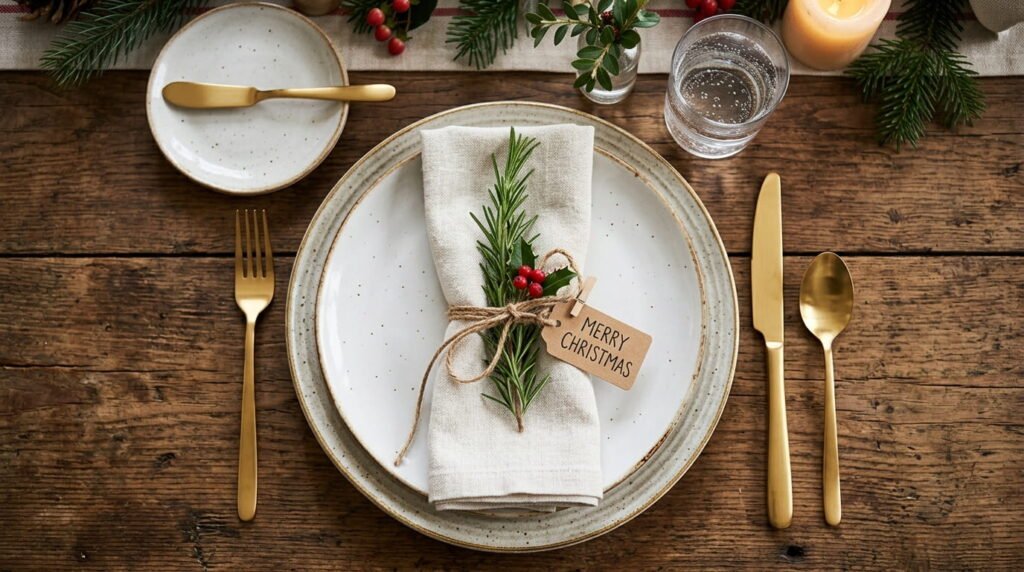
A simple, classic place setting looks like this (from bottom to top):
- Charger or placemat
- Dinner plate
- Salad plate or appetizer plate (optional)
- Napkin (on plate or to the left)
- Flatware (forks on the left, knives and spoons on the right)
- Glassware above the knives
You don’t need every piece for every meal. For a casual Christmas brunch, you might just use a plate, napkin, fork, and mug. For a formal dinner, you can add salad plates, soup bowls, and multiple glasses.
Napkin Folding & Placement
Napkins are an easy way to add polish without much effort.
Simple folds that work:
- Rectangle fold: Fold the napkin into a long rectangle and place it horizontally across the plate or vertically to the left of the forks.
- Simple pocket: Fold into a rectangle, then fold the bottom up halfway to create a pocket for a sprig of greenery or a name card.
- Loose roll with ribbon: Roll the napkin loosely and tie with a thin ribbon or twine, tucking in a small ornament or cinnamon stick.
Avoid overly complicated folds that take 20 minutes per napkin unless you truly enjoy that. Most guests appreciate neat and simple over fancy and fussy.
Name Cards & Small Extras
Place cards make sense for larger gatherings or when you want to control seating.
Easy DIY ideas:
- Small cardstock rectangles with handwritten names, clipped to the napkin with a mini clothespin.
- Mini ornament tags tied with twine around the napkin.
- Small chalkboard pieces with guests’ names in white pen.
Add one small extra per setting to elevate the look:
- A sprig of rosemary or eucalyptus tucked into the napkin
- A single ornament as a take-home favor
- A cinnamon stick or star anise for scent and visual interest
These small touches make the table feel thoughtful without requiring a full styling degree.
Glassware & Flatware Coordination
Keep metal tones consistent where possible:
- If your candle holders are brass or gold, try to use warm-toned flatware or at least avoid clashing metals.
- Simple, clear glassware works with almost any christmas table decorations. Save patterned or colored glasses for more casual setups.
The goal is for glassware and flatware to support the look, not compete with it.
Common Place Setting Mistakes & Fixes
- Overloading each setting: You don’t need three plates, four pieces of flatware, and two glasses for a simple family dinner. Match the setting to the meal.
- Inconsistent spacing: Use your hand as a guide: leave about a finger’s width between plates and a bit more between each setting so elbows don’t constantly bump.
- Sloppy napkins or cards: If napkins keep unfolding or name cards keep falling over, simplify the fold or use a small clip or ribbon to secure them.
Room & Table Shape Considerations
Not all tables are the same. Adjust your layering based on shape and room.
Rectangular Dining Tables
These are the easiest to style.
- Use a long runner down the center.
- Arrange your centerpiece as one continuous line or 2–3 smaller clusters along the runner.
- Keep place settings evenly spaced, with extra room at the ends if you plan to serve food from platters.
Round Tables
For round tables, a single strong focal point in the middle works best.
- Skip the runner or use a round overlay in the center.
- Use one central centerpiece (low bowl with candles and greenery, for example).
- Arrange place settings around the edge, making sure each guest has enough space.
Keep the centerpiece low so everyone can see across the circle.
Small Apartments & Compact Tables
If your table is small:
- Scale down the runner (or skip it entirely and use placemats only). If you are decorating a studio apartment, choosing one strong centerpiece keeps compact dining areas uncluttered.
- Choose one strong centerpiece instead of multiple pieces.
- Skip chargers if space is tight; focus on neat plates and simple napkins.
One or two intentional elements look better than a crowded mini-table.
Buffet or Side Tables
Buffet tables follow different rules because people aren’t seated around them.
- You can go taller with decor (vases, lanterns, stacked boxes) since sightlines don’t matter as much.
- Use christmas table decorations to guide traffic: candles or greenery at the ends, food in the middle.
- Keep serving areas clear so guests can reach plates and utensils easily.
Budget-Friendly & Last-Minute Layering Tips
You don’t need a huge budget or days of prep to create a beautiful table.
Use what you already own:
- Everyday white or neutral plates
- Basic candles (pillar, taper, or tea lights)
- Simple greenery from your yard or a grocery store bouquet
Smart low-cost picks:
- Dollar-store glass vases and candle holders
- Basic cloth napkins in neutral colors (you can add holiday touches with ribbons or greenery)
- A simple runner in a solid color that you can reuse for multiple holidays
15-minute “emergency” layering formula:
- Base: Lay down a plain runner or a couple of placemats.
- Middle: Add 3 candles of varying heights and a handful of greenery or pinecones down the center.
- Top: Set out plates, fold napkins simply, and tuck a small sprig of greenery or an ornament into each napkin.
This alone will make your table look 10 times more intentional than plates on a bare surface.
Where to spend vs. save:
- Worth spending a bit more: A good-quality runner (it sets the tone), decent candles (they burn evenly and smell better), and any piece you’ll use every year.
- Safe places to save: Ornaments, filler greenery, small accents that might get damaged or go out of style.
Common Mistakes to Avoid
Use this as a quick checklist before guests arrive:
- The runner is too narrow or too wide for the table (aim for about one-third of table width).
- The centerpiece is taller than 12–14 inches on a standard dining table, blocking views.ideas.
- Place settings are so close that guests’ elbows constantly bump.
- Too many colors or patterns, making the table look chaotic instead of cohesive.
- Ignoring lighting: a dark room plus dark decor can feel gloomy. Add candles or soft lamps to warm things up.
If you fix only these five things, your table will instantly look more polished.
Step-by-Step Mini Example: Putting It All Together
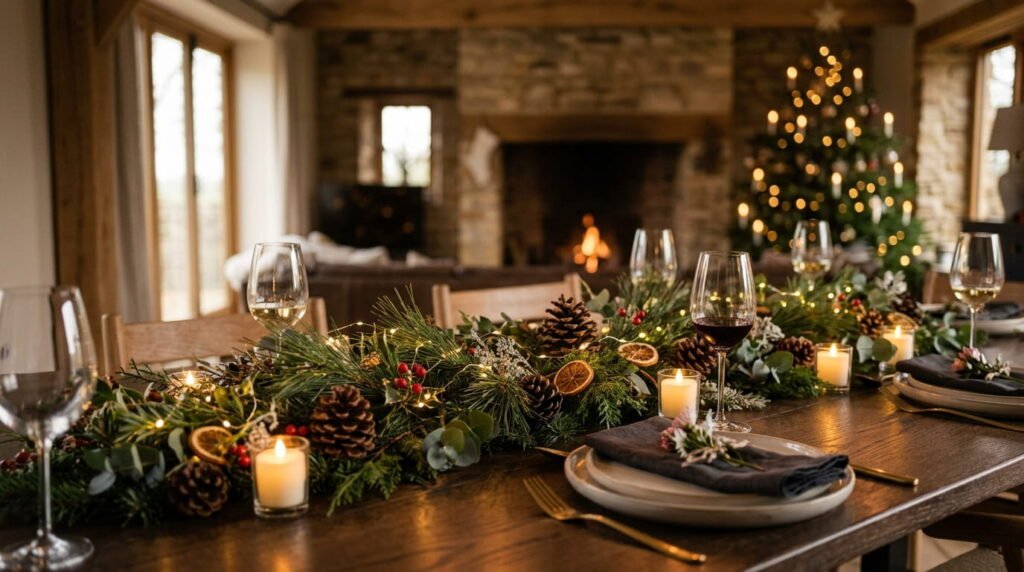
Let’s walk through one complete setup you can copy directly.
Table: 72-inch rectangular dining table, seats 6–8
Style: Warm, traditional Christmas with a clean look
- Base:
- Lay a neutral linen runner, 14 inches wide, with 10 inches of overhang on each end.
- Skip placemats to keep it simple, or add 12-inch woven placemats if you want more texture.
- Middle:
- Create a low garland centerpiece about 8–10 inches tall and 30 inches long in the center of the runner.
- Add 5 pillar candles of varying heights (all under 12 inches) nestled into the greenery.
- Scatter a few pinecones and small ornaments along the garland.
- Top:
- Set white dinner plates centered on or just above the runner.
- Fold simple cloth napkins into rectangles and place them on each plate.
- Tuck a small sprig of eucalyptus or rosemary into each napkin fold.
- Add basic glassware and flatware, keeping metal tones consistent (e.g., all silver or all brushed gold).
Step back and adjust anything that feels crowded. This setup gives you a festive, layered look without feeling overdone.
Conclusion & Actionable Next Steps
Layering christmas table decorations doesn’t have to be complicated. Remember the three layers:
- Base: runner, placemats, chargers
- Middle: centerpiece, candles, greenery
- Top: plates, napkins, flatware, small accents
Start with one table—your dining table, coffee table, or even a console—and apply this method. Once you see how much better it looks with clear layers, you’ll use this system for every holiday.
If you found this guide helpful, explore more home styling tips on My Homes Life, including our guides on small-space holiday hosting and budget-friendly decor. Share your before-and-after tables in the comments or on social—we’d love to see how you layer your christmas table decorations.
FAQ: Christmas Table Decorations & Layering
For a 6-person table, how long should your runner be?
For a typical 6-person rectangular table (around 60–72 inches long), choose a runner that’s 72–84 inches long. This gives you a 6–12 inch overhang on each end, which looks balanced and intentional.
How tall can a Christmas centerpiece be without blocking views?
Keep dining table centerpieces under 12–14 inches tall so guests can see each other comfortably. Taller arrangements work better on buffet tables or in spaces where people aren’t seated directly across from one another.ideas.vishaldecor+2
Can I use christmas table decorations on a coffee table or console?
Yes. Use the same layering idea: a small runner or tray as the base, a low centerpiece (candles + greenery) in the middle, and a few decorative objects on top. Since people aren’t eating there, you can go a bit taller and more decorative.
What’s the easiest way to make a table look festive in under 30 minutes?
Lay down a runner, add 3–5 candles and some greenery down the center, then set out plates with simple folded napkins and a small sprig of greenery or ornament on each. This base-middle-top approach gives you a styled look fast.
How do I store table linens and decor after the holidays so they last?
Wash and fully dry linens before storing. Fold them neatly or roll them to reduce deep creases. Store candles, glassware, and delicate decor in padded boxes, and keep greenery and ornaments in separate bins to prevent crushing. Label boxes by room or theme to make next year’s setup easier.



Leave a Reply