

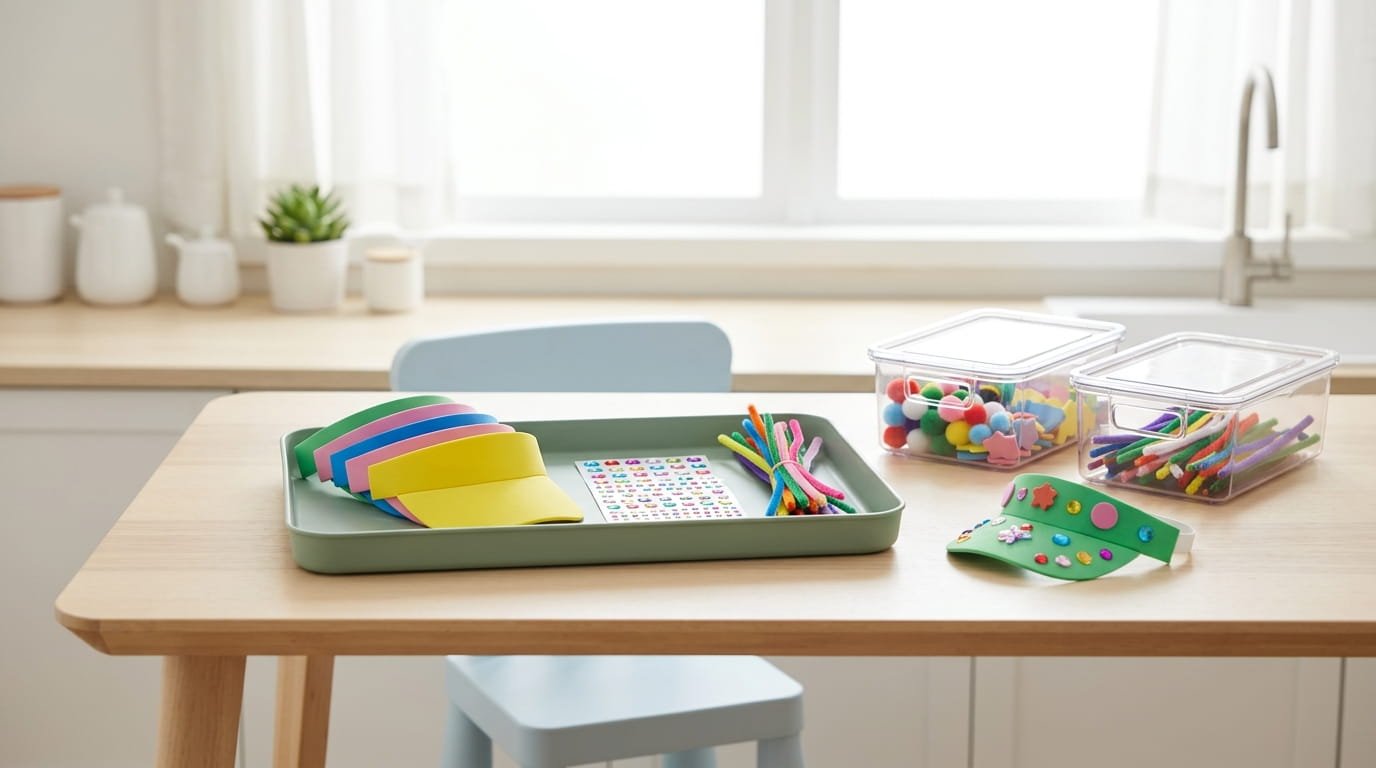
Parents know the familiar cycle: you see a beautiful Pinterest craft, gather supplies, set the kids up at the table, and ten minutes later glitter is embedded in the carpet, glue has migrated onto the chairs, and cleanup takes three times longer than the activity itself. The promise of “creative fun” often delivers more frustration than joy.
There is a better way. Dollar Tree offers a surprisingly strong selection of supplies that support high-engagement, low-mess crafts. When you choose the right materials and pair them with simple containment strategies, you can give toddlers and preschoolers meaningful fine-motor practice, sensory input, and creative expression without turning your kitchen into a disaster zone. (If you’re working with tighter spaces, check out our guide on smart storage solutions for small homes to keep your supplies tidy.)
3 Pillars of Home-Safe Crafting
- Zero Loose Particles: Absolutely no glitter, powdered dyes, or free-floating beads.
- Containment-First Setup: Every activity lives inside a tray, bin, or on a protected surface.
- Peel, Press, or Washable Adhesives: Skip traditional glue bottles whenever possible.
Below, you will find a $10 “Home Shield” prep station every parent should assemble once, followed by ten carefully selected kid-friendly Dollar Tree craft ideas grouped by mess level.
The $10 “Home Shield” Prep Station
Before any craft begins, invest a few dollars in basic barriers. These four items dramatically reduce cleanup time and protect floors, tables, and furniture.
| Dollar Tree Item | Home Protection Purpose | Cleanup Efficiency Impact |
| Plastic serving trays / baking sheets | Creates a bounded workspace with raised lips for each child. | Keeps spills, rolling markers, and scraps isolated to one tray. |
| Vinyl shower curtain liner | Serves as a disposable or wipeable floor mat beneath chairs. | Catches dropped pieces; folds up in seconds to shake into the trash. |
| Painter’s tape / Press-and-Seal | Anchors paper and plastic trays to tables to prevent sliding. | Prevents accidental tray flips or floor spills during active play. |
| Lidded storage bins (shoebox size) | Houses individual craft kits for easy setup and teardown. | Allows unfinished projects to be stacked and stored instantly. |
Setup Tip: Lay the vinyl liner under the chairs or high chairs, place a tray in front of each child, and tape the tray down if needed. Keep a pack of baby wipes and a small trash bag at the table. This simple station turns almost any activity into a contained experience.
Category A: 100% Zero-Liquid & Dry Crafts
These projects involve no liquid at all. They are ideal for the youngest toddlers or days when you want absolute zero risk of stains.
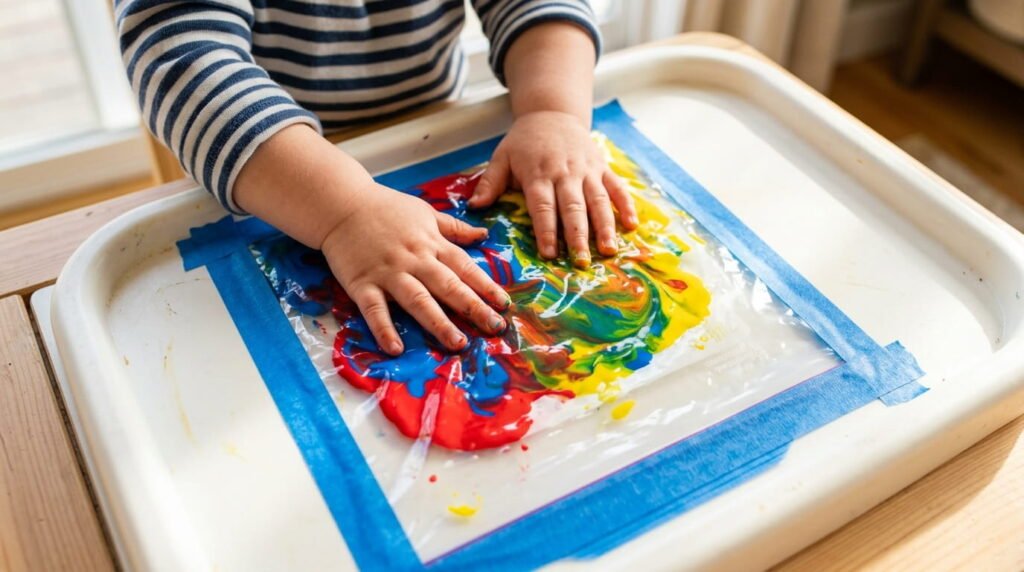
1. Zip-Top Bag Sensory Painting
- Supplies: Gallon zip-top freezer bags, washable acrylic paint (primary colors), heavy cardstock or white paper, painter’s tape.
- Steps: Place a sheet of cardstock inside the bag. Squirt three or four small drops of paint onto the paper. Seal the bag, press out most of the air, and tape the entire bag flat to a tray or a sunny window. Children press, smear, and mix the colors through the plastic.
- Developmental Benefits: Color mixing becomes a tactile science experiment. Children explore cause and effect and strengthen finger and hand muscles without ever touching wet paint.
- Cleanup Time: 0 minutes. Leave the sealed bag as a finished “painting” or simply discard it.
2. Foam Visor & Peel-and-Stick Gem Station
- Supplies: Craft foam visors, self-adhesive foam alphabet or shape packs, sticker gems or foam stickers.
- Steps: Hand each child a foam visor. They peel the paper backs off foam shapes and stickers and arrange them however they like. No glue required.
- Developmental Benefits: Repeated peeling and placing builds the pincer grasp essential for writing. Spatial reasoning improves as children decide where each piece belongs.
- Cleanup Time: 1 minute. Gather the paper backings and toss them. Visors can be worn immediately or stored.
3. Colander & Chenille Pipe Cleaner Sculptures
- Supplies: Plastic kitchen colander, multi-colored pipe cleaners, optional large pony beads.
- Steps: Flip the colander upside down on the tray. Children thread pipe cleaners in and out of the holes to create 3-D structures. Add beads if desired for extra challenge.
- Developmental Benefits: Excellent hand-eye coordination and bilateral coordination practice. Toddlers gain spatial focus while working in three dimensions.
- Cleanup Time: 30 seconds. Pull the pipe cleaners out and drop them back into a storage bin for reuse.
Category B: Self-Contained Mess & Tactile Crafts
These activities involve dry materials that stay mostly inside a bin or are easily controlled. They deliver rich sensory input with minimal scatter.
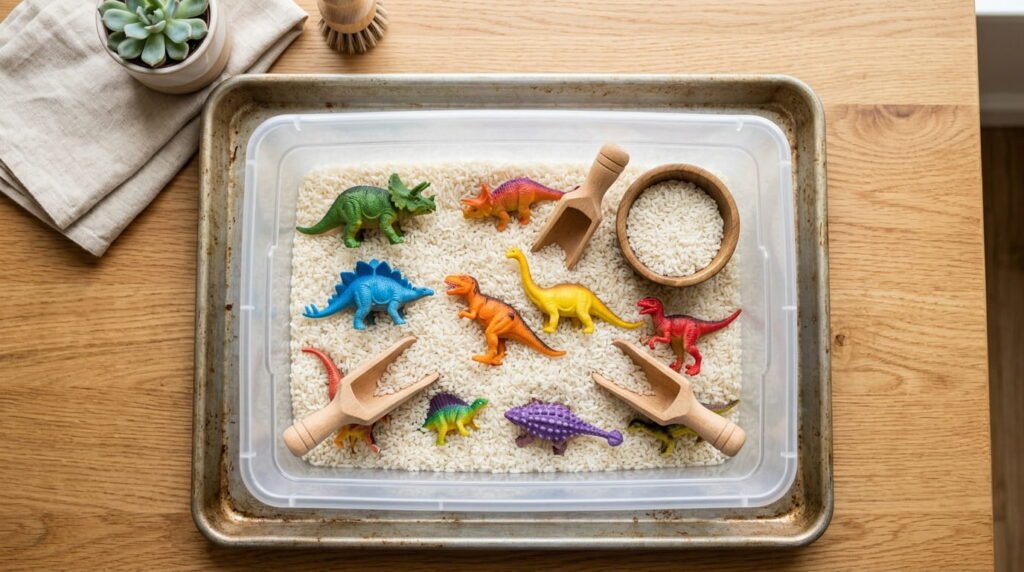
4. Controlled Rice & Dino Discovery Bins
- Supplies: Deep storage bin with locking lid, 2–3 bags of dry white rice, plastic measuring cups or scoops, plastic dinosaurs or other small toys.
- Steps: Fill the bin halfway with rice and bury the toys. Place the bin inside a larger tray or on the vinyl mat. Children dig, scoop, pour, and search for the hidden items.
- Developmental Benefits: Sensory regulation, fine motor scooping, and early counting or sorting practice. The repetitive motion is calming for many children.
- Cleanup Time: 2 minutes. Sweep or vacuum any stray grains that escaped the tray, then snap the lid shut. The entire bin stores neatly.
5. Pre-Cut Wood Kit Decorating (Marker & Sticker Method)
- Supplies: Unfinished wood birdhouses, plaques, or simple cutouts from the craft aisle, dual-tip washable markers, foam stickers.
- Steps: Skip wood stain and liquid paint. Children color directly on the raw wood with washable markers and add foam stickers for decoration.
- Developmental Benefits: Children learn how different surfaces accept color and practice controlled line work. The texture of the wood provides additional sensory feedback.
- Cleanup Time: 1 minute. Cap the markers and stack the wood pieces.
6. Paper Plate Animal Shakers
- Supplies: Uncoated paper plates, dry navy beans or macaroni, washable markers, stapler (adult use only).
- Steps: Children draw animal faces or patterns on the outside of a plate. An adult folds a second plate over the first, drops a small handful of beans inside, and staples the edges firmly every half-inch.
- Developmental Benefits: Combines visual art with auditory exploration. Children experience rhythm and cause-and-effect when they shake their finished instrument.
- Cleanup Time: 1 minute. Put the markers away. The shakers are self-contained and ready for play.
Category C: Low-Moisture & Water-Controlled Crafts
These projects use a controlled amount of water or adhesive that stays on the work surface. Cleanup remains quick when trays and mats are in place.
7. Spray-Mist Coffee Filter Tie-Dye Flowers
- Supplies: White coffee filters, washable markers, small fine-mist spray bottle filled with water, pipe cleaners.
- Steps: Children color heavily on coffee filters placed inside a baking tray. Lightly mist the filters two times so the colors bleed and blend. Once dry, pinch the center of each filter and twist a pipe cleaner around it to form a flower stem.
- Developmental Benefits: Children observe capillary action and color mixing in real time. The process introduces basic fluid dynamics in a hands-on way.
- Cleanup Time: 2 minutes. Wipe the tray with a paper towel. The dried flowers can be displayed or used in pretend play.
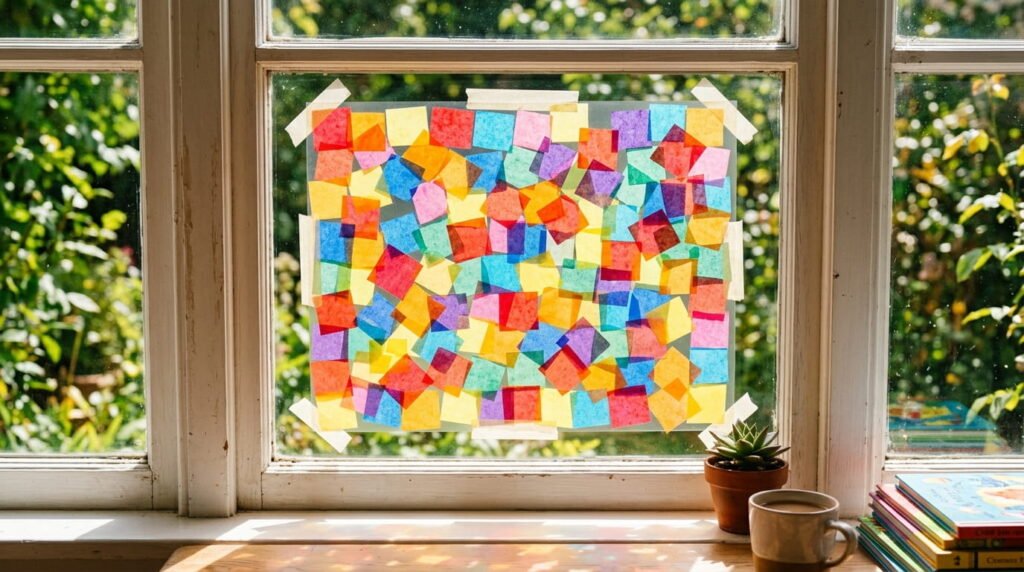
8. Contact Paper Window Suncatchers
- Supplies: Clear contact paper roll, pre-cut tissue paper squares or scraps, painter’s tape, scissors (adult use for cutting the contact paper).
- Steps: Cut a piece of contact paper and tape it sticky-side out to a sunny window or to a tray. Children press tissue paper pieces onto the sticky surface to create stained-glass designs. When finished, cover with a second piece of contact paper if desired.
- Developmental Benefits: Working on a vertical surface strengthens shoulder stability and wrist extension. Color and shape recognition improve as children arrange the pieces.
- Cleanup Time: 1 minute. Sweep any excess tissue scraps into the trash.
9. Pool Noodle & Marble Gravity Tracks
- Supplies: Foam pool noodle, serrated knife (adult only), marbles, plastic bowls or cups for catching.
- Steps: An adult cuts the pool noodle in half lengthwise to create open tracks. Tape the top of the track to the edge of a couch, chair, or low wall and angle the bottom into a catch bowl. Children roll marbles down the tracks and experiment with different starting heights and angles.
- Developmental Benefits: Introduces early physics concepts (gravity, velocity, and trajectory) through play. Hand-eye coordination and problem-solving develop as children adjust the setup.
- Cleanup Time: 1 minute. Collect the marbles into a sealed container and store the noodle halves.
10. Sticker Mosaic Pattern Cards
- Supplies: Construction paper, multi-colored circular garage sale coding labels or similar small stickers.
- Steps: Draw simple outlines (butterflies, cars, stars, letters) on the paper. Children match and place colored stickers along the lines or fill in sections to complete the mosaic.
- Developmental Benefits: Strengthens pattern recognition, color sorting, visual tracking, and the same pincer grasp used in writing.
- Cleanup Time: 30 seconds. Discard the sticker sheet backings.
Parent Execution & Cleanup Protocol
Consistency makes these activities sustainable. Establish a simple 2-minute reset rule: before moving to the next activity or snack, every child clears their own tray. This builds responsibility and keeps the station ready for the next use.
Keep a dedicated pack of Dollar Tree baby wipes in the center of the table. Wipe hands before children leave the craft area so markers, rice dust, or sticker residue do not travel through the house.
For long-term organization, use the shoebox-size lidded bins. Create individual kits labeled by activity (Visor Station, Rice Bin, Coffee Filter Flowers, etc.). Rotate two or three kits every week or two. Children stay interested without the need for constant new purchases, and setup becomes a matter of pulling one bin off the shelf.
Frequently Asked Questions
What are the best low-mess craft items to buy at Dollar Tree?
The best budget items for mess-free crafting include craft foam visors, self-adhesive foam stickers, pipe cleaners, uncoated paper plates, coffee filters, and clear contact paper.
How do you prevent crafting mess with toddlers?
Use containment barriers like plastic trays with raised lips and a vinyl shower curtain liner under chairs. Stick to dry or self-contained activities that use stickers, markers, or sealed plastic bags instead of liquid glue and free glitter.
Creative development does not require elaborate, messy setups or expensive specialty supplies. Thoughtful choices at Dollar Tree, combined with basic containment, deliver high engagement, genuine skill-building, and remarkably short cleanup times. Try one or two of these projects this week to build a calmer crafting routine at home.




Leave a Reply