

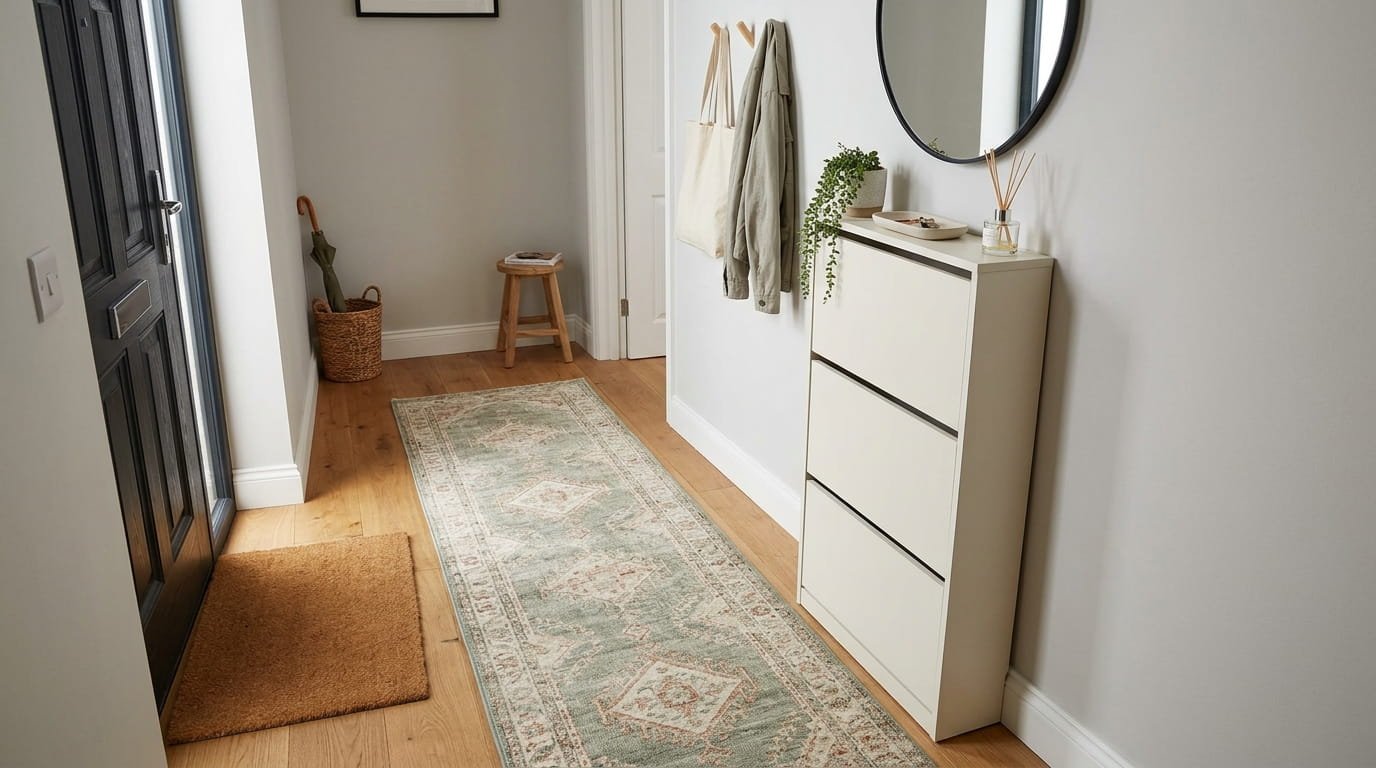
You open the front door after a long day and immediately step over a heap of shoes. It’s a common scene in homes everywhere, yet the entryway is often the last space people organize. A smart entryway shoe storage system does more than tidy the floor: it speeds up your morning routine, reduces clutter-related stress, and makes your whole home feel more put-together from the moment you walk in.
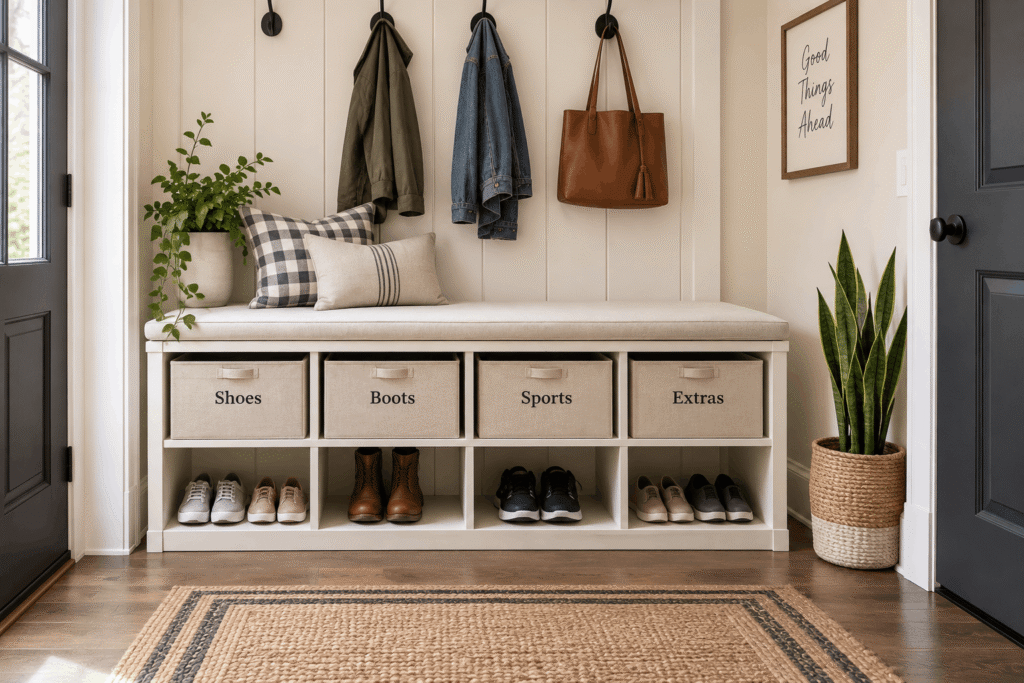
This guide covers practical solutions for real homes: quick fixes for tight apartments, family-friendly mudroom setups, and design-forward ideas that keep shoes off the floor without sacrificing style. If shoes are taking over your entry, you’ll find a solution that fits.
Why Entryway Shoe Storage Matters (More Than You Think)
Most people treat entryway clutter as a minor annoyance. In reality, it affects daily life in measurable ways. Environmental psychology research links physical clutter to higher cortisol levels, the body’s primary stress hormone, and the entry zone is one of the most frequently used areas in the home, with shoes often at the center of the mess. Learning how to declutter your home fast starting at the front door sets a calm tone for the entire house.
The practical consequences go beyond stress:
- Dirt and Bacteria: Microbes from shoe soles travel deeper into the home when footwear isn’t stored near the door.
- Time Loss: Hunting for matching pairs before work or school adds up over weeks and months.
- Safety Risks: Scattered shoes create real tripping hazards, especially for young children and older adults.
- First Impressions: Organized entryways influence how guests (and potential buyers) perceive the rest of a property.
Good entryway shoe storage solves a functional problem that quietly improves everyday life.
How to Plan Your Entryway Shoe Storage (Measurements, Capacity, Daily Pairs Rule)
Before buying anything, define your constraints and your “daily pairs” target. This prevents overbuying and ensures your system actually fits.
- Measure Usable Depth After the Door Swings: Open the door fully, mark where the leading edge lands, and measure from that line to the opposite wall. This number, not the empty-room measurement, decides what furniture will fit.
- Set a Daily-Pairs Cap: A sensible starting point is 3–5 pairs per household member—the shoes worn most regularly. Everything else belongs in a bedroom closet, under-bed storage, or seasonal containers.
- Plan Width per Pair: Allocate roughly 8–10 inches of width per adult shoe pair (slightly less for kids’ shoes), and adjust shelf depth based on heel height. Measure a few favorite pairs first to determine realistic spacing.
- Depth Guidelines: Men’s shoes typically need 11–13 inches of depth; women’s shoes generally fit within 9–11 inches. Aim for at least 12 inches deep so shoes sit properly without hanging over the edge.
- Go Vertical First: In narrow halls, prioritize height over width. Tall, narrow cabinets or stacked units use wall height efficiently and keep walkways clear.
Best Entryway Shoe Storage Ideas (With Real-World Fit)
Slim Shoe Cabinets (Tilt-Out) for Narrow Halls
Tilt-out shoe cabinets are excellent for concealing messes and presenting a cleaner appearance compared to open shelving. They’re ideal for narrow entryways because they often require only 6–10 inches of depth while storing many pairs vertically.
- Best for: Minimalist looks, design-conscious homes, and households with smaller-to-medium shoe collections.
- Trade-off: Slightly less convenient; you open a door each time, and bulky boots may not fit as well as sneakers and flats.
- What to look for: Depth under 9.5 inches for tight halls; adjustable shelves for boot clearance; ventilation or breathable liners to reduce odors.
Shoe Storage Benches with Cubbies/Drawers
Benches equipped with pull-out drawers or cubbies provide both seating and storage in a compact footprint, perfect for families and covered entryways.
- Best for: Families, anyone who needs a place to sit while putting shoes on or taking them off, and homes wanting a polished, furniture-style look.
- Trade-off: Requires more floor space than a basic rack; fabric bins look tidy but need occasional washing.
- Pro Tip: Assign each person a specific cubby or labeled bin. For young children, photo labels on cubbies build the habit without requiring reading ability.
Vertical Racks, Wall-Mounted Shelves, and Floating Cubbies
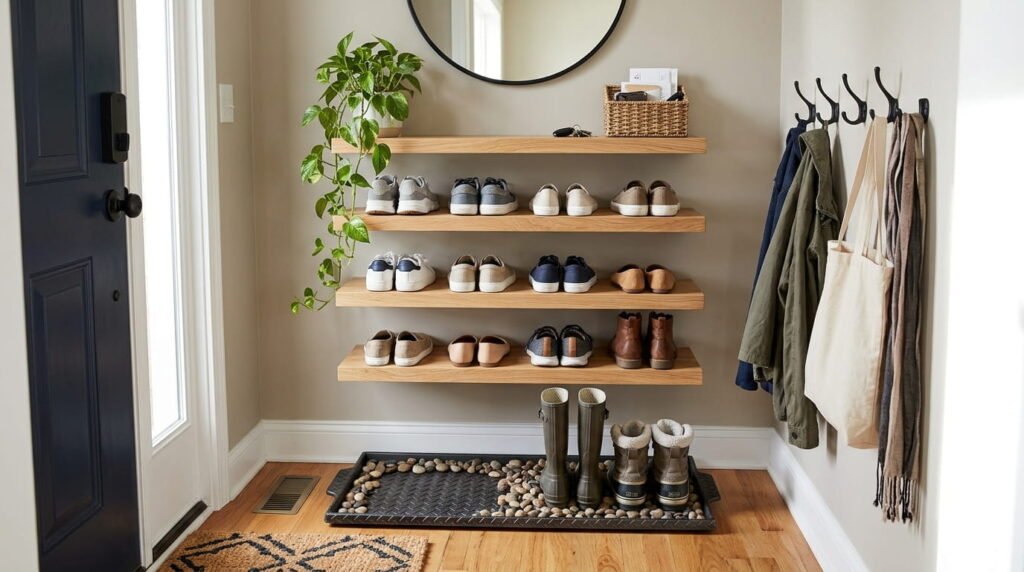
Wall-mounted racks utilize otherwise unused vertical areas while keeping the floor space open. Tiered metal or wood racks typically hold 6–20 pairs depending on configuration, and floating shelves keep the floor entirely clear, making narrow entries feel more open.
- Best for: Renters, smaller households, tight budgets, and apartments with minimal floor space.
- Trade-off: Shoes stay visible, which can feel cluttered in open-plan interiors unless styled with baskets or bins.
- Styling Tip: Keep open shelving at about 70–80% full and use baskets or bins on lower shelves to create visual order.
Over-the-Door and Behind-Door Organizers
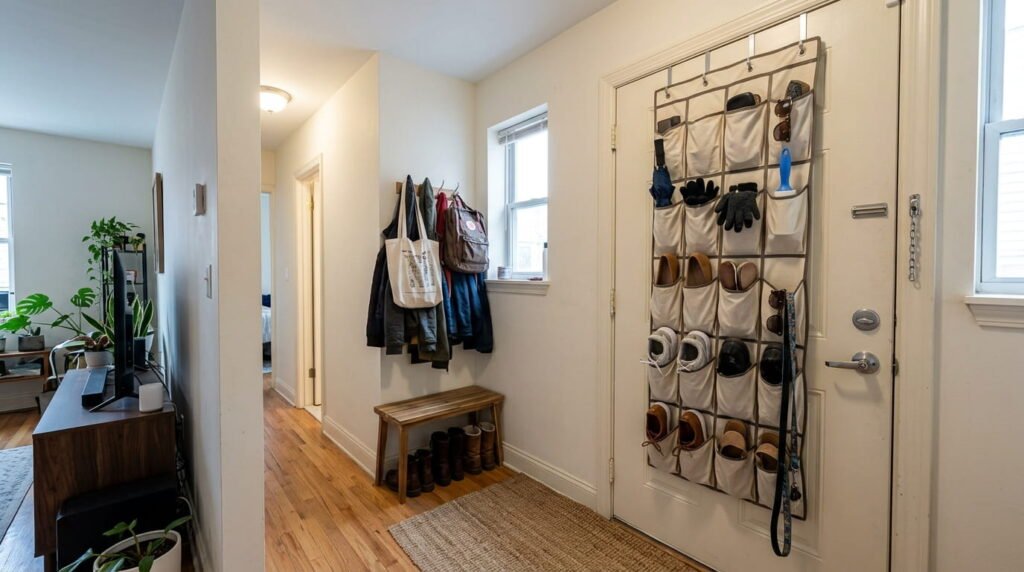
The wall behind an inward-swinging front door is one of the most underused surfaces in any home. Over-door fabric or metal organizers hold flats, sandals, and children’s shoes without using any floor or wall space at all.
- Best for: Apartments with zero floor space and renters who can’t drill.
- Trade-off: Not ideal for heavy boots; front-door mounting can dent door edges over time. Use on interior bedroom or closet doors instead.
- Capacity Note: Fabric pocket organizers can hold 12–24 pairs for a low cost, making them high-capacity per dollar, but keep them off the main entry door if possible.
Baskets, Bins, and Boot Trays for a Clean Drop Zone
A rubber boot tray or low boot rack does something psychological as much as practical: it tells everyone in the household where shoes are allowed to be, and it catches wet or muddy footwear before it spreads dirt inside. If you want to build a functional entryway on a tight budget, explore these organize home without buying anything techniques.
- Best for: Wet climates, families with kids, and anyone who wants a defined “shoe zone.”
- Trade-off: Adds zero capacity on its own, but dramatically improves compliance and cleanliness.
- Pro Tip: Place the tray on the hinge-side wall, out of the walking path, and pair it with a narrow rack or cabinet for daily pairs.
Mudroom Shoe Storage Layouts That Work
A mudroom shoe organizer operates at a different scale than standalone furniture. Mudrooms, dedicated spaces between the outdoors and main living areas, are built to absorb the mess active households generate.
In a proper mudroom setup, shoe storage integrates with coat hooks, cubbies assigned to each family member, bench seating, and sometimes individual lockers, creating a complete drop-zone system rather than a single piece of furniture.
- If you don’t have a dedicated mudroom: You can mimic one by combining a large foyer bench with multiple cubby sections, a separate boot storage zone, and wall hooks above. You can also build modular systems using clever house beautiful IKEA hacks to create custom-looking storage in a hallway corner or garage entry.
Key Layout Principles:
- Assign Zones, Not Just General Space: Give each person their own cubby, labeled basket, or shelf section.
- Account for Boot Storage Specifically: Tall boots need vertical clearance that standard racks don’t offer; use removable/adjustable shelves or reserve a floor area for taller footwear.
- Prioritize Easy-Clean Surfaces: Choose wipe-clean materials; fabric-heavy designs look appealing in photos but become frustrating within weeks of real use.
- Pair Shoe Storage with Coat Hooks: Combining shoe storage with coat hooks creates a proper drop-zone, containing backpacks, coats, and muddy boots the moment someone walks in.
Shoe Storage Ideas for Small Entryway Apartments and Rentals (No-Drill Options)
Apartments, older homes, and condos frequently offer nothing more than a narrow strip of floor at the front door: no mudroom, no hallway width to spare, and sometimes not even a closet nearby. A small entryway shoe organizer has to work harder in less space.
- Go Vertical Before Going Wide: A tall, narrow shoe cabinet trades floor width for wall height. Units that are 12–15 inches deep but extend to 60 inches or more can hold 15–20 pairs while occupying a small footprint.
- Mount Shelves Directly to the Wall (If Allowed): Floating shelves keep the floor entirely clear, making a narrow entry feel significantly more open. Even one or two shelves positioned near the door handle the most frequently worn pairs without crowding the space.
- Use the Back of the Front Door: Over-door fabric or metal organizers hold flats, sandals, and children’s shoes without using any floor or wall space.
Renter-Safe Picks That Actually Hold Up:
- Slim Freestanding Shoe Cabinet (Unanchored but Weighted): A cabinet under 8 inches deep is the single biggest win in a narrow hallway. For example, the IKEA TRONES is 7⅛ inches deep and holds about four pairs per unit. If you can’t drill, stack two units maximum against a wall out of the door’s swing path and weigh down the base.
- Narrow Shoe Rack Behind the Door: A multi-tier metal rack roughly 24 inches wide and 11 inches deep holds 6–8 pairs using the wall space covered by the open door.
- Clear Stackable Shoe Containers: Highly effective for hidden shoe storage in apartments. Stackable shoe boxes let you see contents without unstacking. Store off-season pairs under a bed or on a high shelf.
- Rubber Boot Tray as the Anchor: A rubber boot tray defines the drop zone and catches wet/muddy shoes, preventing mildew and deposit issues in rentals.
Adhesive Mounts: When They Work (and When They Don’t)
Adhesive is strong in shear and weak in peel. It works best on smooth painted drywall, within stated weight limits, and for lightweight footwear (sandals, flats, kids’ shoes). It fails with textured walls, humid entries, and heavy boots. Clean the surface with isopropyl alcohol first and wait a full hour before loading.
Open vs. Closed Shoe Storage: Which Looks Tidier and Ranks Better in Photos?
- Closed Storage Wins for Small Entryways: Slim tilt-out shoe cabinets (6–10 inches / 15–25 cm deep) use vertical space efficiently and keep the floor clear, making a narrow foyer feel larger. Closed cabinets keep the entry looking intentional rather than functional-but-messy, especially when the entryway connects directly to a living area without a visual break.
- Open Racks: Open racks are affordable and airy but read as clutter no matter how neatly you arrange them because you see shoes head-on the moment you walk in. They work best behind the door or above shoulder height where they don’t dominate the entryway area.
- Styling Tip: Don’t fill open shelving to capacity. At about 70–80% full, it looks intentional; crammed reads as disorganized even if everything has a place. Anchor the area with a runner or entry mat, and use baskets or bins on lower shelves to create visual order.
Step-by-Step: Set Up a 3-Part Entryway System (Hooks + Shoe Landing + Surface)
A simple, repeatable system beats a perfect-but-complicated one. Build three zones: coats/bags, shoes, and a landing pad for keys/mail.
- Measure Your Usable Depth After the Door Swing: Tape the footprint on the floor and open the door 20 times before ordering furniture.
- Count and Cull Your Shoe Collection: Line up every pair. Anything you haven’t worn in three months leaves the entryway. Storage never fixes a volume problem.
- Claim the Wall Behind the Open Door First: Maximize vertical space in an entry that has no floor to spare. Your tallest freestanding unit goes here.
- Set the Boot Tray as Your Boundary: Place it against the wall on the hinge side, out of the walking path.
- Add Wall Hooks Above the Shoe Zone: Use adhesive hooks rated for 20 lbs to handle coats and bags without drilling (on smooth drywall).
- Create a Landing Pad at Eye Level: A narrow console (10–12 inches deep) or a small floating shelf gives you a surface for keys and mail, stopping small items from spreading into the home.
- Live With It for One Week, Then Adjust: Watch where shoes actually land when you’re tired and carrying items. If people keep dropping them short of your rack, move the rack. Design for the habit you have, not the one you want.
Common Mistakes to Avoid
- Buying Before Measuring the Door Swing: A 14-inch-deep shoe cabinet is useless if the door clears only 12 inches. Tape the footprint first.
- Trusting Adhesive with Heavy Boots: Adhesive strips are rated for static, evenly distributed loads. Yanking a boot outward applies peel force, causing adhesives to give way. Keep anything over ~3 pounds per mounting point on the floor.
- Choosing Open Shelves at Eye Level in Small Entries: Shoes on open shelves read as clutter. Use closed storage or baskets at eye level; keep open shelves above shoulder height.
- Ignoring Moisture: Wet shoes on carpet grow mildew. Always use a rubber tray in damp seasons, and never put wet shoes on wood or laminate shelves.
- Overstuffing: A crammed rack reads as disorganized even if everything has a place. Keep daily pairs capped and rotate seasonal footwear elsewhere.
FAQ: Entryway Shoe Storage
How many pairs of shoes should an entryway hold?
A sensible starting point is 3–5 pairs per household member—the shoes worn most regularly. Everything else is better stored in a bedroom closet or secondary storage area. Keeping that limit in mind is what allows an entryway shoe storage system to stay functional rather than becoming a dumping ground.
What is the best entryway shoe storage for small spaces?
A vertical front door shoe cabinet or wall-mounted floating shelves are the most space-efficient choices for tight entryways. Over-door organizers are a strong backup for apartments where floor space isn’t available.
How do I keep entryway shoe storage from smelling?
Ventilation matters most. Open racks allow air to circulate naturally. For enclosed cabinets, use activated charcoal sachets or cedar blocks inside to absorb odor. Always dry wet shoes before placing them in enclosed storage.
Is a shoe bench worth it compared to a simple rack?
For most households with more than one or two people, yes. The seating element alone makes it more practical, and most bench designs offer more capacity than a comparable rack. It’s especially valuable in homes with young children or elderly family members.
How deep should entryway shoe storage be?
Men’s shoes typically need 11–13 inches of depth; women’s shoes generally fit within 9–11 inches. Aim for a unit that’s at least 12 inches deep so shoes sit properly without hanging over the edge.
Can I use entryway shoe storage in a garage?
Yes. Metal racks and stackable shelves are well-suited to garage environments. Prioritize moisture resistance and durability over visual design.
What’s the best entryway shoe storage for a family of five?
A mudroom shoe organizer with individual cubbies per family member is the most effective long-term solution. If a full mudroom isn’t possible, a large foyer bench with multiple cubby sections plus a separate boot storage zone covers most busy-household needs.



Leave a Reply