

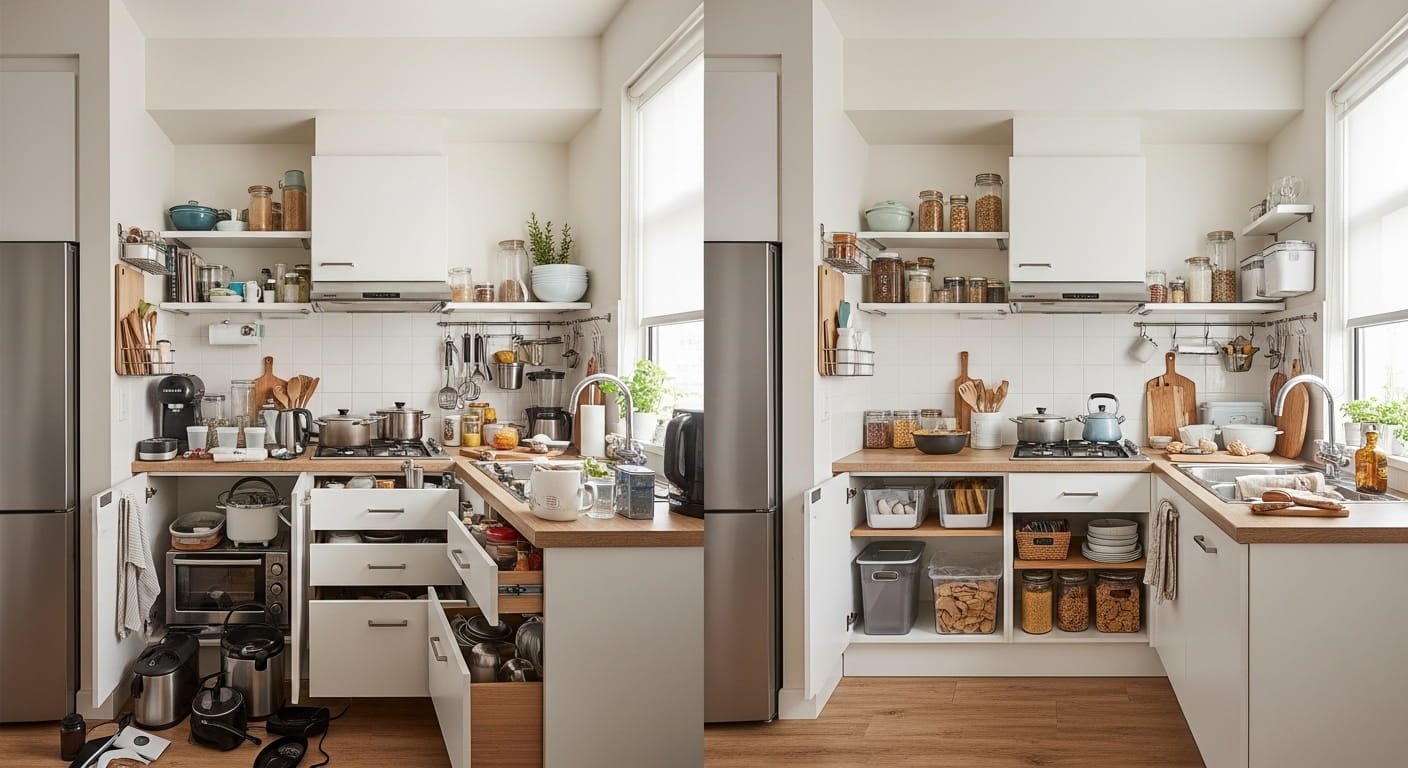
Small kitchens run out of usable space fast. Counter clutter piles up. Cabinets overflow. And the vertical space above your head stays completely empty while every drawer fights to close.
The good news is that most small kitchen storage problems have practical fixes that cost very little and take less than an afternoon to implement. These 25 hacks are organized by area so you can tackle one zone at a time and see results immediately.
For the complete kitchen organization framework that supports these hacks, the Small Kitchen Organization Ideas guide covers the full system from declutter through daily maintenance.
Why Small Kitchens Run Out of Space So Quickly
Before fixing the problem, it helps to understand exactly where the space goes.
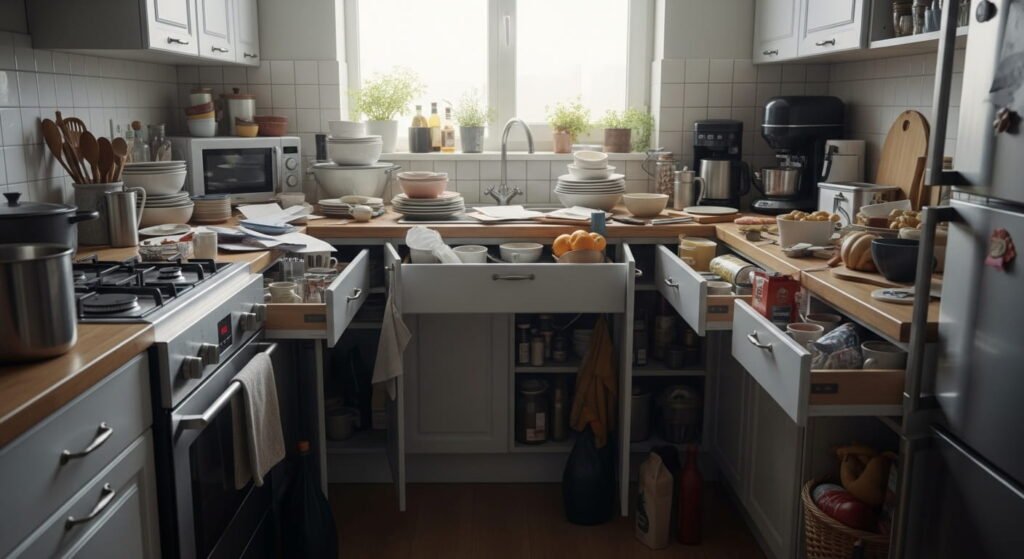
Too Much Countertop Clutter
Counters attract items like a magnet. An appliance here, a fruit bowl there, a stack of mail that has no real home. Before long, the actual prep surface shrinks to a cutting board-sized patch near the sink. Counters in small kitchens need strict rules about what earns a permanent spot.
Unused Vertical Space
Most kitchens use storage from floor to roughly five feet high. Everything above that is empty wall. In a small kitchen, those empty walls represent significant untapped storage capacity that costs nothing to access.
Poor Cabinet Organization
Deep cabinets where items stack without visibility. Drawers without dividers that turn into junk piles. Upper shelves where only the front row is ever used. These are not space problems. They are organization problems with straightforward fixes.
Use Vertical Space Like a Pro
Wall space is free storage. These hacks put it to work.
Install Floating Shelves
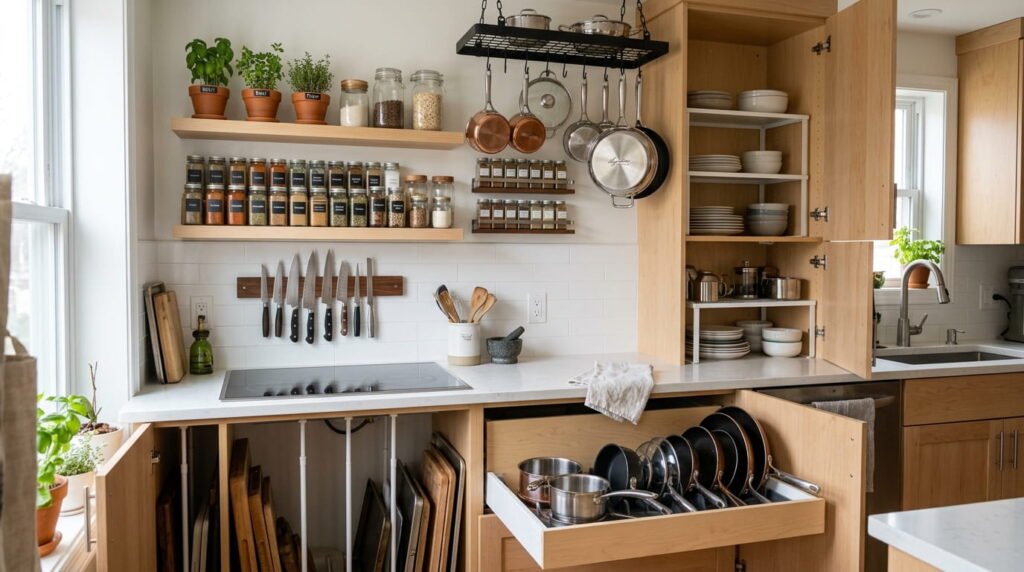
One or two floating shelves above the counter hold oils, spices, a small plant, or frequently used pantry items. They remove those items from cabinet shelves and counter surfaces simultaneously.
Budget: $15 to $40 depending on material and bracket style. Many homeowners report reclaiming an entire cabinet shelf by moving everyday items to a wall shelf instead.
Add a Magnetic Knife Strip
A magnetic strip mounted beside the stove holds every kitchen knife safely and accessibly. It frees the counter space a knife block occupied and keeps blades in better condition by eliminating friction from a wooden block.
Budget: $15 to $25. Zero counter footprint.
Use Wall-Mounted Spice Racks
A wall-mounted spice rack beside the stove keeps the 6 to 8 spices used most often within arm’s reach during cooking without occupying counter or cabinet space. Many wall-mounted options use adhesive mounting suitable for renters.
Hang Pots and Pans
A wall-mounted or ceiling-mounted pot rack moves bulky cookware out of lower cabinets entirely. Organization professionals consistently rate pot racks among the highest-impact single storage changes in small kitchens because they free a full lower cabinet for other categories.
Budget: $35 to $80. The cabinet they free is often worth far more in daily convenience.
Smart Cabinet Space Saving Hacks
These changes apply to the cabinets you already have and require no renovation.
Add Shelf Risers
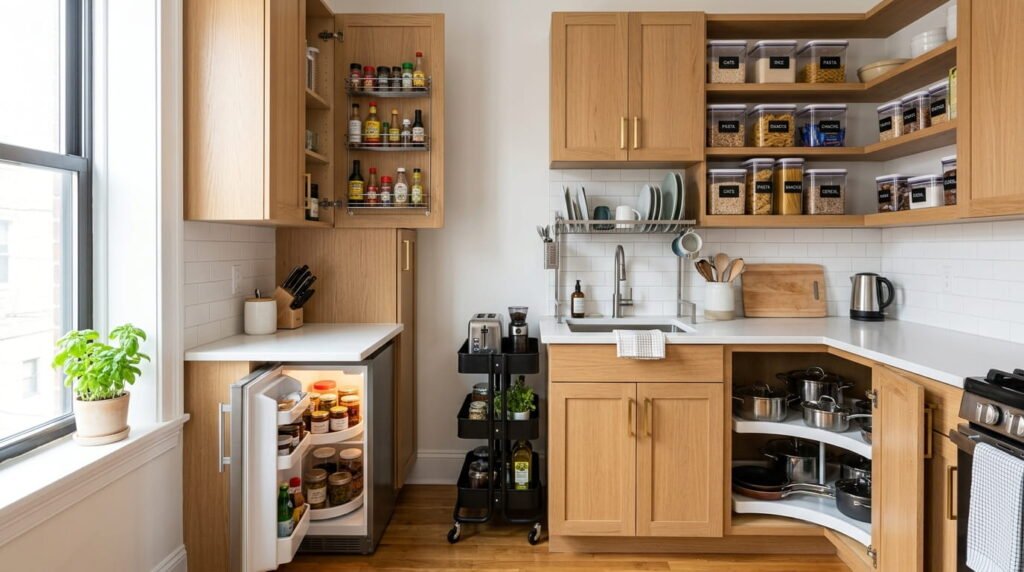
A stackable wire or bamboo shelf riser creates a second tier inside any upper cabinet, making the back row visible and independently accessible. Many homeowners report doubling the effective storage of their upper cabinets in under 15 minutes using shelf risers alone.
Budget: $12 to $20 for a two-pack. Look for adjustable widths that fit most American cabinet dimensions.
Use Pull-Out Organizers
A sliding pull-out organizer mounted in a lower cabinet brings the full depth of the cabinet into reach. Items stored 18 inches back become as accessible as items at the front. Organization professionals often describe pull-out cabinet organizers as the single most impactful small kitchen upgrade for families who cook regularly.
Recommended: Rev-A-Shelf or Lynk Professional pull-out systems. Budget: $35 to $75.
Store Baking Sheets Vertically
Sheet pans, cutting boards, and pot lids stored flat require removing everything above to access the bottom item. A $5 tension rod installed vertically inside a lower cabinet creates individual slots for every flat item to stand upright. Access time drops from 45 seconds of unstacking to a 5-second pull.
Use Door-Mounted Storage
The inside of every cabinet door is unused storage. Adhesive hooks or slim over-door racks on cabinet doors hold pot lids, measuring cups, aluminum foil boxes, and small tools without using a single inch of shelf space.
For more no-cabinet storage ideas, Kitchen Storage Without Cabinets covers the full range of creative solutions.
Countertop Space Saving Tricks
Counters are the most valuable real estate in a small kitchen. These hacks protect that space.
Use an Over-the-Sink Drying Rack
An over-sink rack that extends across the sink basin rather than sitting beside it recovers 3 to 4 square feet of counter space. Dishes dry above the drain. The counter stays clear for food prep.
Recommended: Polder adjustable over-sink rack. Budget: $35 to $55.
Consolidate Small Appliances
Every appliance on the counter permanently is paying rent with prep space. Audit the counter against one question: is this used at least four times a week? If yes, it earns a counter spot. If no, it stores in a cabinet and comes out when needed.
Most families can clear two to four appliances off the counter with this standard alone.
Create a Dedicated Coffee Station
Grouping all coffee-related items into one defined area (coffee maker, mugs, sugar, spoons) rather than scattering them makes the setup look intentional and makes the morning routine faster. A small tray creates the visual boundary that defines the station.
Store Frequently Used Items Near Their Use Point
Cooking oils and salt belong within arm’s reach of the stove. Cutting tools belong at the prep area. When items live near where they get used, the kitchen flows faster and counters stay cleaner because nothing needs to be carried across the room.
Pantry Space Saving Hacks
A few targeted changes can double effective pantry capacity without adding a single shelf.
Use Clear Storage Bins
Clear stackable bins assigned by category give every pantry area visible inventory. When a bin is empty, a category needs restocking. When it is full, a category is due for rotation. The open-front design means items are grabbed without removing the whole bin.
Recommended: mDesign stackable pantry bins. Budget: $18 to $30 for a set of four.
Add Lazy Susans
A lazy Susan on the spice shelf and the canned goods shelf eliminates buried-in-the-back problems on both. One rotation brings every item to the front. Many homeowners also add a lazy Susan to a refrigerator shelf for condiments with equally strong results.
Budget: $8 to $16 each.
Label Everything
A label on the shelf communicates what belongs in that position to every family member, not just the person who set up the system. When everyone knows where things go, everyone can put things away correctly. For the full pantry setup process, Pantry Organization Ideas on a Budget covers every step for under $40 total.
Create Zones
Grouped categories function better than mixed shelving. Setting up a breakfast zone, a snack zone, and a meal-prep zone makes both cooking and grocery put-away faster because every item has a neighborhood, not just a shelf. This layout also makes it incredibly easy to track inventory when you sit down to create a food budget, ensuring you only buy what you actually have space to store.
Refrigerator Organization Hacks
Use Clear Bins
Assign one bin per category inside the refrigerator. Leftovers in one bin, dairy in another, kids’ snacks in a third. Every family member navigates the refrigerator independently. Expiring items become visible before they’re forgotten.
Group Similar Foods Together
Condiments together. Produce together. Beverages together. Grouping by type means restocking is faster, inventory is clearer, and nothing gets pushed to the back and forgotten.
Create a “Use First” Zone
Designate one specific shelf spot at eye level as the use-first zone. Any item approaching its expiration date or any leftover that needs to be eaten before new food opens goes here automatically.
Space Saving Hacks for Renters
Renters cannot drill, but these hacks require zero wall holes.
Adhesive Hooks
Heavy-duty adhesive hooks rated for 3 to 7 pounds hold bags, utensils, towels, and small baskets on walls, inside cabinet doors, and on the sides of appliances. They remove cleanly when applied and removed correctly. Command brand hooks are the most consistently reliable for rental situations.
Tension Rod Storage
A tension rod inside a cabinet creates vertical dividers for sheet pans and cutting boards. A tension rod under the sink organizes spray bottles by hanging them from their triggers. Zero installation, zero damage, and easily repositioned when needs change.
Rolling Utility Carts
A slim rolling cart fits in the narrow gap beside the refrigerator or stove and adds a full column of storage that can be moved when needed. No installation required, completely portable, and functional enough to replace a small cabinet in many apartment kitchens.
Space Saving Products Worth Buying
When it is time to invest, these deliver the strongest results per dollar:
Shelf risers ($12 to $20): Immediate visible cabinet capacity improvement with no tools required.
Pull-out organizers ($35 to $75): The highest-impact lower cabinet upgrade available for active family kitchens.
Lazy Susans ($8 to $16 each): Eliminates hidden items in cabinets, pantries, and the refrigerator.
Stackable clear bins ($18 to $30 per set): The foundation of any functional pantry or refrigerator organization system.
Over-sink rack ($35 to $55): Reclaims the most contested real estate in a small kitchen without any modification.
For a full breakdown of which products perform best across every budget level, Best Kitchen Organizers for Small Spaces covers every category with specific product recommendations and buying considerations.
Common Space Saving Mistakes
Buying organizers before decluttering. An organizer in a space that still holds unused items organizes the wrong problem. Declutter first, always. For a step-by-step cabinet declutter and setup process, How to Organize Kitchen Cabinets Efficiently gives you the complete method.
Ignoring vertical space. The wall above the counter and above the cabinets is free storage most families never use. Every vertical hack on this list costs under $30 and delivers immediate visible results.
Overfilling cabinets. A cabinet at 80% capacity is functional. A cabinet at 100% is a daily frustration. The goal is usable capacity, not maximum capacity.
Too many single-use gadgets. Every gadget that performs one task and sits unused 350 days a year is occupying cabinet or drawer space that something you use every week needs. The 90-day rule applies: if it has not been used in 90 days, it does not earn kitchen space.
Conclusion
These 25 hacks work because they address the real causes of small kitchen storage problems: underused vertical space, unoptimized cabinet depth, and flat surfaces treated as permanent storage rather than working space.
Start with the area causing the most daily friction. Cleared counters, vertical wall storage, and pull-out cabinet organizers consistently deliver the highest visible impact for the time and money invested.
For the full kitchen organization framework that ties all of these hacks into a lasting system, the Small Kitchen Organization Ideas guide is the logical next step.
Also helpful: Best Kitchen Organizers for Small Spaces | Kitchen Storage Without Cabinets | Pantry Organization Ideas on a Budget | How to Organize Kitchen Cabinets Efficiently



Leave a Reply