

Introduction
The gap between the top of your kitchen cabinets and the ceiling has a way of becoming a dead zone. Leave it empty and it can look unfinished, especially with taller ceilings. Fill it without a plan and it turns into a dust-collecting shelf for things nobody wants to look at.
The good news is that this space is prime real estate once you know what belongs there. Whether you’re working with a vaulted ceiling, a cramped pantry, or you just want the kitchen to feel more like you, there’s a way to use it well.
This guide covers 15 practical storage ideas and decor options for above kitchen cabinets, plus the styling rules that keep the look intentional instead of cluttered, and how to keep it clean once it’s styled.
Practical Storage Ideas for Above Kitchen Cabinets
Start here if the cabinet gap is more about function than looks. These options store real kitchen items without adding visible clutter.
1. Woven Baskets and Storage Bins
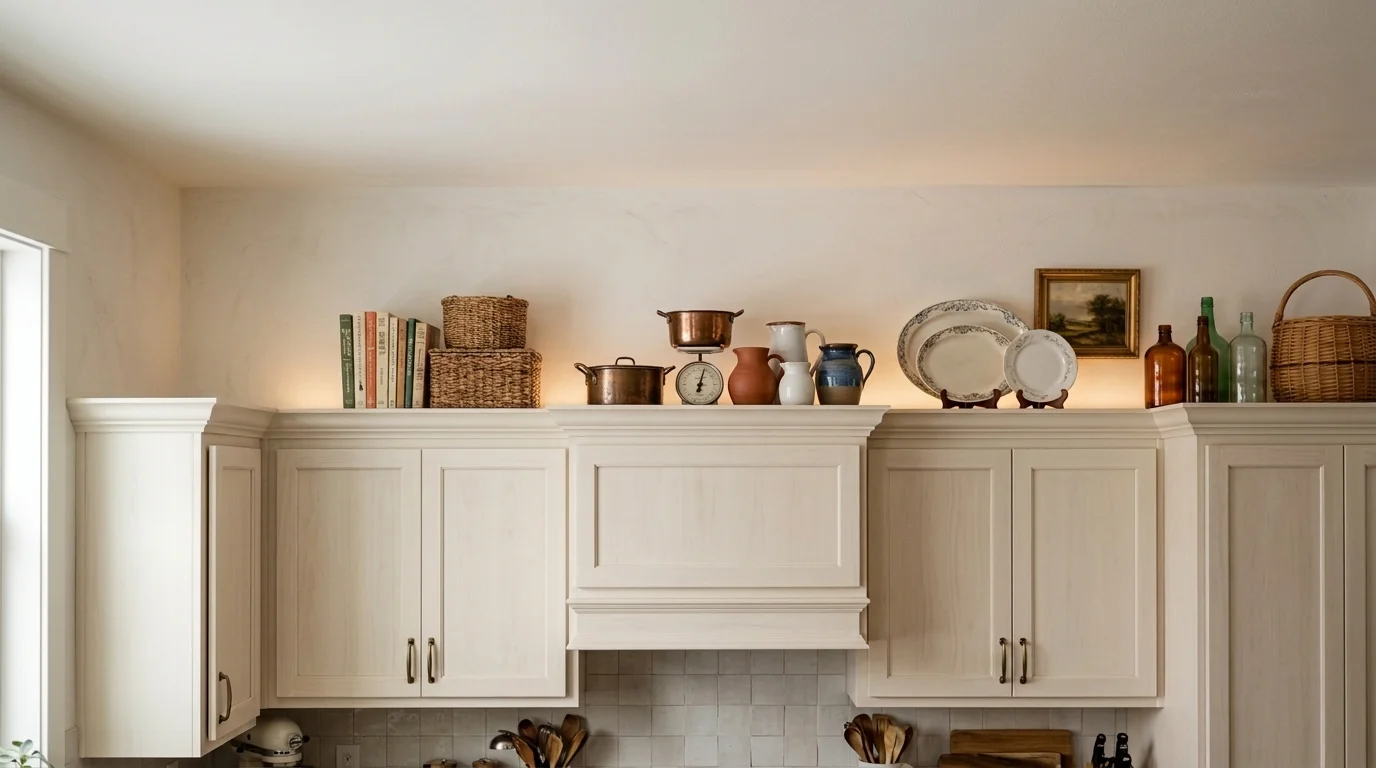
Woven baskets are the easiest way to add storage without it reading as mess. Use them for seasonal appliances, baking sheets, or extra linens you don’t need in daily rotation. Stick to one material, like matching rattan or canvas, so the row looks intentional instead of thrifted. A full set typically runs $40 to $100 depending on size and material.
2. Vintage Crate Storage
Wooden crates bring in texture while hiding small appliances, party supplies, or anything you only pull out a few times a year. Stack two or three at varying heights rather than lining them up flat. It reads more curated and less like overflow storage. Reclaimed wood crates work especially well in farmhouse or cottage-style kitchens.
3. Cookbook Display and Organization
If you actually use your cookbooks, keep them accessible with a small wooden rack or decorative bookends, paired with a step stool for reaching them. Arrange by color or size rather than alphabetically, since this is a display spot first and a reference shelf second. Works best with hardcovers that have interesting spines.
4. Display-Worthy Serving Trays and Pitchers
Large serving platters, cutting boards, and ceramic pitchers you only use for entertaining don’t need to live in a packed cabinet. Store them vertically, leaned against the back wall, or layered two deep for a fuller look. This works especially well if your pieces have some color or pattern worth showing off.
5. Organized Wine and Bottle Racks
A horizontal wine rack adds storage and a bit of visual interest, though the top of cabinets runs warmer than a proper wine fridge. Treat this as a spot for bottles you’ll drink within a few months or decorative bottles you’re not planning to age, not a long-term wine cellar.
Stylish Decor and Aesthetic Display Ideas
Once the practical pieces are placed, these ideas add height, color, and personality to the space.
6. Trailing and Low-Light Houseplants
Cascading greenery softens the hard lines of cabinet fronts and corners. Faux pothos or eucalyptus garlands are the low-maintenance choice, since the heat and grease near a stove isn’t kind to real plants. If you do go with real plants, pick low-light, drought-tolerant varieties and plan on pulling them down for an occasional dusting.
7. Framed Artwork and Gallery Stacking
Lean framed prints against the wall rather than hanging them. Vintage food illustrations, botanical prints, or landscape paintings all work, and leaning lets you swap pieces seasonally without new nail holes. Overlap two or three frames of different sizes for a collected, gallery-wall feel.
8. Statement Ceramics and Pottery
Group earthenware jugs, stoneware jars, or ceramic vases in odd numbers. Three tends to work best for this width of shelf. Vary the heights slightly and keep the color palette tight so the grouping reads as one display rather than a random collection.
9. Vintage Glassware and Mason Jar Collections
Colored or clear glass catches natural light without adding visual weight, which makes it a good option for kitchens with lower ceilings where heavier objects can feel cramped. Group jars by color or size, and keep the arrangement to one row so it stays a display and not a storage shelf.
10. Decorative Galvanized Metals and Copperware
Antique copper pots, brass bowls, or galvanized tin canisters bring warm metallic tones that tie into stainless steel appliances or brass hardware elsewhere in the kitchen. These pieces also handle grease and dust better than fabric or unsealed wood, which matters more the closer you are to the stove.
11. Seasonal and Holiday Displays
Swap in small seasonal touches rather than committing to one permanent look: mini pumpkins and dried wheat in fall, evergreen clippings in winter, woven baskets with fresh greenery in summer. Keep the base layer, like crates, jars, or baskets, neutral so only the seasonal accents need to change.
12. Oversized Lettering or Architectural Salvage
Vintage wooden signs, old corbels, or salvaged architectural pieces add character fast, especially in farmhouse or cottage-style kitchens. These work best as a single statement piece rather than paired with a lot of other decor. If your ceilings run higher than 10 feet, this is one of the few options with enough visual weight to hold its own up there.
13. Accent Lighting and Warm LED Strips
Soft uplighting installed along the top of the cabinets does two things at once: it highlights whatever decor is up there and makes the ceiling feel taller. Warm white LED strip lights, in the 2700K to 3000K range, read as cozy rather than clinical. This is also one of the few ideas on this list that adds function after dark, not just during the day.
14. Decorative Wreaths Leaned or Hung
Small boxwood, olive, or eucalyptus wreaths work surprisingly well leaned against the wall above cabinet fronts, not just hung on doors. They fill vertical space without adding bulk, and faux versions hold up far better than real greenery this close to cooking heat.
15. High-Impact Wallpaper or Accent Paint Background
Treat the strip of wall above your cabinets like a mini accent wall. A bold wallpaper pattern or a contrasting paint color makes whatever you display pop, even if the collection itself is simple. This is the highest-effort option on the list, but also the one with the biggest visual payoff for a wide, bare gap.
4 Golden Rules for Decorating Above Your Cabinets
Mind the Scale and Proportion
Small knick-knacks read as clutter from floor level. Choose fewer, larger items you can actually see from across the kitchen rather than a crowd of tiny ones.
Stick to a Cohesive Color Palette
Pull colors from your backsplash, island, or countertop so the display feels connected to the room instead of bolted on top of it.
Leave Breathing Room
Don’t fill every inch. Empty space between groupings is what keeps the display looking curated instead of crammed.
Group in Odd Numbers
Clusters of three or five, varied in height, read better to the eye than even pairs or straight rows.
How to Keep Above-Cabinet Decor Clean and Dust-Free
The air above your cabinets sits right in the path of cooking steam and grease, which means dust up there doesn’t stay dry dust for long. Left alone, it turns into a sticky film that’s far harder to clean than a simple wipe-down.
The easiest fix is a liner. Lay wax paper, newspaper, or a washable shelf liner across the top of your cabinets before you style them. Every few months, roll it up, toss it, and lay down a fresh sheet instead of scrubbing the actual cabinet surface.
For the decor itself, favor washable or easy-to-wipe materials, like sealed wood, glass, ceramic, or metal, over anything fabric or porous. A quick monthly wipe with a damp cloth keeps everything looking intentional instead of neglected.
Frequently Asked Questions
Should you leave the space above kitchen cabinets blank?
If your cabinets already sit close to a low ceiling, leaving the gap empty is often the cleaner choice. For a wider gap, some decor keeps the kitchen from feeling unfinished, but you don’t need to fill every inch of it either way.
How do you fill a large gap between cabinets and ceiling?
Lean toward a few tall, statement pieces, like large urns, oversized art, or architectural salvage, rather than many small items. If you’d rather not style it at all, crown molding or a soffit gives the same clean, built-in look without any decor.
Is it bad feng shui to put things on top of kitchen cabinets?
In feng shui, clutter above head height is thought to trap stagnant energy. Keeping the space clean, uncluttered, and limited to a few intentional pieces is generally considered fine. It’s the buildup and mess that cause the issue, not the location itself.
Conclusion
The space above your kitchen cabinets doesn’t have to be an afterthought. A few well-chosen baskets, jars, or leaned art turn a dead zone into one of the more personal corners of the room, and the golden rules above keep it from tipping into clutter.
Looking for more ways to make small kitchen choices work harder? See small kitchen layout ideas and Space saving kitchen hacks are good next reads.




Leave a Reply