

For most busy families, the gap between wanting a clean home and actually maintaining one comes down to a simple missing piece: a weekly plan that acknowledges real life. Without a clear roadmap, the work piles up invisibly until Saturday morning arrives and suddenly someone has to spend three hours scrubbing bathrooms, vacuuming every room, and dusting while the kids watch cartoons. That cycle breeds resentment, exhaustion, and a home that never quite feels peaceful. A thoughtful weekly cleaning schedule changes that. It breaks the load into small, predictable sessions that fit into the edges of a full week, not against it. It answers the question “What gets done today?” so nobody has to hold the entire mental checklist in their head. Best of all, when that schedule lives on paper where everyone can see it, the whole household can share the load.

This article provides exactly that: a realistic, printable weekly cleaning schedule designed for families with kids, pets, jobs, and zero tolerance for guilt. You’ll find a day-wise breakdown that requires twenty to thirty minutes most days, a zone-based alternative for those who prefer flexibility, and detailed task lists with time estimates. I’ll also show you how to customize the plan for your home’s size, your work schedule, and the seasons. This weekly rhythm plugs directly into the larger system laid out in the home cleaning routine for daily, weekly, and monthly tasks, making it an essential middle layer between your quick daily resets and monthly deep cleaning. If you’ve ever wished someone would just hand you a schedule that actually works, this is it.
Why a Weekly Cleaning Schedule is Essential for Busy Families
When you rely on a single weekend cleaning marathon, several problems surface. First, the house feels messy and chaotic for most of the week, which quietly raises stress levels. Second, weekend cleaning eats into precious family downtime, leisure, and rest. Third, certain tasks, like bathroom sanitizing and Floor vacuuming and mopping really need to happen regularly to keep the home’s indoor air quality healthy. A weekly schedule distributes the work in small, manageable doses so that the house stays consistently livable and weekends feel more open.
A set schedule also reduces the mental load. Instead of scanning rooms and deciding what to tackle based on what looks worst, you simply follow the day’s assignment. Sarah, a real mom I worked with, told me that the greatest gift was no longer having to think about what needed cleaning. She just glanced at the fridge chart on Tuesday, saw “Dusting & Surfaces,” and did it. That clarity alone saved her mental energy for far more important things, like helping with homework or relaxing with Mark after the kids went to bed. A visible weekly plan also invites family participation. When everyone sees that Wednesday is vacuum day, it becomes a shared expectation rather than Mom’s secret chore list.
How This Weekly Schedule is Designed
This schedule is built on a few core principles. Each daily assignment takes roughly twenty to thirty minutes, short enough to squeeze in after dinner or right after work before the evening routine. The tasks are grouped logically so you aren’t hauling the vacuum out every single day and then mopping on a different day; instead, floor work is consolidated. We also designed flexibility into the plan. You can swap days if a Tuesday deadline runs late, or you can shift to a zone-based approach if daily tasks don’t suit your rhythm.
We assume you already have a simple daily routine in place, even if it’s just a ten-minute evening kitchen wipe-down and a living room pickup. If you’re still building that habit, the daily cleaning routine 30 minutes article gives you a gentle, step-by-step foundation. The weekly schedule layer adds the deeper cleaning that daily maintenance alone can’t cover: scrubbing toilets, dusting surfaces, vacuuming fully, and mopping. And because life is unpredictable, the schedule is forgiving. Miss a day? You can catch up in a lighter week or let it roll. This is a rhythm, not a punishment.
Recommended Weekly Cleaning Schedule: Day-Wise Breakdown
Here is the core schedule that hundreds of families have used successfully. I’ve included time estimates so you can plan realistically. The tasks assume that you do a basic evening reset each night: dishes loaded, counters wiped, and main living area picked up. Without that daily habit, the weekly tasks will take longer because you’ll be cleaning around clutter. But once the daily habit is steady, this weekly plan hums along.
| Day | Focus Area | Key Tasks | Approx. Time |
| Monday | Bathrooms | Scrub toilet bowls, wipe counters and mirrors, clean shower/tub walls with a daily spray, swap hand towels, empty trash. | 25 min |
| Tuesday | Dusting & Surfaces | Dust all reachable surfaces in living areas and bedrooms: furniture, shelves, electronics, picture frames, windowsills. Use a microfiber cloth or extendable duster. | 15 min |
| Wednesday | Floors | Vacuum all carpets and rugs thoroughly, including under furniture edges. Mop hard floors (kitchen, bathrooms, entry). | 25–30 min |
| Thursday | Kitchen Deepening | Wipe appliance fronts, cabinet doors near stove, microwave interior. Sanitize sink. Check fridge for expired items. | 20 min |
| Friday | Catch-Up & Laundry Focus | Fold and put away lingering laundry, spot-clean walls or sticky handprints, tidy hot spots (mail pile, mudroom). | Flexible 20 min |
| Saturday | Family Blitz | 30-minute whole-family speed clean: outdoor toys, pet areas, bedroom tidy, quick vacuum of main floor if needed. | 30 min |
| Sunday | Rest & Light Reset | Minimal tasks. A quick sweep of the kitchen after meals, maybe a five-minute declutter of the dining table. Use this day to recharge. | 5–10 min |
This schedule ensures that no single day is overwhelming. Mondays tackle bathrooms because starting the week with fresh, clean bathrooms sets a positive tone. Wednesdays handle all the floors at once, so you only need to do a light daily sweep the rest of the week. Friday is a flexible catch-up day because by the end of the week energy often dips, and you can use it to address whatever bothers you most. Saturday’s family blitz turns cleaning into a group activity, and Sunday protects rest.
Zone-Wise Alternative Option
Some families prefer to clean by zone rather than by day. In that approach, you assign each day to a different area of the home. For example, Monday might be the kitchen and dining zone (counters, floors, appliance wipe-down), Tuesday the living and family room (dusting, vacuuming, tidying), Wednesday the bedrooms (dust, vacuum, change linens), Thursday the bathrooms (full scrub), and Friday the entryway, mudroom, and laundry area. Saturday and Sunday remain flexible and rest-focused. This method works well if you have a larger home or want to concentrate your cleaning energy in one physical space. The printable schedule can easily accommodate either layout.
Printable Weekly Cleaning Schedule: How It Works
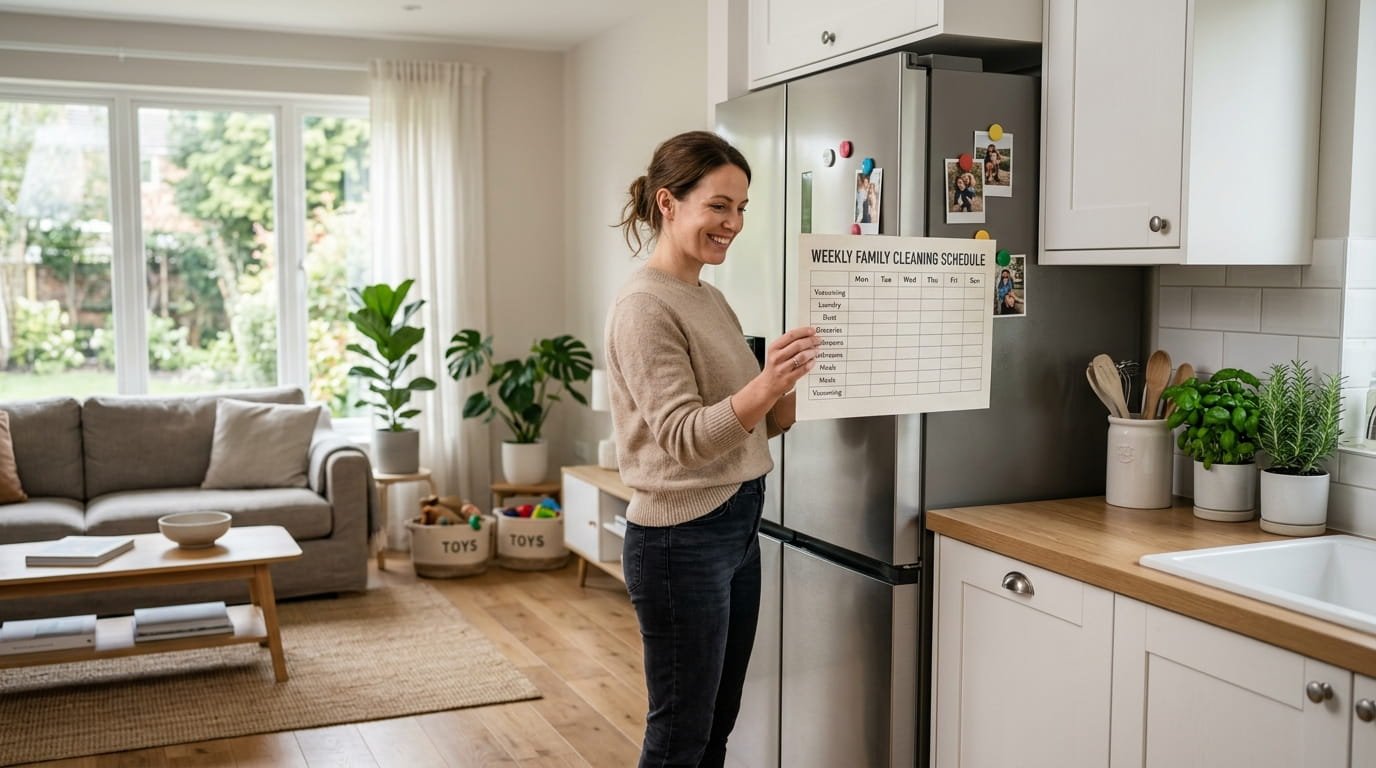
The printable version of this schedule is designed to be hung on the fridge or a command center where everyone can see it. It’s not a fancy, color-coded work of art that nobody uses. It’s a straightforward, clean layout with columns for the day, the focus area, specific tasks, a time estimate, and a check-off box for completion. I also include a small section at the bottom for notes, so you can jot down seasonal additions (like “wipe baseboards this Saturday”) or assign a family member’s name next to a task.
To use it effectively, print a fresh copy at the start of each week or laminate one and use a dry-erase marker. At the beginning of the week, take two minutes to look at your calendar. If you know Tuesday is packed with a late meeting, swap Tuesday’s dusting with Wednesday’s floors, or simply plan to do dusting on Saturday. The schedule is a tool, not a taskmaster. The check-off boxes create a small, satisfying sense of progress. Kids especially respond to this visual cue. A completed checklist by Sunday feels like a collective win.
For those who prefer a digital version, you can screenshot the schedule and keep it in a shared family note app. However, I strongly recommend a physical copy. It removes the friction of opening an app, and it remains visible even when phones are put away during family time.
Detailed Task Breakdown with Time Estimates
To make the schedule even clearer, let’s unpack what each day’s tasks actually entail. This isn’t about perfection; it’s about hitting the highest-impact areas.
Monday – Bathrooms (25 min)
- Squirt toilet bowl cleaner, let sit while you do other tasks.
- Spray and wipe counters, mirrors, and faucets with a microfiber cloth and all-purpose cleaner. (5 min)
- Scrub toilet bowls with a brush, wipe exterior, including the base and seat. (5 min)
- Spray shower walls and tub with a daily shower cleaner or vinegar-water mix. Squeegee or wipe down. No heavy scrubbing if done weekly. (5 min)
- Empty bathroom trash bins, replace liners. (2 min)
- Swap hand towels and hang a fresh set. (2 min)
- Quick floor sweep of visible hair. (1 min)
Tuesday – Dusting (15 min)
- Grab an extendable microfiber duster or a damp cloth. Start high (ceiling corners for cobwebs if needed, tops of furniture) and work downward.
- Dust electronics, picture frames, lamp bases, windowsills, and any open shelving. Move a few items, but don’t clear entire surfaces. (10 min)
- Wipe down doorknobs and light switches in main areas (a monthly deep-clean task can be more thorough). (2 min)
Wednesday – Floors (25-30 min)
- Clear toys and small items from floors in all rooms to be vacuumed. (5 min)
- Vacuum carpets, rugs, and under edges of furniture where pet hair collects. Use attachments for baseboards if time allows. (15 min)
- Sweep and mop hard floors. A spray mop with a washable pad works quickly. (10 min)
Thursday – Kitchen Deepening (20 min)
- Wipe down appliance fronts: refrigerator door, dishwasher, microwave exterior, and oven handle. (5 min)
- Clean microwave interior: heat a bowl of water for 2 minutes, then wipe steam and food residue. (3 min)
- Wipe cabinet doors and drawer fronts near the stove, where grease splatters. (5 min)
- Sanitize the sink with a scrub and a spray. (2 min)
- Quickly check fridge for expired condiments, wilted produce, or leftovers that need tossing. (5 min)
Friday – Catch-Up (20 min)
- Fold and put away any laundry that has piled up. Involve kids in sorting their own clothes. (10 min)
- Spot-clean walls, light switches, and the dining table for sticky fingerprints. A melamine sponge works wonders. (5 min)
- Spend 5 minutes tackling a persistent hot spot: the mail pile, the mudroom bench, or the homework stash.
Saturday – Family Blitz (30 min)
- Set a timer. Assign everyone a quick job. Examples: vacuum the main floor, tidy the garage entry, wipe the pet feeding area, straighten the living room. Turn on music. The goal is speed, not perfection.
Sunday – Rest & Light Reset (5-10 min)
- After meals, do a one-minute wipe of kitchen counters. Toss any stray items into a basket to put away. Take the day off from scheduled cleaning.
Customizing the Schedule for Your Home
Not every home fits a one-size-fits-all template. Here’s how to adjust.
Home Size: If you live in a smaller apartment, tasks will take less time. You might combine Monday and Tuesday (bathrooms and dusting) into one 30-minute block. In a larger home, you may need to split floors across two days: upstairs on Wednesday, main floor on Thursday, or assign one floor to a partner or teen.
Work Shifts: If you work nights, anchor your days differently. “Monday” might start at 10 a.m. and “evening reset” might happen at midnight. The schedule still works if you keep the sequence consistent with your awake hours.
Seasonal Adjustments: In winter, add a weekly task of shaking out entry rugs and wiping down mudroom shoe bins to manage salt and slush. In summer, include a quick patio sweep or wiping of outdoor furniture if you use those spaces heavily. During fall, vacuum behind radiators or heaters before you turn them on.
Adding or Removing Tasks: If you have a weekly chore that’s crucial, like cleaning a litter box or washing pet bedding, slot it into a light day like Tuesday or Friday. If a task feels unnecessary for your household, drop it. The schedule should reflect your actual life.
Getting the Whole Family Involved
A weekly schedule only lightens the load if it’s shared. Here’s how to make that happen.
Assign age-appropriate weekly chores. A seven-year-old can empty bathroom trash cans on Monday and dust low surfaces on Tuesday. A ten-year-old can vacuum the stairs on Wednesday (with supervision) or help fold laundry on Friday. A teenager can fully own a bathroom clean each week, provided you teach them once and let them do it their way. I’ve found that rotating tasks monthly prevents boredom and resentment.

Use the printable schedule as a visual cue. When a child checks off a task, that small sense of accomplishment builds intrinsic motivation. Pair the Saturday blitz with a reward: a family movie night, a special snack, or a later bedtime. Keep the tone light. Instead of barking orders, say, “Hey, it’s vacuum day. Who wants to be the floor hero today?” A little playfulness goes a long way.
For spouses, the schedule can be a neutral starting point. Rather than assigning tasks in a way that feels parental, sit down together and ask, “Which of these weekly tasks do you mind the least?” Mark found that he actually didn’t mind Thursday kitchen deepening because he liked puttering with a podcast. Sarah took Monday bathrooms because she could do them quickly right after the kids’ bath time. When both partners have some choice, cooperation rises.
Combining with Daily Routine & Monthly Deep Cleaning
This weekly schedule is the bridge between daily maintenance and monthly deep cleaning. Think of the layers like this: the daily 30-minute routine handles surface mess, kitchen counters, and living area pickup so you never start a weekly task from a place of chaos. The weekly schedule addresses the build-up that daily cleaning can’t touch: grime, dust, soil on floors, and bathroom sanitization. Then, once a month, you rotate in deeper tasks like washing windows, cleaning the fridge coils, or organizing a cupboard. When all three layers work together, your home stays in a steady, calm state without any single day feeling like a crisis.
If you haven’t yet established a daily habit, I encourage you to start there. The daily cleaning routine 30 minutes article will help you build that quick evening reset muscle. Then layer on this weekly plan. When you’re ready, the comprehensive home cleaning routine for daily, weekly, and monthly tasks connects everything into one cohesive system. And if you ever feel that the clutter itself is slowing you down, the organize your home step by step guide will help you clear the chaos so your weekly cleaning takes even less time.
Troubleshooting & Adjusting When Life Happens
Life will throw curveballs. A stomach bug sweeps through the family. A work project demands late nights. A weekend gets taken over by a soccer tournament. Here’s how to adapt without abandoning the schedule.
Sick Weeks: Drop to absolute essentials. Run the dishwasher, wipe the kitchen table, and keep the bathroom surfaces swabbed with a disinfecting wipe. Let the dusting and deep vacuuming go. The schedule will be there when everyone is healthy.
Guest Preparation: If visitors are coming, do a quick triage. Focus on the guest bathroom, the living room, and the kitchen. Use the Saturday blitz model: set a timer for 45 minutes, get the whole family moving, and hit the highest-impact areas. Don’t try to deep clean every bedroom.
Low Motivation Weeks: Use the Friday catch-all day to do a single weekly task you missed. If you missed bathrooms on Monday, just do a quick toilet scrub and mirror wipe on Friday and call it good. Perfection isn’t the goal.
When Your Partner Doesn’t Follow the Schedule: Revisit the collaborative conversation. Ask what’s making it hard. Maybe the schedule feels too rigid, or the tasks are unclear. Offer to swap responsibilities or reduce the load for a trial period. The goal is partnership, not a chore audit.
Frequently Asked Questions
How do I print and use this schedule effectively?
Print a clean copy each week or laminate one. Place it on the fridge or a family command center. Use a dry-erase marker to check off tasks daily. At the end of the week, wipe it clean and start fresh.
What if my work schedule is irregular?
Anchor the weekly tasks to your available windows, not to specific days. If you have Tuesday off, make that your heavy cleaning day. You can assign tasks to “Day 1,” “Day 2,” etc., and simply progress through them in order whenever you have a half-hour gap. The sequence matters more than the calendar date.
How much time should each day take?
Most days are designed for 20 to 30 minutes. If you’re consistently taking longer, check if you’re cleaning around clutter. Decluttering first, with the help of the organize your home step by step guide, will dramatically speed things up.
Can I modify tasks for different seasons?
Yes. In muddy seasons, add a weekly floor mopping to Wednesday or a weekend rug shake. In pollen-heavy spring, dusting might need to be done twice a week. Adjust as your home’s needs shift.
How do I handle weeks when kids have exams or guests are coming?
During high-stress weeks, shrink the schedule to just the bathroom clean and kitchen deepening, which have the biggest impact on hygiene and feel. For guests, do a power blitz an hour before they arrive, focusing on the bathroom they’ll use and the main living areas.
Should we do cleaning every single day?
Not necessarily. The schedule includes a light day on Sunday and a flexible Friday. The daily 30-minute reset is a different layer: that’s a quick evening tidy, not a full cleaning task. You can combine some weekly tasks if you prefer four focused days instead of seven lighter ones.
What if my partner doesn’t follow the schedule?
Avoid blaming. Have a calm conversation about how the schedule benefits everyone’s relaxation time. Ask your partner to pick one weekly task they can own consistently. Start there and build slowly. Appreciation for any effort is more motivating than criticism.
How does this connect with the daily 30-minute routine?
The daily routine handles the surfaces and clutter that accumulate from meals, play, and daily life. The weekly schedule tackles the deeper grime that builds over days: toilet scrubbing, full vacuuming, dusting. Together they create a complete maintenance system that prevents weekend marathons. The daily cleaning routine 30 minutes provides the detailed morning and evening rhythm that makes this weekly schedule far easier to maintain.
Conclusion
A clean, calm home isn’t the result of a heroic Saturday push. It’s the result of small, consistent efforts spread across the week, shared among the people who live there. This weekly cleaning schedule printable gives you that structure without rigidity. It tells you what to do, when, and for how long, so you can stop thinking about cleaning and just do it, then move on to the parts of life that matter more.

I invite you to try this schedule for two weeks. Print it out tonight. Sit down with your family for five minutes and assign or choose tasks. Notice how the house feels at the end of that first week. You’ll likely find that the quiet, predictable rhythm does more than clean your home. It gives you back time, reduces morning stress, and creates a little more breathing room. And when you’re ready to connect it to a full system, the home cleaning routine for daily, weekly, and monthly tasks is your next step. You’ve got this.




Leave a Reply